Phnom Kulen National Park: The Complete Guide (2026)
A sacred mountain of lychee forest, a two-tier waterfall, hundreds of carved lingas and the spot where the Khmer Empire was declared. Here is how to see all of it in one well-planned day.
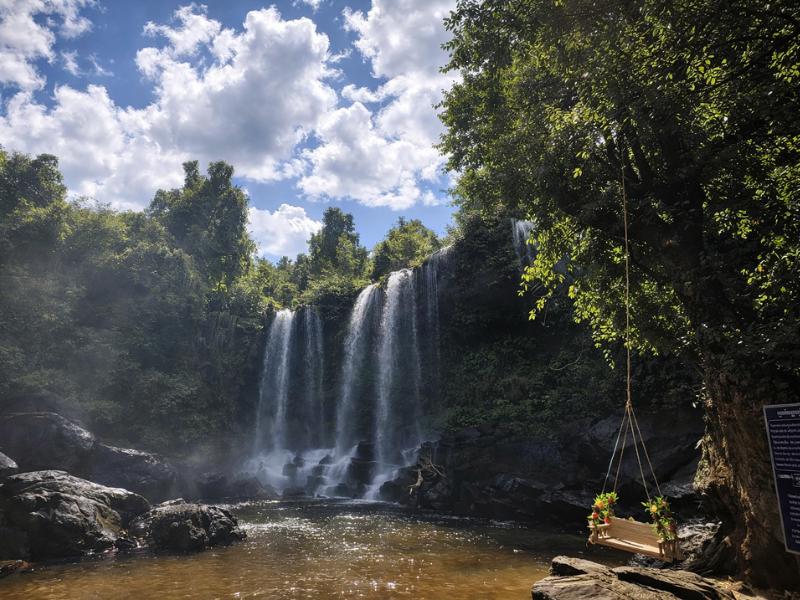
Phnom Kulen at a glance: distance, sights and the entry fee
Distances, sights and the US$20 fee drawn from the park's published figures and the operators we work with.
Planning takeaway: Choose a first park visit or a longer remote-plateau trek.
What is Phnom Kulen National Park?
Phnom Kulen is a flat-topped sacred mountain about 50 km north of Siem Reap, protected as a national park. Its name means mountain of the lychees. The plateau holds a two-tier waterfall, a riverbed carved with Hindu lingas, a large reclining Buddha, and the ruins of an early Khmer capital, all holy to both Hindus and Buddhists.
Choose the kind of mountain day first, then compare current inclusions and the time you have.
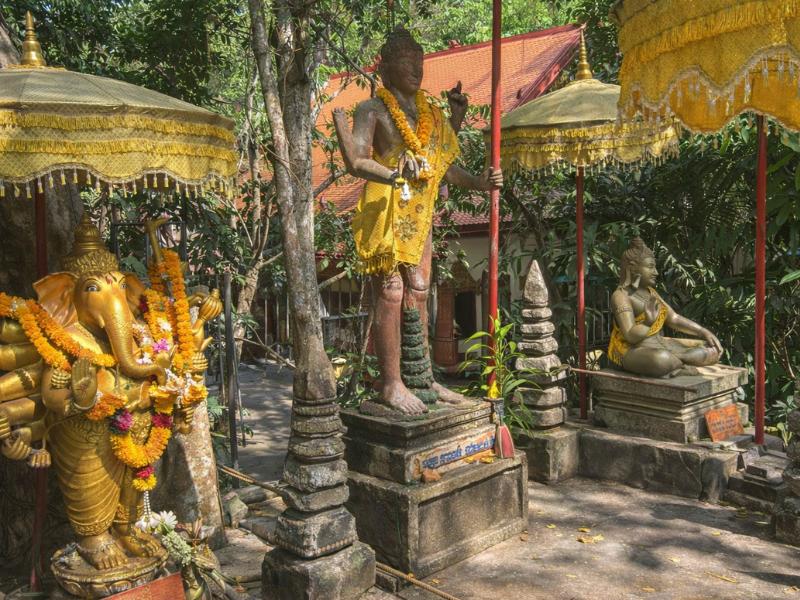
The mountain matters far beyond its scenery. In 802 CE, King Jayavarman II stood on this plateau and proclaimed himself universal monarch, declaring independence from Java. Historians mark that ceremony as the founding moment of the Khmer Empire, the civilisation that would later raise Angkor. You can read the full story in the Khmer Empire's birthplace on the mountain.
Today the mountain is a living pilgrimage site, holy to both Hindus and Buddhists. On weekends and holy days Cambodian families climb to the pagoda, leave offerings, and picnic by the river. That mix of a working shrine and a tourist waterfall is part of what gives Phnom Kulen its particular feel, closer to a sacred hill than a scenic viewpoint. Our guides at Phnom Kulen Tours handle the timing, the one-way road and the park ticket.
Up here once stood Mahendraparvata, an early capital whose street grid lay hidden under forest for centuries. Airborne lidar surveys in 2012 and 2013 mapped that lost city, revealing roads, canals and temple mounds the jungle had swallowed. Most of it is not on the tourist route, but knowing it is beneath your feet changes how the day feels.
One correction worth making early: Phnom Kulen is a national park, and it is not part of the Angkor UNESCO World Heritage listing. It sits under its own management, charges its own fee, and rewards a different kind of visit, greener, quieter, more spread out than the temple circuit.
Where is Phnom Kulen and how far is it from Siem Reap?
Phnom Kulen sits roughly 50 km (31 miles) straight-line north of Siem Reap, about 56 km by road. Most visitors reach it in 1.5 to 2 hours by car, since the last stretch climbs a winding mountain road. There is no train and no short cut, so plan the drive as part of the day.
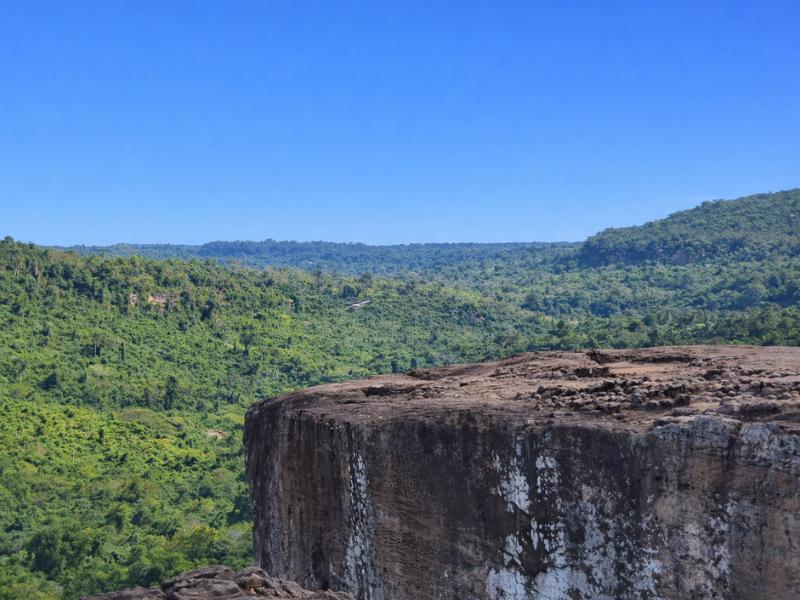
The route runs north past Banteay Srei, the pink-sandstone temple many people fold into the same trip, then on toward the base of the mountain before the climb begins. The final ascent is slow going, which is why the total time lands closer to two hours than one even though the distance looks modest on a map.
Because the drive eats a real slice of the day, the mountain works best as a single dedicated outing rather than something squeezed between temples. Our full breakdown of routes, drivers and timing lives in getting there from Siem Reap, and if you are pricing a private car, see what a taxi to the mountain costs.
What are the main sights on the mountain?
Four sights anchor a Phnom Kulen day: the two-tier waterfall with its swim pool, the River of a Thousand Lingas carved into the sacred riverbed, the reclining Buddha at the Preah Ang Thom pagoda, and, for the adventurous, the remote Srah Damrei stone elephant. A normal day trip covers the first three.
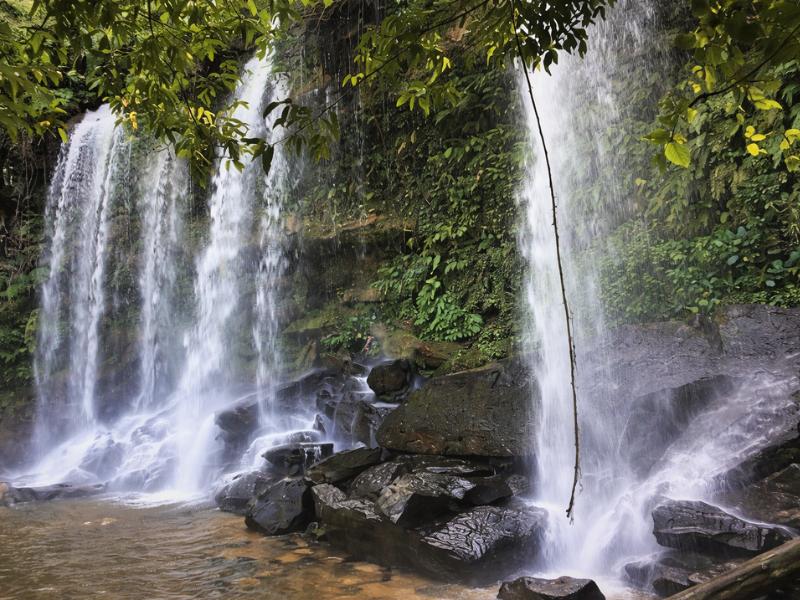
The waterfall is the postcard: a short upper drop and a taller lower fall that pours into a broad pool where people swim. The lingas are subtler, hundreds of Shiva symbols and Hindu deities cut into the sandstone streambed so the water is blessed as it flows down to the plains. The reclining Buddha rests on a boulder at the top of a pagoda staircase, one of the largest in Cambodia.
| Sight | What it is | Why go |
|---|---|---|
| Phnom Kulen waterfall | Two tiers, lower fall into a swim pool | Swimming, the classic photo, jungle cool |
| River of a Thousand Lingas | Carved sandstone riverbed | Sacred art, quiet, deep history |
| Preah Ang Thom | Hilltop pagoda with reclining Buddha | Active temple, views, pilgrimage feel |
| Srah Damrei | Life-size stone elephant, remote | Off-route adventure, few crowds |
Each of these earns its own deep dive. Start with the two-tier waterfall in detail and the carved riverbed and reclining Buddha if you want to know exactly what you are looking at before you arrive.
What else is on the plateau beyond the main sights?
Beyond the waterfall, the lingas and the reclining Buddha, the plateau hides quieter rewards: the remote Srah Damrei stone elephant, scattered forest shrines and minor ruins, and the buried remains of Mahendraparvata, the lost city. These sit off the standard loop and usually need extra time, a capable vehicle or a dedicated trek to reach.
Srah Damrei, the Elephant Pond, is the pick of them: a life-size elephant and other animals carved from stone, standing deep in the forest well away from the day-trip crowds. Reaching it means a rough track and a longer day, which is why it rarely features on the standard tours and why the reward is solitude.
The lost city itself is more idea than sight for most visitors. The lidar maps revealed a whole street grid under the trees, yet on the ground it reads as forest, low mounds and the occasional worn stone. Knowing it is beneath you gives the plateau its weight; turning up expecting ruined boulevards will disappoint.
| Lesser-visited stop | What it is | How to reach it |
|---|---|---|
| Srah Damrei | Life-size stone elephant carving | Rough track, extra time, or an off-road tour |
| Forest shrines and minor ruins | Small carved sites across the plateau | Short walks off the main road, a guide helps |
| Mahendraparvata remains | Buried early Khmer capital | Mostly forest; understood more than toured |
These corners suit a second visit, or an adventurous first one. To reach the far stops under your own steam, see the trekking and hiking guide, and for the rough tracks that link them, the mountain by dirt bike and jeep.
How much does it cost to visit Phnom Kulen?
Foreign visitors pay a US$20 entrance fee per person, and this is separate from the Angkor Pass. The park ticket does not cover transport, lunch or a guide. A full-day tour that bundles all of that starts at around $45 to $55 per person, and private or specialist trips run higher.
That $20 catches some people off guard, because they assume an Angkor Pass covers the whole region. It does not. The park runs its own gate and its own charge. The site's own full-day park entry ticket is priced at around $19 to $20, and on that product the physical ticket is hand-delivered to your Siem Reap hotel the evening before, which saves a queue at the gate. Prices move, so check the live listing before you book.
| Option | Typical starting price | Roughly covers |
|---|---|---|
| Park entry ticket only | around $19 | Admission, delivered ahead |
| Join-in group day tour | around $48 | Entry, transport, guide, picnic |
| Combined temple day tour | around $52 to $55 | Kulen plus Banteay Srei or Beng Mealea |
| Private day tour | around $82 to $99 | Private guide and vehicle, your pace |
Whether $20 on top of transport feels fair is a fair question, and we answer it plainly in the park entrance fee explained. The short version: bundled into a good tour, the fee stops feeling like a separate sting.
When is the best time to visit?
The falls are fullest in the green season, roughly June to November, when rain feeds the river and the lower tier thunders into its pool. The dry season, December to May, brings clearer skies and easier roads but thinner water, so a dry-month waterfall can underwhelm. Pick your months by whether you came for the swim or the scenery.
This is the single biggest driver of whether people call the trip a highlight or a letdown. Arrive in September and the water roars; arrive in March and you may find a modest trickle over the same rocks. Neither is wrong, but they are different days, and it helps to know which one you are buying.
The gate opens around 8 AM. Get up the mountain early and you beat both the heat and the crowds at the pool. We lay out the month-by-month picture, temperature, rain and water flow together, in the best months to visit the mountain.
How do you get there and get around the park?
Almost everyone reaches Phnom Kulen by car, joining a tour or hiring a private driver. The mountain access road has historically run one-way with time windows, up in the morning and down after midday, with the road up closing around 11:30 AM. A guide handles that timing so you never risk being stuck on the wrong side of the cutoff.
That one-way system is the practical catch of the whole trip. Miss the morning window and your plan unravels. It is the main reason independent travellers on rented motorbikes sometimes have a rough day, and the main reason a guided small-group tour with picnic lunch is the low-stress choice for a first visit.
| How you go | Best for | Watch out for |
|---|---|---|
| Guided tour | First-timers, no logistics stress | Fixed group pace |
| Private car and driver | Families, your own schedule | You still track the road cutoff |
| Rented motorbike | Confident, independent riders | Long climb, timing, dust |
On the plateau itself, sights are spread out and short drives apart, so a vehicle stays with you between stops. The exact timing rules can change, so confirm them locally or let the operator carry that responsibility.
Is Phnom Kulen worth it?
For most travellers with a full day to spare, yes, but honestly. Some recent visitors feel $20 is steep, notice litter near the busy pool, and find the falls thin in the dry season. Come in the green season, start early, treat the lingas and history as the point, and the mountain rewards the effort.
We would rather set the expectation straight than oversell it. If you picture a pristine, empty cascade and turn up at a crowded pool on a dry March afternoon, you will feel short-changed. If you come for the whole package, the sacred riverbed, the reclining Buddha, the jungle drive and a swim when the water is up, the day holds together well.
The litter is real near the main falls, concentrated where day-trippers picnic, and it thins out as you walk to quieter spots. Our candid take, with the cases where we would skip it, lives in whether the mountain is worth the trip.
What should you know before you go?
Carry cash for the US$20 fee, dress modestly for the working pagoda, and bring water, since shops on the mountain are few. Phone signal is patchy up on the plateau, restrooms are basic, and the forest is humid and buggy. A little preparation turns a hot, logistics-heavy day into a smooth one.
The pagoda is an active place of worship, so keep shoulders and knees covered, remove shoes where signs ask, and stay quiet around people at prayer. The entrance fee is cash only at the gate, and small notes save fuss. Snacks and plenty of water are worth carrying, because the plateau is not lined with stalls.
Heat and humidity do the most to wear people down, especially in the late dry season. Start early, pace the walking, and keep repellent handy in the shaded, damp stretches near the river. None of this is hard; it simply rewards a few minutes of packing the night before.
| Detail | What to expect |
|---|---|
| Money | $20 fee, cash at the gate; small notes help |
| Dress | Modest cover for the pagoda, swimwear for the falls |
| Facilities | Basic restrooms, few shops, so carry water |
| Connectivity | Patchy phone signal on the plateau |
For the full kit list adjusted by season and stop, see what to wear and bring to the mountain.
How should you plan a day at Phnom Kulen?
A smart Phnom Kulen day starts early, clears the one-way road up before its late-morning cutoff, works down the plateau from the reclining Buddha to the lingas to the waterfall, and saves the swim for last. Add lunch on the mountain and you are back in Siem Reap by late afternoon.
Sequencing matters because of the road and the heat. Reaching the pagoda and carvings first keeps the swim as a cooling reward, and it means the busiest stop, the falls, is not where you burn your freshest hours. A picnic-style lunch on the plateau is the norm on the popular tours.
| Time | Where | What you do |
|---|---|---|
| 7 to 8 AM | Siem Reap | Hotel pickup, drive north |
| 9 to 10 AM | Preah Ang Thom | Climb to the reclining Buddha |
| 10 to 11 AM | Sacred riverbed | See the carved lingas |
| Midday | Plateau | Picnic lunch |
| 1 to 3 PM | Waterfall | Swim, photos, then descend |
Want the sequence spelled out with tour options attached? See a full day-trip itinerary. And if you are trying to fit the mountain around temples, pairing Phnom Kulen with Angkor Wat explains why they usually deserve separate days.