Phnom Kulen Entrance Fee and Tickets (2026)
The Phnom Kulen entrance fee is a flat US$20 per foreign visitor, cash only, and it is not part of any Angkor ticket. Here is what it buys and how to pay it.
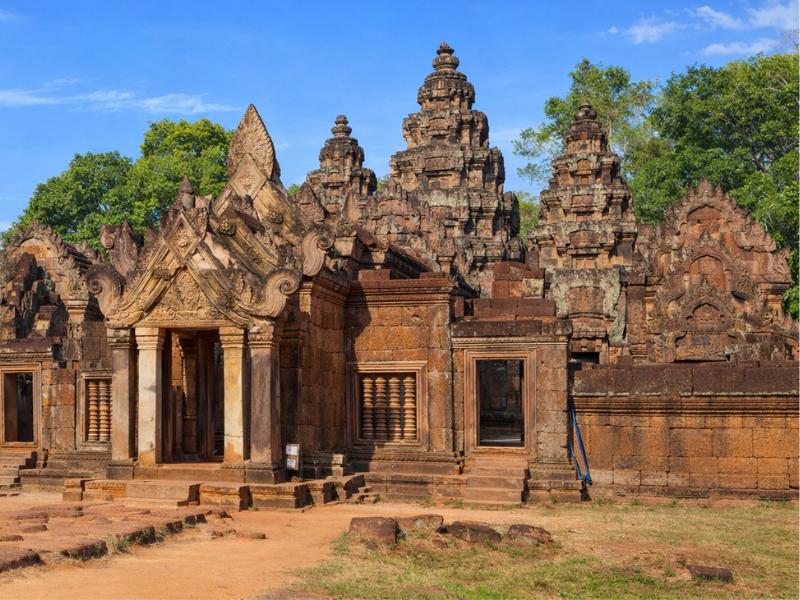
Twenty US dollars, in cash, at a checkpoint below the mountain. That single fee catches out most first-time visitors, because it is nothing to do with the Angkor Pass and it never appears at a temple-ticket booth in town. Below is exactly what the fee covers in 2026, where you actually hand it over, and how the do-it-yourself sum stacks up against a guided day that rolls the ticket, the ride and lunch into one price. We match you to the right trip at Phnom Kulen Tours.
What the US$20 Phnom Kulen ticket covers, and the guided alternatives
Prices are approximate and move with the season; check the live listing before you rely on a figure.
Planning takeaway: Distinguish advance admission-only delivery from tours with transport.
How much is the Phnom Kulen entrance fee?
Phnom Kulen National Park charges a flat US$20 per foreign visitor, paid in cash at the gate below the mountain. It is a single day-entry fee, kept separate from the Angkor Archaeological Park Pass, and it is not covered by any temple ticket you already hold for Angkor Wat or the wider Angkor complex.
Choose the kind of mountain day first, then compare current inclusions and the time you have.
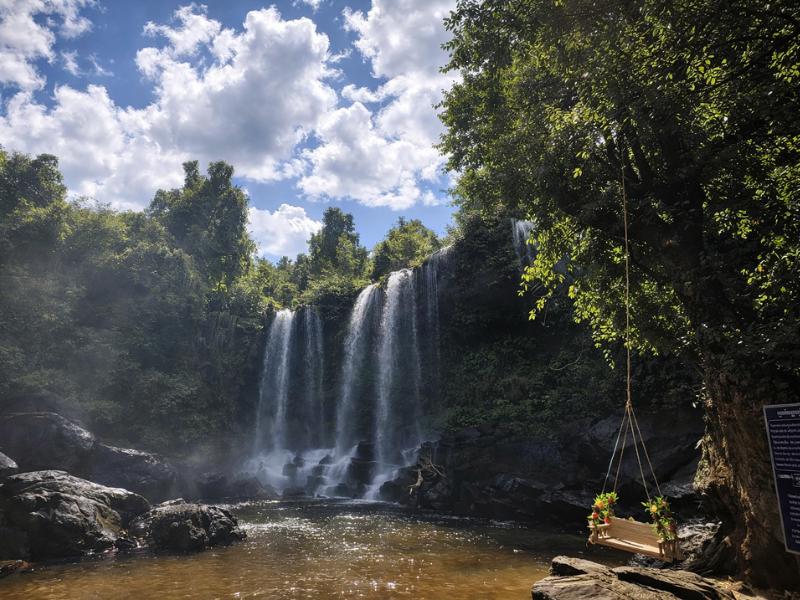
The fee is per person, not per vehicle, and children are charged at the gate rather than by a published online rate, so treat any child discount as something to confirm on the day. Payment is US dollars, the working currency across Siem Reap; small change often comes back in Cambodian riel. Operators who sell a pre-booked entry pass price it a touch lower, around $19, and deliver it to your hotel the evening before. If you would rather not queue or carry the exact cash, you can pre-book the full-day park entry ticket and have it dropped at reception, then walk straight through the gate the next morning.
The twenty dollar figure has held steady and is widely reported, so it is safe to plan around, though gate prices anywhere can change without much notice. There is no card machine at the checkpoint, so draw dollars from an ATM in Siem Reap before you set off; machines dispense US dollars across town, and small purchases give change in riel. If you are travelling as a couple or a family, remember the fee multiplies per head, which is the point where the maths starts to favour a tour that bundles it.
| Detail | Phnom Kulen park ticket |
|---|---|
| Price | Around US$20 per foreign visitor at the gate; a pre-booked pass runs about $19, so check the live listing |
| Payment | US dollars, cash; change may return in riel |
| Where you pay | The checkpoint at the base of the mountain access road |
| Validity | One full day inside the national park |
| Not the same as | The Angkor Archaeological Park Pass |
What does the ticket include, and what does it leave out?
The fee buys a day of access to the park and its main sites: the two-tier waterfall and its swimming pool, the carved River of a Thousand Lingas, and the hilltop pagoda with one of Cambodia's largest reclining Buddhas. It does not include transport from Siem Reap, a guide, lunch, or any help with the one-way road timing.
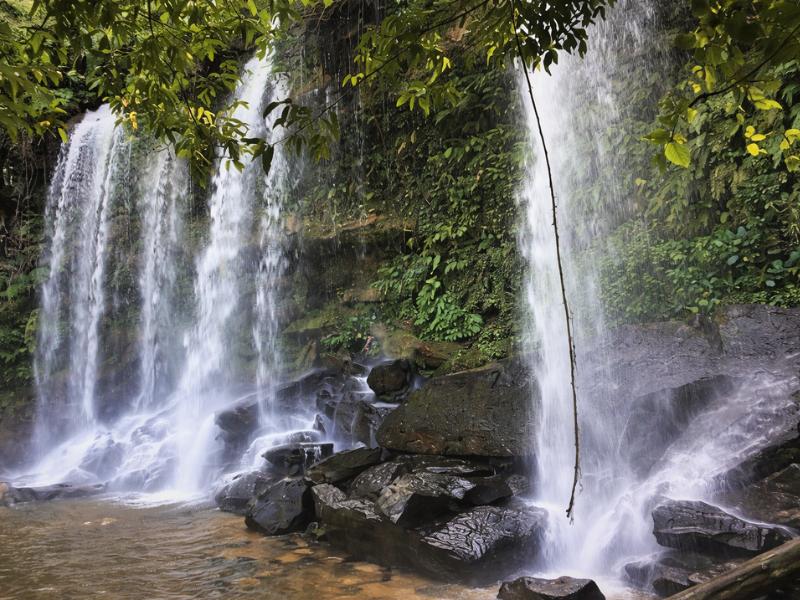
Everything inside the boundary is yours for the day once the gate lets you in. That covers the walk down to the falls, the streambed carvings upstream, the pagoda at Preah Ang Thom and the viewpoints along the plateau. What the twenty dollars does not do is get you there or back, feed you, or solve the logistics, and those are the parts that actually shape the day. The mountain sits well north of town, the access road has historically run one direction at a time, and there is no public bus. That gap between a cheap ticket and a not-so-simple journey is why so many people fold the two-tier waterfall and its swimming pool into a wider trip rather than turning up alone.
Access is genuinely open once you are inside: there is no second ticket at the falls, the streambed or the pagoda, and you can linger as long as the road window allows. What you will not find is much in the way of facilities. Expect basic toilets, a scatter of food and drink stalls near the falls, and little signage explaining what you are looking at, which is where a guide earns their keep. Bring your own water and a few snacks so you are not relying on the stalls, and pack modest cover for the pagoda, which is an active place of worship.
| Covered by the fee | Not covered |
|---|---|
| Park entry for the day | Round-trip transport from Siem Reap |
| The waterfall and swimming pool | A driver waiting while you explore |
| The River of a Thousand Lingas | A guide to the carvings and history |
| The reclining Buddha pagoda | Lunch or a picnic |
| Viewpoints across the plateau | Managing the one-way access window |
Where do you buy the ticket, and can you pre-book it?
You buy the standard ticket in cash at the checkpoint where the mountain road begins, roughly 50 km from Siem Reap. You can also pre-book a park entry pass online and have it delivered to your Siem Reap hotel the night before, and many guided Phnom Kulen tours bundle the fee, but you must check the exact option before booking.
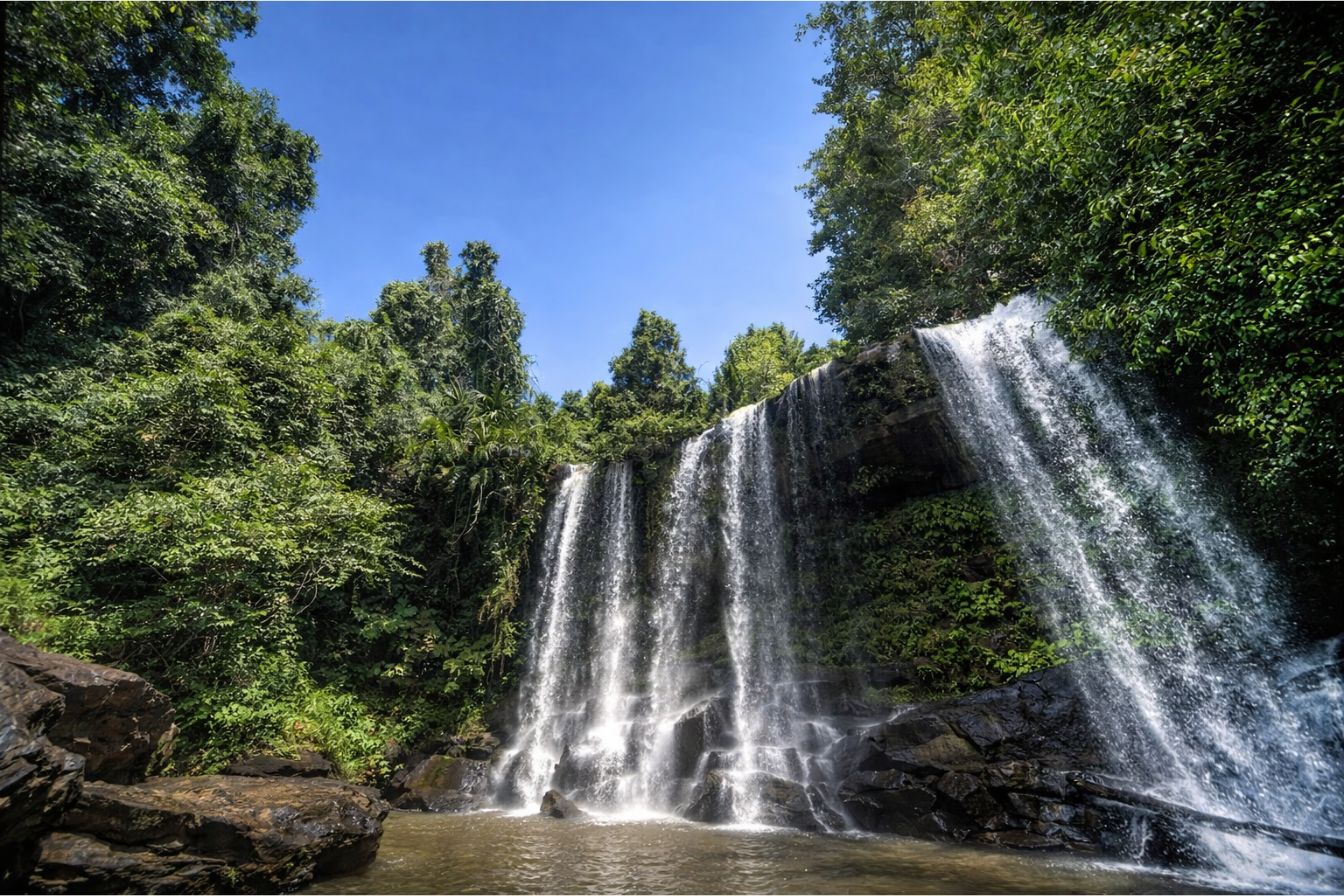
The gate is the default. A ranger checks the ticket as vehicles start the climb, and independent drivers stop there to pay. Pre-booking exists mostly for convenience: an operator sends the pass to your hotel, which suits early starts and travellers who want the cash sorted in advance. Our notes on getting to the mountain from Siem Reap cover the road detail, because the ticket only matters once you have solved the drive. If a fixed price with nothing to arrange sounds easier, a small-group day tour with lunch collects you at your hotel, pays the fee for you and handles the timing, which is the route most visitors end up taking.
The checkpoint itself is low-key: a barrier, a booth and a ranger who tears or scans the ticket as vehicles queue to start the climb. Independent travellers pay here in cash; pre-booked visitors simply show the pass their hotel handed over. Neither route needs your passport, and there is no timed entry slot to miss at the gate itself, the constraint is the road above it. If you like every loose end tied before an early start, the pre-booked pass removes the one cash errand from your morning.
Is the Angkor Pass valid at Phnom Kulen?
No. The Angkor Archaeological Park Pass does not work at Phnom Kulen, and the mountain is not part of the Angkor UNESCO World Heritage site. Phnom Kulen National Park runs its own admission and its own US$20 gate fee, so you pay it whether or not you already hold a one, three or seven-day Angkor ticket.
This trips people up because both sit near Siem Reap and both are ancient Khmer landscapes, so it feels like one ticket should cover them. It does not. The Angkor pass admits you to Angkor Wat, Bayon, Ta Prohm and the temples inside that protected zone; Phnom Kulen keeps its own gate. Budget for the two separately, and do not let anyone tell you a temple pass gets you up the mountain. If you want the history behind why this hill matters so much to Cambodia, the mountain as the birthplace of the Khmer Empire is a story in its own right, and it is the reason the site is protected at all.
The confusion carries a real cost if you get it wrong: arrive expecting your Angkor ticket to cover the mountain and you will be paying the twenty dollars at the gate anyway, or turning around. Plan the two as separate lines in your budget from the start. It also helps to think of them as different kinds of place. Angkor is a ticketed archaeological park run for mass tourism; Phnom Kulen is a sacred mountain and a national park, quieter, wilder and managed on its own terms.
| Phnom Kulen park ticket | Angkor Park Pass | |
|---|---|---|
| Admits you to | Phnom Kulen National Park | The Angkor temple complex |
| Price | Around US$20 per person | Sold separately by duration |
| Covers the other site? | No | No |
| Where bought | The mountain gate or pre-booked | Angkor ticket office in Siem Reap |
How does paying at the gate compare with a guided tour?
Paying at the gate looks cheapest until you add the transport. The fee is $20 a head, but you still need a car and driver for a 50 km run each way plus a long wait. A small-group day tour is around $48 and already includes the ticket, hotel pickup, lunch and the one-way timing, so the real gap is smaller than it first seems.
Do the arithmetic honestly. On your own you pay the twenty dollar fee, then hire a private car or remork for a half-day-plus that keeps a driver parked at the mountain for hours; split between two people the transport alone often rivals the tour price, and you still organise lunch and the road window yourself. A shared tour spreads the vehicle cost across the group and folds everything into one number. Prices move, so check the live listing before you count on any figure. If you want to see more than the mountain, pairing Kulen with Banteay Srei temple runs a little higher and adds the pink-sandstone carvings on the same day.
Here is a worked example. Two travellers pay forty dollars in fees between them, then hire a private car and driver for a day that runs eight hours or more with long waits at the mountain; that vehicle is comfortably the biggest number on the day. The same two on a shared small-group tour pay one per-person price that already contains the ticket, the ride, lunch and the timing, and the vehicle cost is split across the whole group. Once you price the transport honestly, the gap between doing it yourself and booking a seat narrows to very little, and the tour buys back a lot of hassle.
| Option | Approx. price | Fee included? | What you get |
|---|---|---|---|
| Pre-booked park entry pass | Around $19 | Yes | Admission only, delivered to your hotel |
| Small-group day tour with lunch | Around $48 | Yes | Pickup, ticket, guide, lunch, timing handled |
| Kulen plus Banteay Srei full day | Around $52 | Yes | Two sites, ticket and transport in one booking |
| Pay at the gate alone | Guided day tour | |
|---|---|---|
| Ticket | $20 cash, arranged by you | Included in the price |
| Transport | Your own car and driver, waiting | Hotel pickup and return |
| One-way road timing | Your problem to plan | Handled for you |
| Lunch and guiding | Bring or buy your own | Usually included |
Is the $20 fee worth it?
For most people, yes, but with a caveat. Some recent visitors feel $20 is steep, mention litter in the busy areas and a thin waterfall in the dry months. The fee is easiest to justify in the green season, when the falls run full, and when a guided trip absorbs the timing and transport rather than leaving you to it.
We think the honest read matters more than a hard sell. The complaints are real and worth knowing before you go: the site can get crowded near the falls, some corners hold litter on peak weekends, and a March visit can find the second tier reduced to a trickle. The counterweight is timing. Come when water is running, arrive early, and the mountain delivers a swim, sacred carvings and a story that predates Angkor Wat. If you are still weighing it, our take on whether the mountain is worth the day lays out the case both ways, and the notes on when the waterfalls run fullest explain exactly which months reward the fee.
It also helps to know what twenty dollars is really paying for. This is not a manicured attraction with polished paths and interpretation boards; it is a living sacred mountain that happens to have a swimming hole, and the fee goes toward running a protected park rather than a theme park. Read it that way and the rough edges annoy less. Come for the carvings, the story and a swim when the water is right, and the fee reads as fair for a full day out of Siem Reap.
What are the opening hours and the one-way road rule?
The park opens around 8 AM. The single mountain access road has historically run one way on a timed pattern, up in the morning and down after midday, so you cannot simply drive up whenever you like. The exact window can change, so confirm it locally, or let an operator handle the timing as part of the booking.
This one rule shapes the whole day. Because traffic is released uphill early and downhill later, a late start can mean missing the morning climb entirely, and a slow lunch can leave you waiting for the descent to reopen. Rangers and operators know the current schedule, which is why a guided trip is worth its price here as much as anywhere: the driver simply times it. Our complete Phnom Kulen park guide keeps the current hours and road notes in one place, so you are not relying on a stray forum post from three years ago.
Plan your day backwards from the descent, not forwards from breakfast. If the road reopens downhill after midday, you want to be up top, fed and swum before then, which again argues for an early pickup. The window has shifted over the years and can change with conditions or the season, so the current times are worth confirming the day before rather than assuming last year's schedule. This is the single logistic that turns a relaxed day into a rushed one, and it is exactly the sort of thing a driver handles without you thinking about it.
What else should you budget for beyond the ticket?
Beyond the twenty dollar ticket, budget mainly for transport, which is your largest and most variable cost, plus a little for lunch, water and small tips. On a guided tour those extras mostly disappear into one price; going independently, the car and driver dominate the day's spend and everything else is minor by comparison.
The fee is fixed and small, so it rarely decides anything. The number that moves is how you reach the mountain and back, a fifty-kilometre run each way with hours of waiting in between. Everything else, a plate of Khmer food near the falls, bottled water, a tip for a good guide or driver, sits in the small-change column. That is why experienced visitors think in terms of the whole day rather than the gate: solve the transport well and the rest looks after itself.
The shape of the trip decides the total. A solo traveller pays the fee once but carries the full transport cost, so a shared tour is usually the better value. A couple or a small group can split a private car and come out closer to the tour price, then choose privacy over savings. Families should remember the fee stacks per head. Whichever way you go, carry more small dollars than you think you need, because change on the mountain is limited and card payment is not an option.
One last piece of budgeting advice: build in a little slack. The mountain rewards a slow morning, a proper swim and a lunch without a clock, and the one-way road can add waiting time you did not plan for. If you have squeezed the day to the last dollar and the last minute, a delayed descent or a longer stop turns into stress. Leave room, carry spare small dollars, and the twenty dollar fee will be the least memorable number of the whole trip.
| Line item | Rough size | Included on a tour? |
|---|---|---|
| Park entrance fee | Fixed, US$20 per person | Yes |
| Transport from Siem Reap | Largest, and variable | Yes |
| Lunch | Small | Usually |
| Water and snacks | Small | Sometimes |
| Tips for guide or driver | Optional | At your discretion |