The River of a Thousand Lingas and the Reclining Buddha
Hundreds of Shiva symbols cut into a jungle streambed, and a reclining Buddha carved from one boulder at the summit. What the carvings mean and how to see them well.
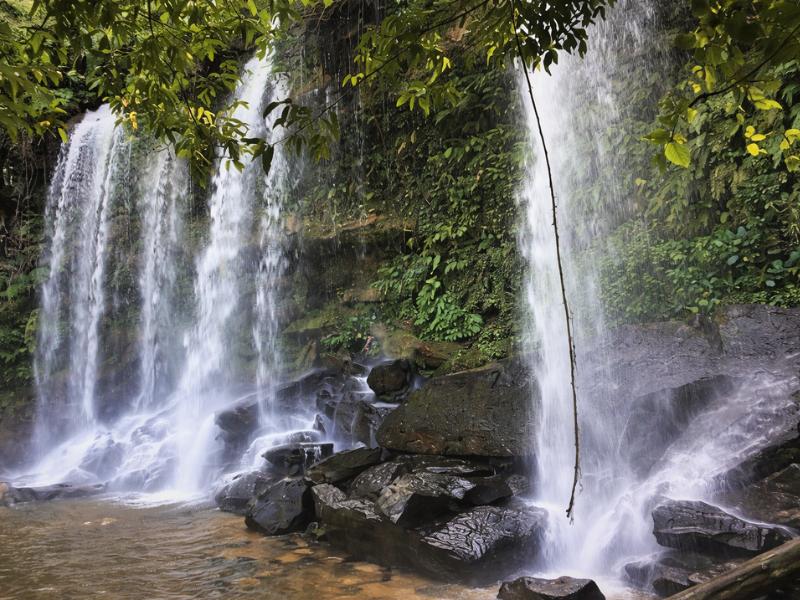
The carvings, the Buddha and the Khmer timeline
Carving meanings and the 16th-century Buddha follow the site's descriptions and Wikipedia; the dates trace the Khmer founding on the mountain.
Planning takeaway: Understand the lingas and reclining Buddha with a guide or choose separate Kbal Spean.
What is the River of a Thousand Lingas?
The River of a Thousand Lingas is a stretch of sacred streambed on Phnom Kulen where the sandstone riverbed is carved with hundreds of lingas, the symbol of the Hindu god Shiva, alongside images of other deities. Water runs over the carvings and is believed to be blessed as it flows down to the plains below.
Choose the kind of mountain day first, then compare current inclusions and the time you have.
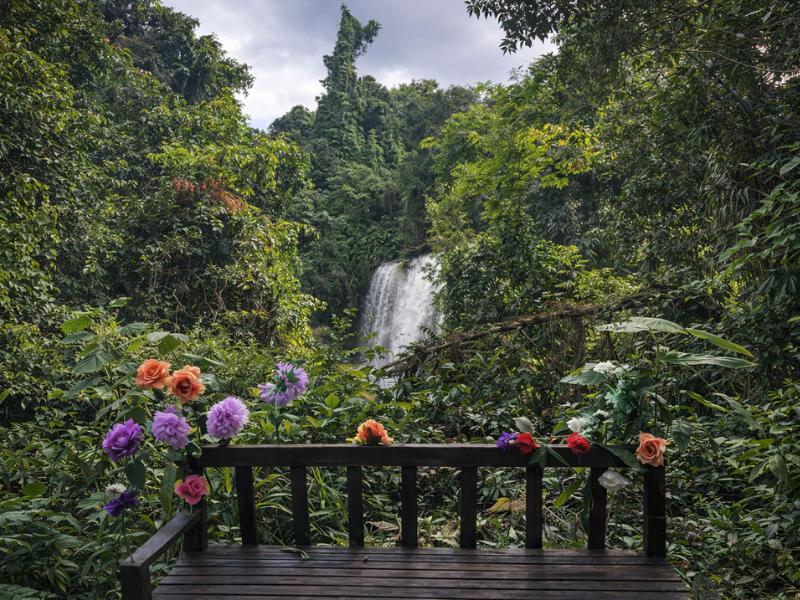
It is one of the most atmospheric sights on the mountain, and one of the easiest to walk past without understanding. The carvings sit in the bed of the Kulen stream, distinct from Kbal Spean, worn smooth by centuries of water, so you are looking down into the river rather than up at a monument. Come knowing what they are and the site opens up. Compare the options side by side with Phnom Kulen Tours before you go.
The lingas share the plateau with the mountain's other treasures, so almost every visitor pairs them with the waterfall and the pagoda. For the quick, plain-language version of the story, see what the carved lingas mean, and for the whole mountain, the complete national park guide.
What do the carvings actually mean?
A linga is a rounded pillar that represents Shiva, usually rising from a square base called a yoni, together symbolising creation and divine energy. The riverbed also carries carved images of Vishnu, Brahma and other figures. By channelling water over these forms, the site was meant to sanctify the river feeding the rice plains of Angkor.
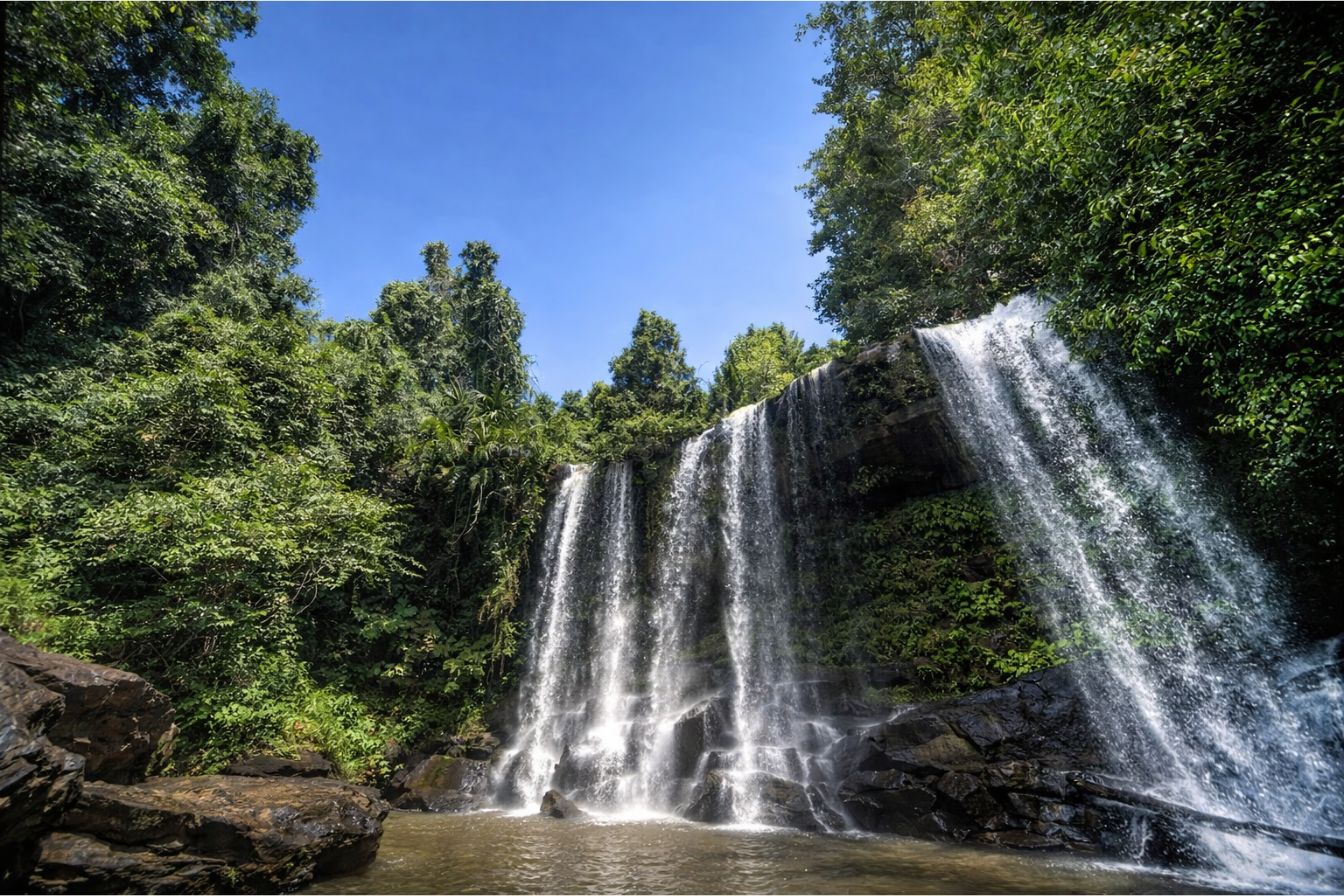
Once you can read the grid, the pattern is everywhere: neat rows of rounded knobs set into square frames, cut straight into the rock floor. Some panels show reclining deities and mythological scenes rather than lingas. It is devotional engineering, art made to do a job, blessing the water itself.
| Carving | What it represents | How to spot it |
|---|---|---|
| Linga and yoni | Shiva, creative energy | Rounded knob in a square frame, in rows |
| Deity panels | Vishnu, Brahma and others | Figures carved into flatter rock faces |
| Reclining figures | Mythological scenes | Larger relief carvings beside the flow |
A guide makes a real difference here, because the carvings are subtle and easy to miss under moving water. If you want a knowledgeable walk-through, the guided Kulen rainforest trekking itinerary is built around exactly this site.
What is the Reclining Buddha at Preah Ang Thom?
Preah Ang Thom is the hilltop pagoda at the top of the mountain, reached by a staircase, and its centrepiece is a large reclining Buddha carved from a single sandstone boulder in the 16th century. It is one of the largest reclining Buddhas in Cambodia and remains an active place of pilgrimage for Cambodian Buddhists.
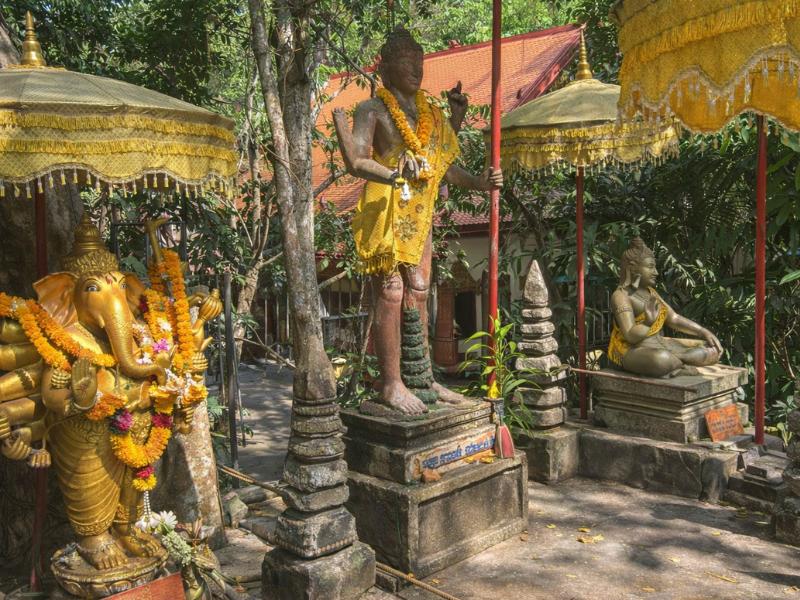
The climb to the shrine is part of the experience, past incense sellers and prayer stalls to the sheltered figure at the summit. Because it is a working temple, dress modestly, cover shoulders and knees, and follow the lead of the worshippers around you. Weekends and holy days bring Cambodian families up in numbers.
The Buddha and the lingas together capture what makes the mountain unusual: a single hill holy to both Hindus and Buddhists, with carvings from very different centuries sharing the same sacred ground.
How do the lingas connect to the Khmer Empire?
Phnom Kulen is where the Khmer Empire began. In 802 CE, King Jayavarman II proclaimed himself universal monarch here and declared independence from Java. The mountain held an early capital, Mahendraparvata, and its river carvings were part of a sacred landscape that fed and blessed the rice plains where Angkor would later rise.
That is why the riverbed is not just decorative. Sanctifying the water was an act of kingship and religion at once, tying the new capital to divine favour. The lidar surveys of 2012 and 2013 that mapped Mahendraparvata beneath the forest confirmed just how substantial that early city was.
The whole arc, from Jayavarman II to the lost city and on to Angkor, is told in the birthplace of the Khmer Empire. If you want the short answer to the obvious question, see why the mountain matters to Khmer history.
When is the best time to see the carvings?
The carvings are visible year-round, but they read differently by season. In the green season, roughly June to November, water runs clear over the lingas and the site feels alive, though the current can hide some detail. In the dry season the flow thins, exposing more carving but with less of the sacred running water that gives the place its point.
There is a genuine trade-off here that catches people out. Come for the atmosphere of blessed water flowing over the stone, and the wetter months deliver. Come to photograph the carvings clearly, and lower dry-season water can help. Neither is the wrong choice, so pick by what you want to take home.
| Season | Water over the carvings | Best for |
|---|---|---|
| Green, Jun to Nov | Full, clear, flowing | Atmosphere, the sacred river feel |
| Dry, Dec to May | Thin, more stone exposed | Seeing carving detail up close |
Either way, morning light through the canopy is kindest for photos. The month-by-month picture across the whole mountain is in the best months to visit the mountain.
How do you reach the lingas and the pagoda?
The carvings and the pagoda sit up on the plateau, reached by the same one-way mountain road that closes to uphill traffic around 11:30 AM. Most visitors arrive by tour or private car, then walk short forest paths and a staircase between the stops. A trekking option adds an uphill hike to the sacred sites for those who want to earn the view.
The walking between sights is gentle, but the sacred riverbed and the pagoda climb both involve steps and uneven stone, so decent footwear helps. Because of the road cutoff, the timing is the real planning point, and a guided trip removes that worry entirely.
For the full transport picture see getting there from Siem Reap, and if you would rather hike in, the trekking and hiking guide covers the routes and effort involved.
Is the River of a Thousand Lingas worth visiting?
Yes, if you come knowing what you are looking at. Visitors expecting a dramatic monument can find the carvings underwhelming, since they lie flat in the streambed and hide under flowing water. Arrive with context, or a guide, and the site becomes one of the most meaningful stops on the mountain rather than a quick photo.
This is the honest catch. The lingas do not announce themselves the way a temple tower does. Their power is in the idea, water made holy on its way to feed an empire, and in the quiet of standing over ancient stone in the forest. That reward depends almost entirely on preparation.
Paired with the reclining Buddha and the waterfall, the carvings round out a day that balances swim, scenery and deep history. On the fence about the whole mountain? See whether the trip is worth it.
Do you need a guide to appreciate the carvings?
You do not strictly need one, but the carvings reward a guide more than almost any other stop on the mountain. Left alone, most visitors see wet rock and move on. The guides we work with point out the linga-and-yoni pattern, the deity panels and the meaning of the blessed water, which is the whole reason the site exists.
The carvings are deliberately subtle, worn smooth and often half-hidden under flowing water, so the difference between a shrug and a genuine moment usually comes down to context. That context can come from reading ahead, from a good guide on the day, or ideally both. Our team consistently sees that the travellers who enjoy the lingas most are the ones who arrived knowing what they were looking at.
If you are visiting independently, spend ten minutes before you go learning the linga-and-yoni form and the idea of sanctified water, and you will read the riverbed far better. If you would rather have it explained on the spot, a private trip built around the site gives you the time to linger and ask.
Either way, the payoff is the same: a flat stretch of carved stone turns into a window on how the early Khmer tied kingship, religion and the very water of the land together.
What is the wider sacred-river landscape here?
The carvings sit in the bed of the Kulen river, separate from the Kbal Spean carved-river site. The idea was simple and powerful: water passing over hundreds of lingas and deities would be sanctified before it flowed down to the rice plains that fed the early empire. The riverbed is one piece of a whole sacred hydrology.
Seen this way, the site is not an isolated curiosity but part of how the Khmer read their landscape. The mountain gathered rain, the river carried it, and the carvings blessed it on the journey. That water reached the plains where the capital, and later Angkor, would depend on a controlled flow for their fields and reservoirs.
It also explains why the carvings run along the streambed rather than standing as a single monument. They were made to be in the water, working with it. That is the mental shift that turns a flat, easy-to-miss stretch of rock into one of the more thoughtful stops on the mountain, and it is why understanding it in advance pays off.
What else will you see around the carvings?
Around the main carved stretch you will find small forest shrines, offering stalls near the pagoda staircase, and a pool that local guides sometimes call the seven-color pool for the way light plays on it. Short, shaded paths link the stops, and the walk itself, dappled and cool, is part of the appeal.
The seven-color pool is local lore rather than a scientific claim, so take it in that spirit; it is a pretty spot the guides like to point out. The shrines and offering points remind you the whole area is actively venerated, not a museum. Keep voices low and follow the lead of anyone at prayer.
| Nearby feature | What it is | Worth knowing |
|---|---|---|
| Forest shrines | Small active places of worship | Dress modestly, stay quiet |
| Seven-color pool | A pool local guides point out | Local lore, not a formal claim |
| Pagoda staircase stalls | Offerings, incense, snacks | Cash helps, small notes |
Pair the carvings with a swim and you have a full day; see the two-tier waterfall in detail for how the falls fit alongside. If you are budgeting time, how long you need at the mountain helps you plan.
How is this different from visiting Angkor's temples?
Angkor overwhelms with scale and stone; Phnom Kulen rewards attention and context. There are no towering galleries here, no crowds funnelling through a single monument. Instead you get quiet carvings in a streambed, a hilltop shrine, and forest. Many travellers find the two experiences complement each other rather than compete.
If Angkor is the empire at its height, the mountain is where it began, smaller, older, more intimate. That contrast is exactly why some visitors love pairing them across a trip, and why others feel let down when they expect a second Angkor and find something gentler. Set the right expectation and the mountain shines.
| Aspect | Angkor temples | Phnom Kulen carvings |
|---|---|---|
| Scale | Vast stone monuments | Intimate riverbed carvings |
| Crowds | Heavy at the headline sites | Lighter, spread out |
| The draw | Architecture and grandeur | History, meaning, forest calm |
On fitting both into one itinerary, see visiting Phnom Kulen and Angkor Wat on the same trip, which explains why they usually deserve separate days.
Which tour best covers the lingas and Buddha?
For the carvings and the pagoda together, a private historical or trekking tour gives you the time and the commentary the site needs. A combined waterfall and lingas tour folds the swim in for around $48, while a private historical wonders trip, around $99, adds pace and depth. Check the live listing for current prices.
The lingas reward a knowledgeable guide more than almost any other stop, which nudges the value toward the private and specialist options if history is your reason for coming. If you want the swim as well as the carvings, the combined group tour keeps the day affordable.
| Tour | From | Best for |
|---|---|---|
| Uphill lingas trekking, private | around $82 | Carvings, history, a hike to the sites |
| Waterfall and sacred lingas | around $48 | Carvings plus the swim, good value |
| Waterfall and historical wonders, private | around $99 | Depth, private pace, wider sights |
Prices move with season and demand, so treat these as starting points and confirm on the live listing before you book.