Is Phnom Kulen Worth It?
The honest answer depends on what you came for and when you go. Phnom Kulen rewards travellers who want sacred history, a jungle swim and a slower day away from the Angkor crowds, and it disappoints anyone expecting a thundering waterfall in the dry months.
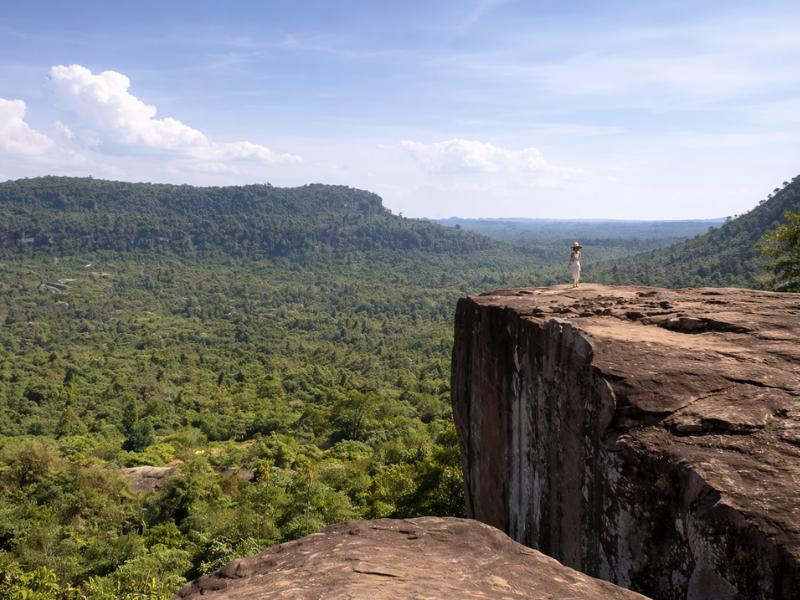
Worth it, or not: the quick read
A rule of thumb from what travellers report, not a promise. The season and your pace decide most of it.
Planning takeaway: Decide whether a full mountain day earns its cost compared with other outings.
Is Phnom Kulen worth visiting?
Phnom Kulen is worth it if you value a jungle swim, sacred history and a slower day away from the Angkor crowds. It underwhelms anyone expecting a thundering waterfall in the dry months or a polished, litter free attraction. Time it for the green season, give it a full day, and the US$20 earns its place.
Choose the kind of mountain day first, then compare current inclusions and the time you have.
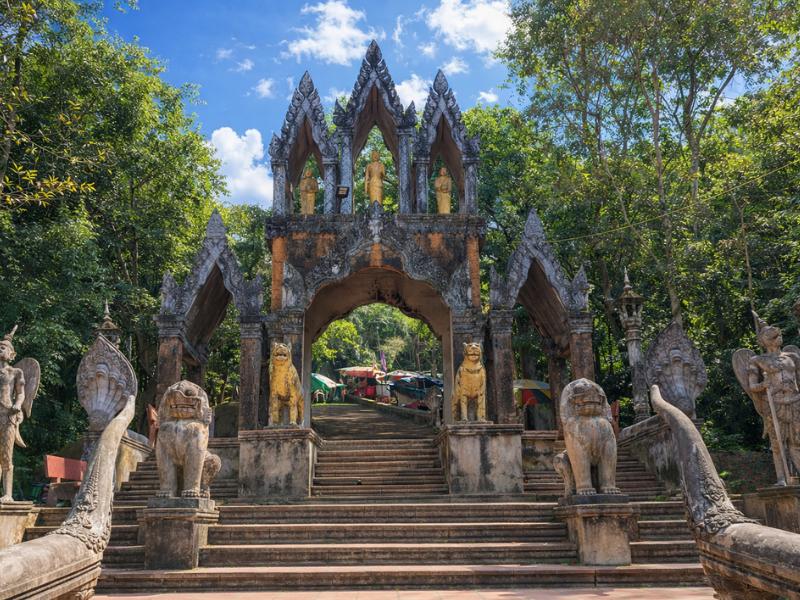
The honest picture, and the one you will read in traveller forums, is mixed. Some visitors arrive in March or April, find the waterfall reduced to a modest curtain, notice litter near the busy picnic areas, and leave feeling the entrance fee was too much for what they saw. Others come after the rains, swim under a full cascade, walk the carved riverbed and the hilltop pagoda, and rate it one of their favourite days near Siem Reap. Both reactions are real. The mountain does not disappoint or deliver in the abstract; it turns on the season, your pace, and whether the day is planned or improvised. We match you to the right trip at Phnom Kulen Tours.
What tips it toward worth it is the variety packed into one ticket. In a single visit you get a two-tier waterfall with a swimming pool, an ancient carved streambed, one of Cambodia's largest reclining Buddhas, and a mountain that Khmer people still treat as holy. If your only yardstick is the height of the falls, you may shrug. If you want a change of texture after days of temple-walking, it holds up. Sorting out whether you can swim in the falls on your dates settles a lot of the debate before you commit.
What do you get for the US$20 entrance fee?
The US$20 buys entry to the whole national park, not a single sight. Inside you can reach the two-tier waterfall and its pool, the River of a Thousand Lingas carved into the streambed, the reclining Buddha at Preah Ang Thom, and the plateau that once held an early Khmer capital. The fee is separate from the Angkor Pass and paid at the gate.
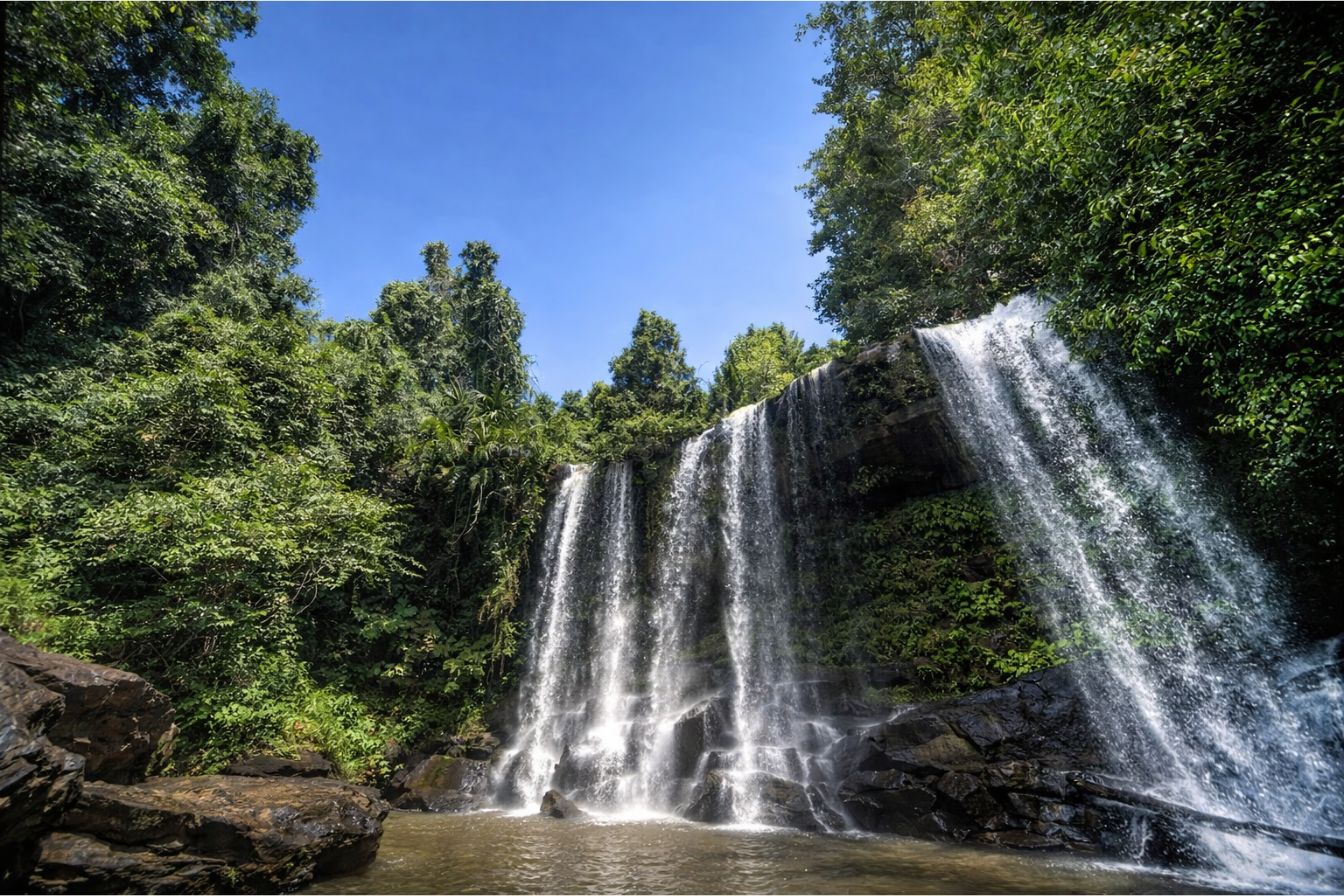
People often assume the mountain sits under the Angkor ticket. It does not, so a day here does not use up an Angkor day. For the money you are buying access to a spread-out park rather than one attraction, which is exactly why a quick drop-in feels thin and a full day feels fair. Here is what the fee actually unlocks.
| What the US$20 unlocks | What you actually get |
|---|---|
| Two-tier waterfall and pool | A short upper cascade and a taller lower fall dropping into a swimmable pool |
| River of a Thousand Lingas | A sandstone streambed carved with Shiva lingas and Hindu figures, a short walk above the falls |
| Preah Ang Thom | A hilltop pagoda with one of Cambodia's largest reclining Buddhas, carved from a single boulder |
| The sacred plateau | Long views and the ground where the lost city of Mahendraparvata once stood |
| Srah Damrei | Life-size stone elephants and animals, remote and deep in the park for those who seek them out |
The value question is really a time question. Visitors who give the mountain six or seven hours, swim, see the carvings and the Buddha and eat a picnic lunch tend to feel the fee was reasonable. Those who spend ninety minutes at a low waterfall do not. Our guide to the two-tier waterfall and its swimming pool shows what each tier looks like across the year, and the park entrance fee and ticket details explain how and where you pay.
Who is Phnom Kulen right for, and who should skip it?
It suits swimmers, history lovers and anyone craving jungle over stone after the temples. It is a poor fit for travellers on a tight clock, those who want a manicured attraction, or anyone whose whole hope rests on a big dry-season waterfall. Matching the mountain to your travel style matters more than the fee.
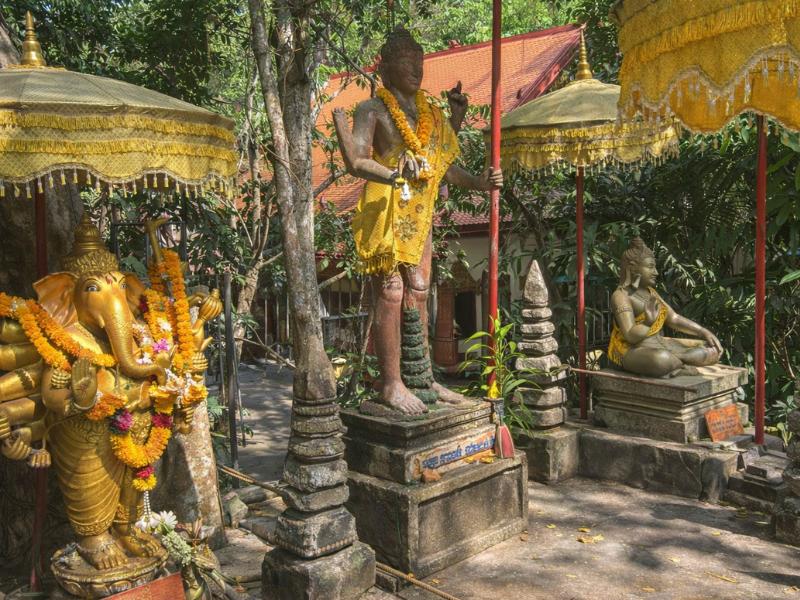
The split is less about budget than about expectation. The table below lines up the two camps so you can place yourself before you book.
| Worth the trip if | Consider skipping if |
|---|---|
| You want to swim under a waterfall in the jungle | You only have a half day and a packed Angkor plan |
| Sacred sites and old carvings interest you | You expect a tall, roaring fall in February to May |
| You are travelling in the green season | Tidy, litter free sightseeing is important to you |
| You are happy to give it a full, slow day | A long, winding mountain road puts you off |
| You are a group splitting the transport cost | You are comparing it head to head with Angkor Wat |
Families with children who like water tend to love it, since the pool is a rare place to cool off near Siem Reap. Solo travellers on a temple marathon are the ones most likely to feel the day was a detour. Neither is wrong; they simply want different things from the same US$20.
Does the season decide whether it is worth it?
Largely, yes, because water is the variable that changes everything. In the green season, roughly June to November, both tiers run hard and the pool is deep and cool. From about February to May the flow drops, the pool warms, and the same fee buys a quieter show. The history and carvings hold up year round.
None of this makes the dry season a write-off. The reclining Buddha, the carved lingas and the plateau's story do not depend on rainfall, and the mountain road is firmer and easier when it is not muddy. As the river drops, more of the carved streambed sits above the surface, which some people actually prefer for seeing the lingas clearly. What shifts is the waterfall, and if the cascade is your main reason to come, the wetter months repay the effort. If you are still choosing dates, our notes on how the water flow changes by season weigh the trade in more detail.
How does it compare with other Siem Reap day trips?
Phnom Kulen is the nature-and-sacred option rather than the architecture one. Angkor is grand stone temples; Banteay Srei is fine pink-sandstone carving; Beng Mealea is a jungle-swallowed ruin; Tonle Sap is a vast lake and stilted villages. The mountain wins when you want a swim and a change of pace, not another temple.
Thinking of your days as a set rather than a ranking helps. Most travellers do Angkor first, then choose a contrasting day out; the mountain is a strong second or third day precisely because it is not more temples.
| Day trip | What it is | Best for |
|---|---|---|
| Phnom Kulen | Sacred mountain, waterfall and swim, carved riverbed, reclining Buddha | A break from temples, a jungle swim, quiet history |
| Angkor temples | The vast temple city, including Angkor Wat and the Bayon faces | The headline sight, grand architecture and sunrise |
| Banteay Srei | A small, exquisitely carved pink-sandstone temple north of Angkor | Detail lovers; often paired with the mountain in one day |
| Beng Mealea | A large, ruined temple half-reclaimed by jungle and roots | Atmosphere and adventure over polished restoration |
| Tonle Sap | Southeast Asia's largest freshwater lake and its floating villages | Water life and a different side of the region |
Several of these pair naturally with the mountain. A day that adds Banteay Srei temple with the park ticket gives you fine carving and a swim together, while a wider loop can fold in Beng Mealea or the lake. That is often the smartest way to make the drive pay: stack a second sight onto the same long day out. Bundling also changes the value calculation. The US$20 mountain fee is far easier to justify when the drive already earns its keep with a temple or a lake attached, which is why travellers who combine sights rarely grumble about the ticket the way a single-stop visitor sometimes does.
What separates a great visit from a disappointing one?
Timing and pace, more than luck. The happy visitors arrive early, cover the falls, the carvings and the Buddha without rushing, and go in a wetter month. The let-down visitors get dropped at a low waterfall for an hour in the dry season, meet weekend litter and crowds, and feel the fee was steep. The mountain rewards a proper day.
Two honest snags come up again and again. First, litter: the busy picnic zones near the lower falls can look scruffy on Khmer weekends and holidays when local families come out in force, so a weekday visit is calmer and cleaner. Second, the access road: the mountain route has historically run one way, up in the morning and down after midday, so an improvised late start can leave you fighting the timing. Reach the gate near opening, around 8am, and the day flows in the direction the road wants to go. Going early also lands you at the pool before the tour buses, which is the difference between a serene swim and a busy one.
A third mismatch is simpler: expectation. Travellers who arrive picturing a giant wet-season torrent, and who come in April, are comparing the real mountain to a photo taken in October. Set the picture by the calendar and the same visit reads as a pleasant surprise rather than a let-down. The people who leave happiest tend to treat the waterfall as one course in a bigger meal, alongside the swim, the carvings, the Buddha and the long green views, rather than the single dish they drove two hours for. Manage those three things, timing, tidiness and expectation, and the disappointing visit mostly disappears.
How do you make the US$20 pay off?
Start early, plan the route, and let someone handle the timing. A full day that reaches the gate near 8am, clears the one-way road in the morning window, and covers the falls, the carvings and the Buddha turns the fee into a small line in a good day out. An improvised drop-and-wait is what makes people feel shortchanged.
The travellers who feel let down usually paid a driver to park them at the lower falls for an hour. The ones who rate it highly gave the mountain a real day. A small-group tour with a picnic lunch keeps the cost sensible while handling the one-way road and the ticket, and a fuller Kulen waterfall and sacred-sites picnic tour adds the carved riverbed so you see well beyond the falls. If you would rather build the day yourself, our full Phnom Kulen day-trip itinerary lays out a sensible order, and if you are short on days, weigh fitting the mountain around Angkor Wat before you commit. Handled well, the fee stops being the story and becomes the least memorable part of the day.