Best Time to Visit Phnom Kulen: Season, Weather and Water (2026)
Water is the whole story of when to visit Phnom Kulen, and it runs opposite to what sun-chasers expect. The green season fills the falls; the dry season empties them.
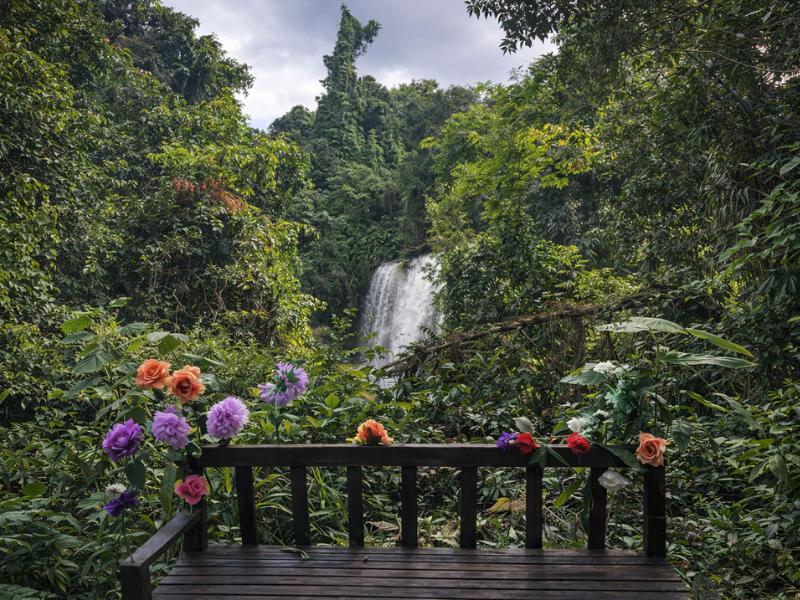
Stand under the Phnom Kulen waterfall in late September and it thunders. Stand on the same rock in March and it can be a thin curtain over warm stone. The mountain is beautiful year round, but the one thing people travel for, the falls and the pool beneath them, tracks the rain almost exactly. That makes the best time to visit a genuine trade-off rather than a single right answer, and it is worth getting straight before you book. See how the tours line up at Phnom Kulen Tours.
Phnom Kulen waterfall flow, season by season
A planning snapshot of relative water volume; conditions shift year to year, so treat the shape as a guide rather than a promise.
Planning takeaway: Choose a seasonal activity priority without guaranteeing waterfall flow or swimming.
When is the best time to visit Phnom Kulen?
For the fullest waterfall, come in the green season, roughly June to November, when monsoon rain swells both tiers and the swimming pool. For the most comfortable weather and firmest roads, come in the dry season, December to February, and accept a thinner flow. The sacred carvings, the pagoda and the views hold up all year.
Choose the kind of mountain day first, then compare current inclusions and the time you have.
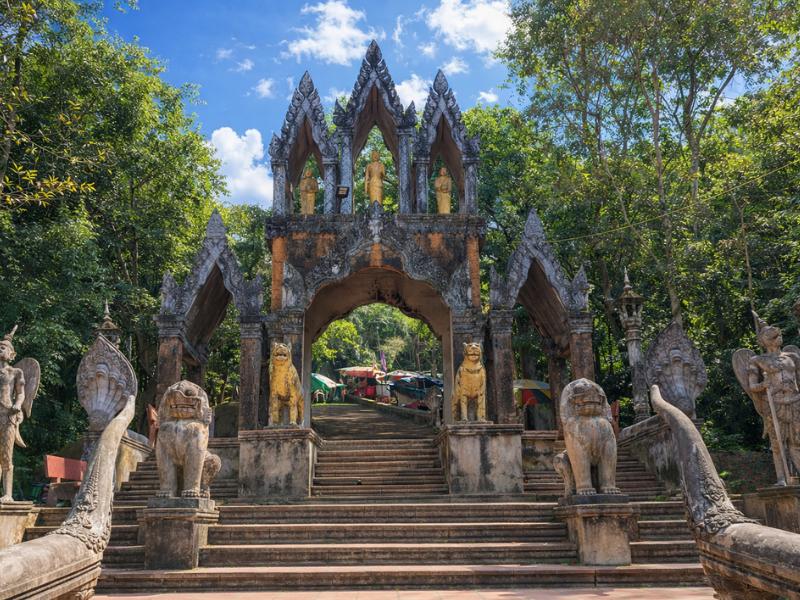
Most travellers arrive in the cool dry months because that is Cambodia's headline high season, and they are surprised to find the falls modest. The mountain reverses the usual logic: the wettest, greenest, least fashionable months are when the water is at its best. If your heart is set on the classic photograph of a wall of water dropping into a jade pool, the shoulder of the wet season delivers it, and the two-tier Phnom Kulen waterfall is the reason to time it that way.
If your priority is a dry, easy day of sightseeing and cooler air, the dry season still gives you the carvings, the reclining Buddha and the drive, just with a quieter set of falls. Neither season is wrong; they simply serve different visits. The trick is to be clear with yourself about what you are coming for, because a green-season traveller chasing sun and a dry-season traveller chasing a torrent will both leave disappointed for the same reason: they picked the wrong month for their goal.
Cambodians call the wet months the green season for good reason, and the name fits the mountain: the forest thickens, the streambed runs, and the whole plateau looks lush rather than parched. Foreign visitors often skip it on the assumption that rain ruins a trip, yet the showers are usually brief and the payoff, full falls and few crowds, is exactly what many travellers say they wanted once they see it. It is the contrarian pick that quietly outperforms the postcard-weather months.
| Green season (about Jun to Nov) | Dry season (about Dec to Apr) | |
|---|---|---|
| Waterfall | Full, loud, both tiers running | Thinner, sometimes a trickle by March |
| Weather | Warm, humid, short heavy showers | Drier, cooler at the start, hot by April |
| Trails and roads | Lush but muddy and slippery | Firm and easy underfoot |
| Best for | The falls and swimming | Comfort, photography of sites, sightseeing |
What is the weather like month by month?
Phnom Kulen shares Cambodia's tropical monsoon pattern: a wet season from about May to October and a dry season from about November to April, with the hottest, stickiest stretch falling in March and April. The mountain's greenery and modest height make it feel a touch fresher than the plains, but expect heat and humidity whenever you go.
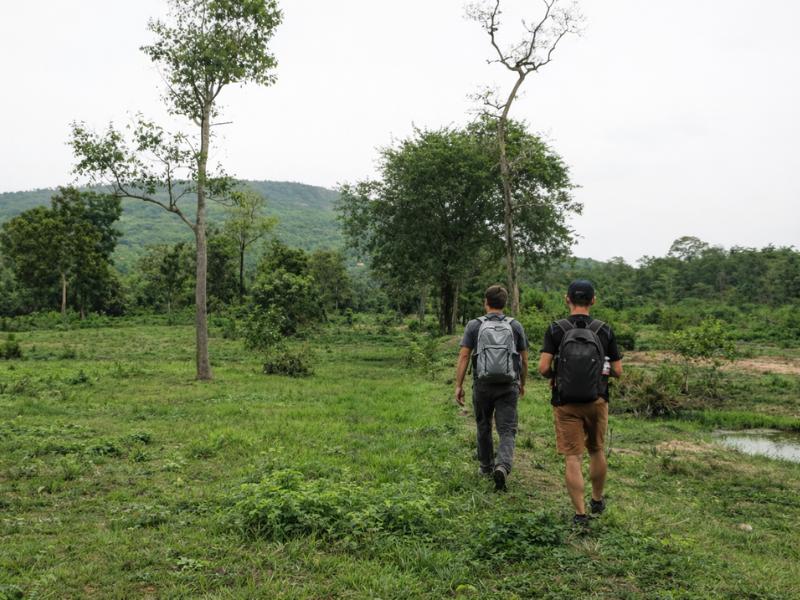
Rain in the wet season usually arrives as a short, hard afternoon downpour rather than all-day drizzle, so mornings often stay usable even in August. The early dry months, November through January, bring the most comfortable air of the year, warm days and cooler evenings. Then the heat builds: by April the plains bake, and the falls have run down to their lowest before the rains return.
The scorecard below rates each month on the things that actually decide a visit, kept as planning guidance rather than precise measurement, because water and weather both shift year to year. Read it as a shape, not a forecast. A late-starting monsoon can push the fullest falls a few weeks later than the table suggests, and an early one can bring them forward, so treat the boundaries as soft.
Whatever the month, dress for humidity rather than for a dry heat. The air holds moisture, sweat does not evaporate quickly, and a light, loose, quick-dry top is far more comfortable than cotton that clings. Mornings on the plateau can feel pleasantly fresh next to the plains below, then the middle of the day turns sticky, especially in the build-up to the rains through April and May. None of this should put you off; it simply rewards packing for the tropics and pacing the day so the hottest hours are spent in shade or in the pool.
| Month | Season | Waterfall flow | Swimming | Crowds |
|---|---|---|---|---|
| January | Dry | Moderate | Calm, shallow | Busy |
| February | Dry | Low to moderate | Shallow | Busy |
| March | Dry, hot | Low | Shallow, warm | Moderate |
| April | Dry, hottest | Lowest | Shallow | Local holiday spikes |
| May | Wet begins | Rising | Good | Quiet |
| June | Wet | Strong | Good | Quiet |
| July | Wet | Strong | Good, watch current | Quiet |
| August | Wet | Strong | Watch current | Quiet |
| September | Wet, peak rain | Peak | Caution, strong flow | Quiet |
| October | Wet | Peak to strong | Caution then good | Building |
| November | Dry begins | Strong to moderate | Good | Building |
| December | Dry, cool | Moderate | Good, cooler | Busy |
Green season or dry season: which is better for the waterfall?
Green season wins for the waterfall itself. From June to November the rain feeds both tiers, the pool fills, and the falls look like the photos that sell the trip. Dry season, especially February to April, can leave the second tier reduced to a trickle, which is behind a lot of the underwhelmed reviews people leave online.
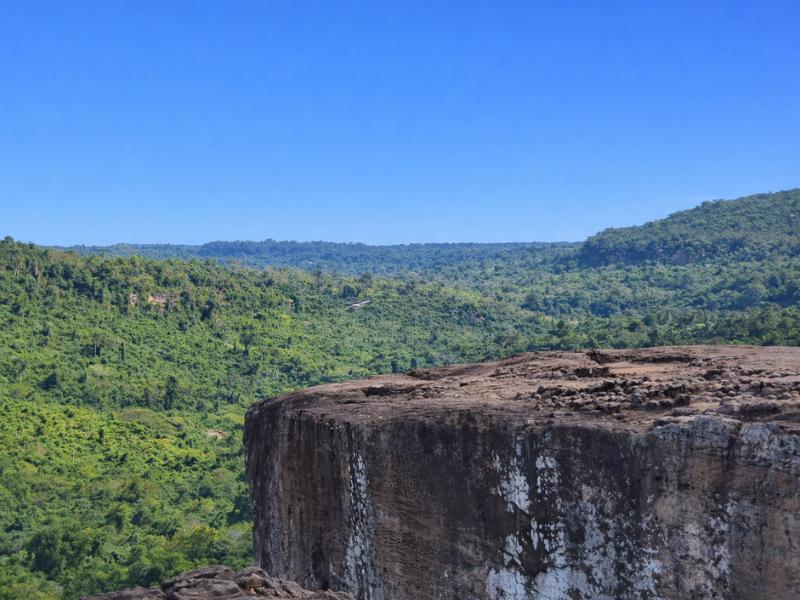
This is the single most useful thing to know before you pick a date. If you travel in the dry high season purely because it is the popular time, and you go for the waterfall, you risk disappointment, and that mismatch is exactly what some visitors report. The fix is not to avoid the mountain in the dry months, the carvings and pagoda are still there, but to set expectations: come for the sacred sites and the drive, not a torrent.
Come in the green season and the priority flips, water first, with lush jungle thrown in. The catch is mud, slippery rock and heavier showers, which is why the trade-off is real rather than one-sided. A green-season day tour that pairs the falls with the sacred sites, like Kulen waterfall and sacred-sites picnic tour, tends to be the sweet spot: full water, and a guide who reads the conditions and keeps you on the safe side of a swollen pool.
Picture the two visits side by side. In September you hear the falls before you see them, the pool is deep and dark, and the whole gorge feels alive with moving water and spray. In March you might find a modest flow over pale rock, pretty in its own quiet way but a long drive for a trickle if the waterfall was your whole reason to come. Knowing which of those you are booking is the difference between a great day and a flat one.
When is swimming best and safe?
Swimming is best in the shoulder months, roughly May to June and October to November, when the pool below the second tier is full but the current is not at its fiercest. At the peak of the rains, around September, strong flow can make the pool unsafe, and in the driest months the water drops shallow and warm.
The swimming pool sits under the taller second drop, and its character changes with the season more than anywhere else on the mountain. After heavy September rain the incoming water can be powerful, and that is the time to admire from the edge rather than plunge in. In the shoulder weeks the pool is generously full and the flow has eased, which is why regulars rate them the sweet spot. Whether you can get in at all on the day depends on conditions, and our answer on whether you can swim beneath the falls covers the safety cues to read before you do.
Pack swimwear whatever the month, because even in the dry season the pool holds enough water for a cooling dip after a hot walk. A trip built around the swim, such as the waterfall join-in tour with a picnic lunch, gives you time at the pool rather than a rushed ten minutes, and the guides know when the current is safe and when to keep everyone on the rocks. Never swim alone at peak flow, and watch children closely; the pool is natural, not a lifeguarded pool with a shallow end.
A few simple habits keep the swim safe. Watch what the water is doing before you get in: a strong push at the base of the second tier, floating debris, or a brown, churning pool all say wait. Enter where the guides enter, keep to the calmer edges rather than the plunge line, and get out if the flow picks up after upstream rain. The reward for a little caution is one of the best natural swims within reach of Siem Reap.
What time of day should you arrive?
Arrive as early as the park allows, around its 8 AM opening. Early means cooler air, softer light on the carvings, the pool before the crowds, and room to breathe at the falls before the tour vehicles arrive. It also fits the mountain's one-way road, which releases traffic uphill in the morning and downhill later.
Time of day matters here as much as season. By late morning in the dry high season the falls area fills with day groups, the heat climbs, and the light goes flat and harsh for photos. A first-thing arrival hands you the best of all of them at once. The one-way access pattern reinforces this: because you generally drive up in the morning and down after midday, an early start is not just nicer, it is how the road actually works.
There is a photographer's reason to be early too. The falls sit in a shaded gorge, and soft morning light reaches the water and the wet rock far more kindly than the flat glare of midday. The streambed carvings read better with a low sun raking across them, and the pool looks its clearest before dozens of swimmers stir it up. If pictures matter to you, treat the first hour after opening as the golden window and plan the rest of the day around it.
| Time of day | Crowds | Heat | Best for |
|---|---|---|---|
| Early morning (from 8 AM) | Thin | Coolest | The pool, quiet carvings, soft light |
| Late morning | Building fast | Rising | Fitting the uphill road window |
| Midday | Busiest | Hottest | Lunch, shade, the pagoda |
| Early afternoon | Thinning | Hot | The downhill drive back |
Which season suits your priority?
Pick by what you care about most. Want the fullest falls and the best swim? Aim for the green season shoulder, May to June or October to November. Want cool, dry, easy sightseeing? Go December to February. Want the fewest crowds? The wet middle, June to August, is quietest, if you can accept the rain and mud.
There is no month that maxes out every column, which is why matching the season to your reason for going beats chasing a single best time. The dry high season is the most comfortable and the most crowded; the wet season is the greenest, quietest and wettest; the shoulders split the difference and tend to give swimmers their favourite conditions. Once you have a target month, the practicalities follow, from how to reach Phnom Kulen from Siem Reap to the day itself.
If you can only travel at a fixed time and it does not match your priority, do not despair. Every season still offers the sacred carvings, the reclining Buddha and the drive through the countryside, and a dry-season trickle or a wet-season downpour is a small tax on an otherwise rich day out. Set your expectations to the calendar you actually have, and the mountain repays the visit whenever you come.
| Your priority | Best window | Why |
|---|---|---|
| Fullest waterfall | Sep to early Nov | Peak flow over both tiers |
| Best swimming | May to Jun, Oct to Nov | Full pool, current eased |
| Coolest, driest weather | Nov to Feb | Comfortable air, firm ground |
| Fewest crowds | Jun to Aug | Off-peak, quiet trails |
| Photography of sites | Nov to Jan | Green from the rains, clear light |
Who visits Phnom Kulen through the year, and when is it quietest?
Two crowds share the mountain. Foreign visitors peak in the cool dry season, November to February, alongside the wider Angkor high season. Cambodian pilgrims come year round to this sacred site, with noticeable spikes on weekends and public holidays. The quietest days are wet-season weekdays, June to August, when both crowds thin out.
It helps to remember Phnom Kulen is a place of worship as much as a tourist stop, so its busy days do not always match the tourist calendar. Cambodian families visit the pagoda and the pool on days off, which can fill the site on a wet-season Sunday that you might have expected to be empty. Public holidays, and the Khmer New Year period in April, draw more local visitors than usual. If solitude matters, aim for a weekday.
For foreign travellers, the practical takeaway is simple: the most comfortable weather and the biggest tourist crowds arrive together in the dry season, so start early to stay ahead of the tour vehicles. If you would rather have the timing and the crowd-beating handled, a guided small-group mountain tour aims for an early pickup that puts you at the falls before the day groups, whatever the season.
If your dates are flexible, a small shift can change the whole feel of the day. Swapping a weekend for a midweek visit thins the local crowd at the pool and pagoda; avoiding a public holiday does the same. When your dates are fixed and land on a busy day, the answer is the clock rather than the calendar: be first through the gate, see the falls and the carvings while they are quiet, and let the crowds arrive as you are moving on to lunch and the pagoda.
| Period | Who visits | How busy |
|---|---|---|
| Nov to Feb weekdays | Peak foreign season | Busy, comfortable weather |
| Weekends and public holidays | Local pilgrims and families | Busiest at the pool and pagoda |
| Jun to Aug weekdays | Fewest of both | Quietest, expect rain |
What should you pack for the season?
In the green season, bring a light rain shell, grippy shoes for slick rock, and quick-dry clothes; showers are heavy but brief. In the dry season, lead with sun protection and plenty of water, plus swimwear either way. Cash for the US$20 gate fee and modest cover for the pagoda apply all year round.
The mountain is a working sacred site as well as a swimming spot, so shoulders and knees covered at the pagoda is the year-round rule. Beyond that, the season sets the kit: wet months reward a packable poncho and footwear that holds on wet stone, while dry months are all about shade, a hat and water. Carry the US$20 park entrance fee in small dollars, since there is no card payment at the gate.
Our full list of what to wear and bring for the day covers footwear, modest dress and the small things people forget, like insect repellent for the damp trails and a dry bag for phones near the pool. If you would rather book a trip that already carries lunch and handles the logistics, a guided tour keeps the packing list short and the day simple.
| Item | Green season | Dry season |
|---|---|---|
| Rain shell or poncho | Essential | Optional |
| Grippy closed shoes | Essential for slick rock | Recommended |
| Sun hat and sunscreen | Useful | Essential |
| Water | Plenty | Plenty, more of it |
| Swimwear and dry bag | Yes | Yes |