Phnom Kulen Waterfall: Two Tiers, Swimming and Water Flow
A short upper drop, a taller lower fall, and a broad pool where people swim. How big the tiers really are, when the water is at its best, and how to plan the swim.
Waterfall tier heights and water flow through the year
Tier heights from the site's published descriptions; the monthly flow curve reflects the green and dry season pattern the operators report.
Planning takeaway: Reach the waterfall with a useful full-day plan, keeping swimming optional.
What is the Phnom Kulen waterfall?
The Phnom Kulen waterfall is a two-tier cascade on the sacred mountain north of Siem Reap. A short upper tier drops first, then a much taller lower tier pours over a wide rock face into a large natural pool where visitors swim. Both tiers run on the same jungle river, and both shrink noticeably in the dry season.
Choose the kind of mountain day first, then compare current inclusions and the time you have.
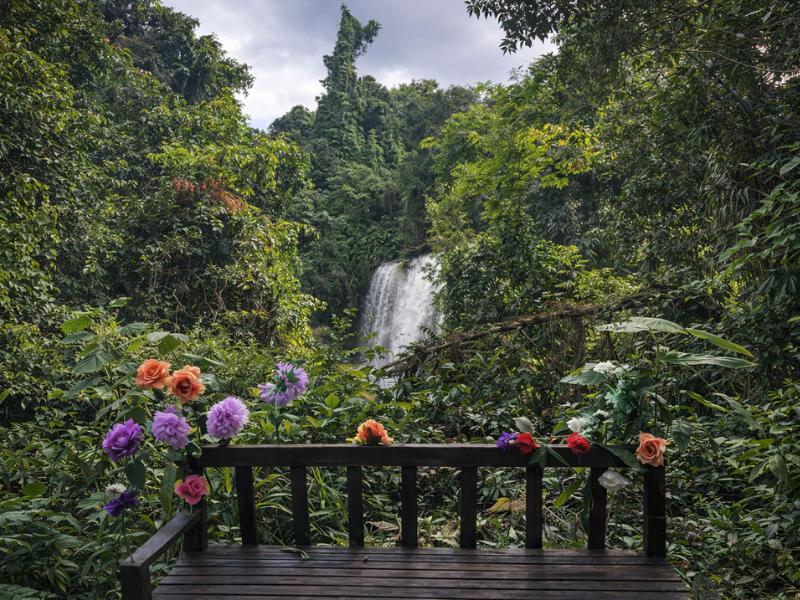
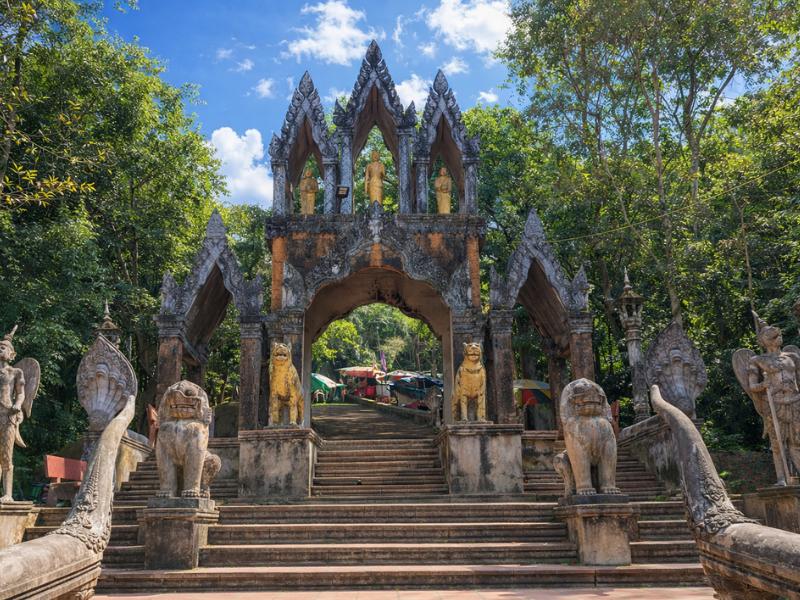
It is the image most people picture when they think of the mountain, and it anchors nearly every day tour up here. The setting does a lot of the work: thick forest, cool spray, and a pool broad enough that a busy afternoon still leaves room to float. On a high-water day the lower fall is genuinely loud. The team at Phnom Kulen Tours books the trips that make this an easy day out.
The falls sit near the top of the plateau, a short walk from the parking area down a stepped path. That accessibility is a blessing and a catch, since it makes the lower pool the busiest spot in the whole park. For the wider context of everything up here, see the complete national park guide.
How tall are the two tiers?
The upper tier is the modest one, roughly 4 to 5 metres (13 to 16 feet) tall and up to about 25 metres (82 feet) wide. The lower tier is the star, dropping around 15 to 20 metres (49 to 66 feet) into the swim pool below. Heights are approximate and the visible flow changes a lot with the season.
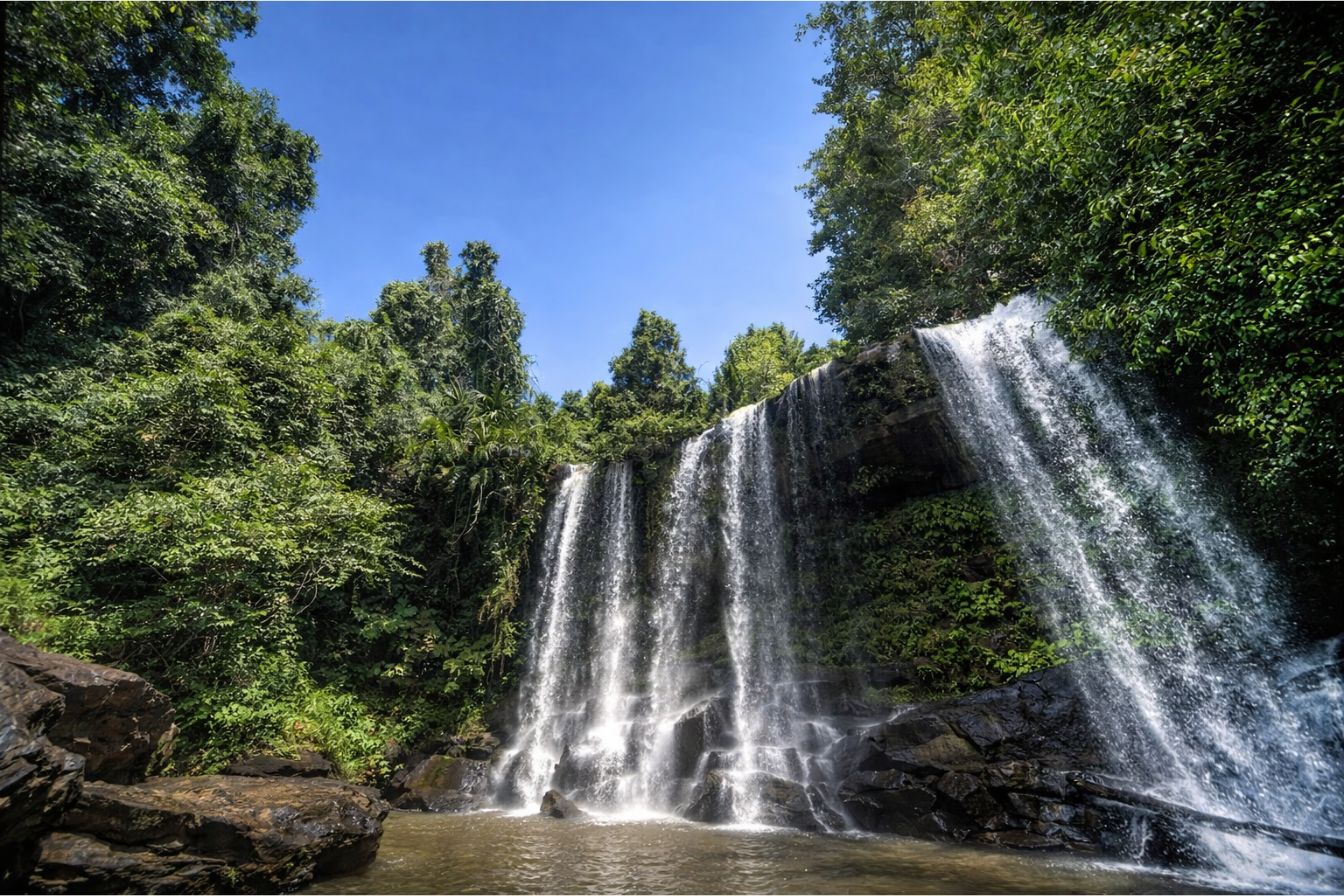
People sometimes arrive expecting one giant single drop and are briefly puzzled by the smaller upper fall. Read them as a pair. The upper tier is wide and gentle, nice for wading and photos; the lower tier is the one that fills the pool and supplies the roar.
| Tier | Approx height | Character | What you do here |
|---|---|---|---|
| Upper | 4 to 5 m (13 to 16 ft) | Wide, gentle, up to about 25 m across | Wade, cool off, photos |
| Lower | 15 to 20 m (49 to 66 ft) | Tall, powerful, feeds the main pool | Swim, the classic shot |
These figures line up with the published descriptions of the site; treat them as a guide, not a survey. The lower fall in particular looks like two different waterfalls between a wet September and a dry April.
Width matters as much as height for how the falls photograph. The upper tier spreads wide and low, so it reads as a broad veil rather than a plunge, while the lower tier is narrower and taller, concentrating the water into the pool. Standing at the base of the lower fall, with spray on your face, is where the two-tier reputation earns itself.
The waterfall shares its plateau with the sacred carvings, and the two make a natural pair on any visit. Once you have cooled off, walking over to the carved riverbed of lingas shifts the day from scenery to deep history without a long drive between them.
Can you swim at the falls?
Yes, swimming in the lower pool is one of the main reasons people come, and most guided tours build in time for it. Bring swimwear, since you cannot buy it up there. Swim when the flow is safe rather than in flood, watch for slippery rock, and keep an eye on children near the moving water.
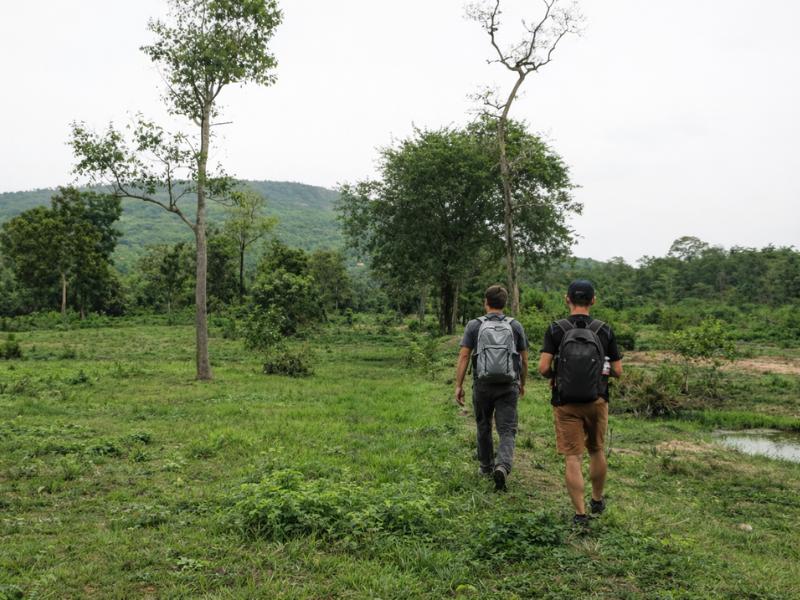
The pool is large and popular, and on a warm day it fills up. Water shoes help on the mossy edges, and a dry bag keeps your phone safe from the spray. In very high water the operators may steer you away from the base of the fall, which is exactly the judgement a guide is there to make.
We cover currents, footing and the seasonal safety picture in whether you can swim in the falls. If a dependable swim is the whole reason you are going, that piece is the one to read first.
When does the water flow strongest?
Water flow peaks in the green season, roughly June through November, when monsoon rain feeds the river and the lower fall runs full. Flow drops through the dry months, December to May, and by late dry season the same fall can look thin. If the waterfall itself is your priority, aim for the wetter half of the year.
This is the honest heart of a Phnom Kulen visit. The dry season gives you blue skies, easy roads and comfortable heat, but a quieter fall. The green season gives you a thundering cascade and a full pool, with the trade-off of heavier roads and afternoon downpours. Knowing which you value most saves disappointment.
| Season | Months | Waterfall flow | Trade-off |
|---|---|---|---|
| Dry, early | Dec to Feb | Moderate, fading | Cooler, clear, easy roads |
| Dry, late | Mar to May | Thin, can disappoint | Very hot, dusty |
| Green, early | Jun to Aug | Strong and rising | Rain showers, greener jungle |
| Green, peak | Sep to Nov | Fullest, most powerful | Wettest, roads slower |
The full weather-and-water breakdown, with temperatures alongside flow, sits in the best time to visit Phnom Kulen. If you can only travel in the dry season, go anyway, just weight your day toward the carvings and history rather than the swim.
Is the waterfall worth it?
In the green season, with an early start, the falls are a genuine highlight and the swim is worth the drive. Be honest about the caveats: some visitors feel the $20 park fee is steep, the main pool gets crowded, litter collects near the picnic area, and a dry-season fall can look modest. Manage expectations and it holds up.
We would rather tell you this now than have you feel misled at the pool. The litter is concentrated where day-trippers eat and thins as you move away from the busiest deck. Come at opening, and you get the water closer to yourself before the tour buses arrive.
The park charges its own US$20 entrance, separate from the Angkor Pass, and that is easiest to swallow when it is bundled into a tour with transport, a guide and lunch. If you want the wider verdict on the whole mountain, see whether Phnom Kulen is worth the day trip.
How do you get to the waterfall from Siem Reap?
The falls are about 56 km by road from Siem Reap, roughly 1.5 to 2 hours by car including the mountain climb. The access road up has historically run one-way with a late-morning cutoff near 11:30 AM, so an early departure matters. Most people go on a tour or with a private driver rather than self-driving.
Because the road up closes to traffic in the late morning, a slow start can cost you the whole plan. That timing, more than anything, is why the join-in and small-group tours are so popular for the falls: the operator owns the clock. Independent riders can do it, but the margin for error is thinner.
The complete transport rundown, drivers, tours and self-drive, lives in how to get to the mountain from Siem Reap. If the waterfall swim is your headline, the waterfall join-in tour is built around exactly that day.
What should you bring for the falls?
Pack swimwear, a quick-dry towel, water shoes or sandals with grip, a dry bag for your phone, and insect repellent. Wear light clothes you can hike a stepped path in, and carry cash for the entrance fee and snacks. Modest cover-ups help at the pagoda, since the mountain is an active place of worship.
The stepped path down to the pool is easy but can be wet and slick, so footing is the thing people underestimate. Repellent earns its place in the shaded, damp forest. A small towel and a change of clothes make the ride home a lot more comfortable after a swim.
| Item | Why it matters |
|---|---|
| Swimwear and towel | No rentals up there; the swim is the point |
| Grippy water shoes | Rocks by the pool are slick with moss |
| Dry bag | Keeps a phone safe from spray and the pool |
| Repellent and cash | Damp forest bites; the fee is cash on site |
The full packing list, adjusted for season and for the temple stops, is in what to wear and bring to Phnom Kulen.
Where are the falls, and how do you walk in?
The waterfall sits near the top of the plateau, a short walk and a stepped path from the parking area. The upper tier comes first, wide and shallow, and the path continues down to the base of the taller lower fall and its swim pool. The whole walk in is easy, but the steps can be wet and slick.
Because the approach is short, the falls draw the biggest concentration of visitors in the park. You reach the upper tier quickly, then descend beside it to the pool that the lower fall feeds. Changing spots and simple stalls cluster near the top of the path, so most people arrive at the water already in swim gear.
Footing is the thing people underestimate. Moss and spray keep the rock damp even in the dry months, so grippy sandals or water shoes earn their place. If you are carrying a phone or camera down to the pool, a dry bag saves it from both the spray and a slip.
A wet day versus a dry day: what actually changes?
The same falls deliver two very different visits by season. On a green-season day the lower tier thunders, the pool is deep and cool, and the forest drips. On a late dry-season day the flow can thin to a modest curtain, the pool sits lower, and the carvings and rocks show more. Both are valid; they are just not the same day.
This is the honest core of planning a waterfall trip, and it decides whether people leave delighted or deflated. If the swim and the roar are your reason for coming, weight your travel toward the wetter months. If you are here for the whole mountain and happy with a gentler fall, the dry season trades water for comfort and clear roads.
| What you notice | Green season (Jun to Nov) | Dry season (Dec to May) |
|---|---|---|
| Lower fall | Full, loud, powerful | Thinner, can look modest by late dry |
| Swim pool | Deep, cool, brimming | Lower, calmer, still swimmable |
| Roads and weather | Greener, wetter, afternoon showers | Clear, hot, easy driving |
| Best for | The swim and the spectacle | Comfort, photos, the wider sights |
The month-by-month picture is worth checking before you commit to dates. If you can only travel dry, pair the falls with the carvings so the day does not rest on water alone, and see other waterfalls near Siem Reap for context on what the region offers.
How busy do the falls get, and when?
The lower pool is the busiest spot in the whole park, and it fills from late morning as day tours converge. Arrive at opening, around 8 to 9 AM, and you get the water close to yourself. By midday the deck around the pool is crowded and the litter near the picnic zone is at its worst, so timing is everything.
Crowds here are predictable, which makes them easy to dodge. The tour buses cluster around the middle of the day, so the early and later edges are calmer. An early start also means cooler air for the walk and better light before the sun climbs over the canopy.
| Time of day | How it feels | Verdict |
|---|---|---|
| 8 to 10 AM | Quietest, cool, clean water | Best window for the swim |
| 11 AM to 2 PM | Busiest, hottest, most litter | Fine, but manage expectations |
| After 2 PM | Thinning out as tours descend | Calmer, watch the road-down timing |
Wondering how much time the whole outing needs? See how long you need at Phnom Kulen before you fix your plan.
Which tour reaches the waterfall best?
For most people the join-in picnic tour is the sweet spot: transport, guide, entry and a plateau lunch built around swim time at the falls, from around $48. A small-group option gives a lighter group, while a combined Kulen waterfall and sacred-sites picnic tour adds the carvings to the same day. Check the live listing for current prices.
The choice comes down to how much you want the falls to dominate the day versus how much history you want folded in. If the swim is everything, the join-in tour keeps it simple. If you want the sacred riverbed too, the combined option earns its slightly different itinerary.
| Tour | From | Best for |
|---|---|---|
| Waterfall join-in with picnic | around $48 | Falls-first day, easy logistics |
| Small-group with picnic lunch | around $48 | Lighter group, balanced pace |
| Waterfall and sacred lingas | around $48 | Falls plus the carved riverbed |
Prices shift with season and demand, so confirm them on the live listing before booking. Whichever you pick, the swim lands best on a green-season morning.