Are There Waterfalls Near Siem Reap?
Siem Reap sits on flat rice-paddy plains, so the waterfalls people ask about are all up in the hills to the north: the swimming falls on Phnom Kulen, and the carved-river cascade at Kbal Spean.
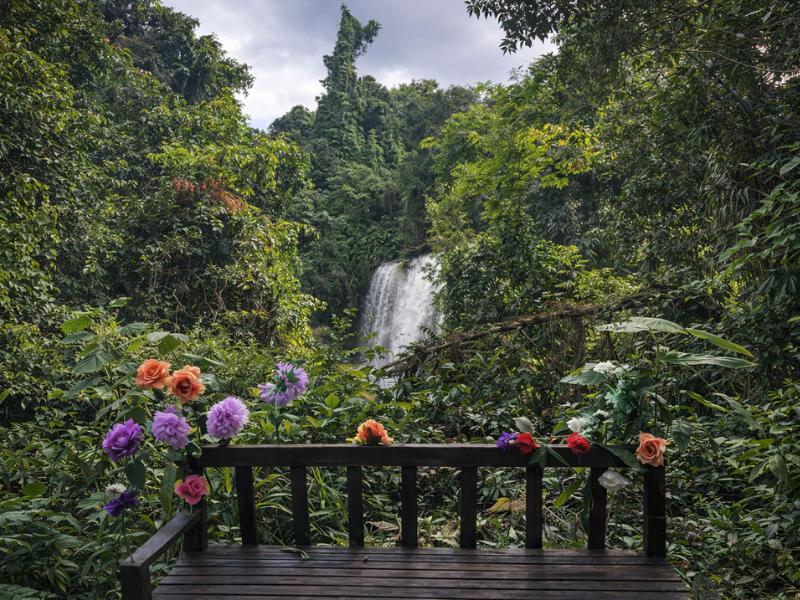
Two waterfalls near Siem Reap, side by side
Flow at both peaks in the green season; heights and distances are approximate, so treat them as a planning guide.
Planning takeaway: Choose Kulen waterfall or the distinct uphill Kbal Spean carved-river excursion.
Are there waterfalls near Siem Reap?
Yes, though the region gives you two real options rather than many. The famous one is the two-tier fall on Phnom Kulen, a sacred mountain about 50 km north, roughly a 1.5 to 2 hour drive. The other is Kbal Spean, a carved riverbed with a modest cascade in the same hills. Siem Reap itself sits on flat plains, so both mean a drive.
Choose the kind of mountain day first, then compare current inclusions and the time you have.
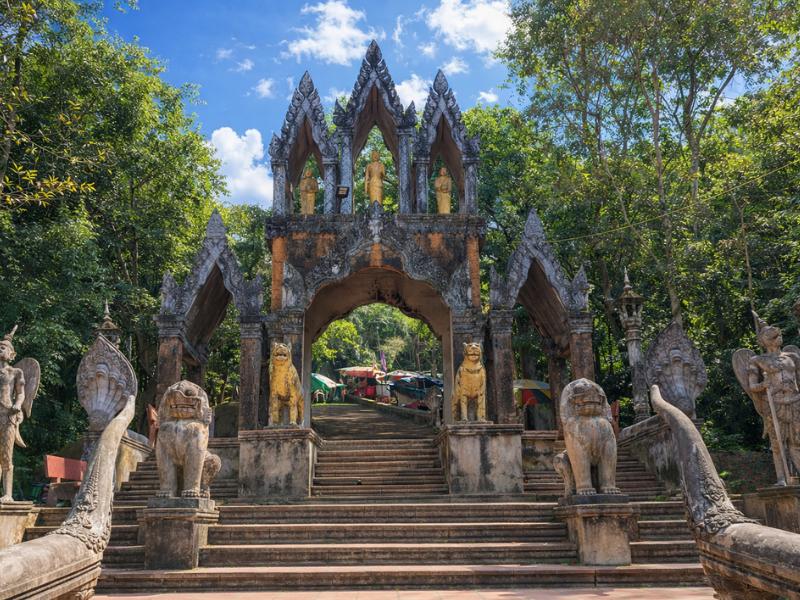
Search for a day trip to a waterfall out of town and the honest answer keeps circling the same country. Siem Reap is lowland, laced by the Tonle Sap floodplain, with no cascades inside the temple zone. Real falling water only turns up once the road climbs into the Kulen hills, the sandstone high ground whose streams drain toward the plains. That is why the swimming waterfall on Phnom Kulen, and the smaller carved-river cascade at Kbal Spean, are what people actually mean when they ask about waterfalls near Siem Reap. For the cascade, its pool and its seasonal moods in full, see our two-tier Phnom Kulen waterfall guide.
What is the Phnom Kulen waterfall like?
It comes in two tiers on the same jungle river. The upper fall is short and wide, roughly 4 to 5 metres tall and up to about 25 metres across. A short walk downstream, the lower fall is the star, dropping some 15 to 20 metres into a broad natural pool deep enough to swim in. Both shrink through the dry season.
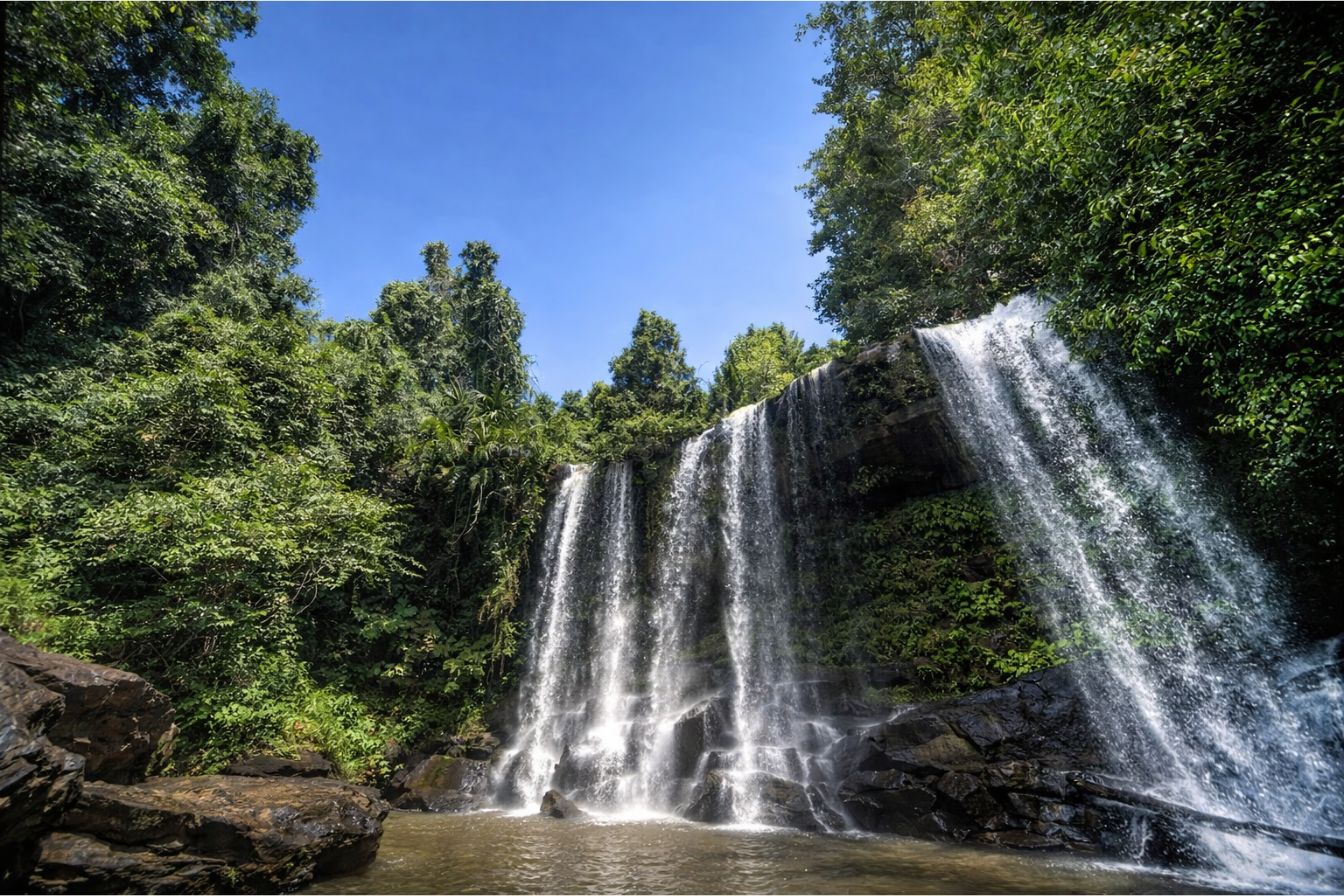
The upper tier is the one you reach first, a low curtain spreading over a rock shelf where the river fans out. Nearly every photo you have seen is of the lower tier, where the water drops into the swimming pool below. Volume is the variable nobody warns you about. After the rains the lower fall runs loud and full, and by March or April it can thin to a modest trickle over the same rock. Here is the shape of the two drops. Start planning the visit with Phnom Kulen Tours.
| Tier | Approx. drop | Width | Swimming | Fullest months |
|---|---|---|---|---|
| Upper fall | 4 to 5 m | up to 25 m | Shallow, wading only | June to November |
| Lower fall | 15 to 20 m | Narrower, powerful | Deep natural pool | June to November |
Width matters as much as height for how the falls read in person. The upper tier spreads wide and low, more veil than plunge, nice for wading and photos. The lower tier concentrates the water and supplies the roar, and it feeds the pool that makes this the swimming spot on the mountain. Standing at its base with spray on your face is where the two-tier reputation earns itself.
The walk in is short but not flat. The falls sit near the top of the plateau, reached by a stepped path down from the parking area, with the wide upper tier arriving first and the pool below the lower fall a little further on. Simple stalls and basic changing spots cluster near the top of the path, so most visitors reach the water already in swim gear. Moss and spray keep the steps damp even in the dry months, which is the main reason grip on your feet matters more than anything else you carry.
What is Kbal Spean, the other carved-river waterfall?
Kbal Spean is an ancient riverbed carved with lingas and Hindu deities in the same hills, ending in a small waterfall. It sits north of Siem Reap near Banteay Srei, reached by a forest walk of roughly 1.5 kilometres uphill. The draw is the sacred carvings under flowing water, not a swim, and it falls inside the Angkor Archaeological Park.
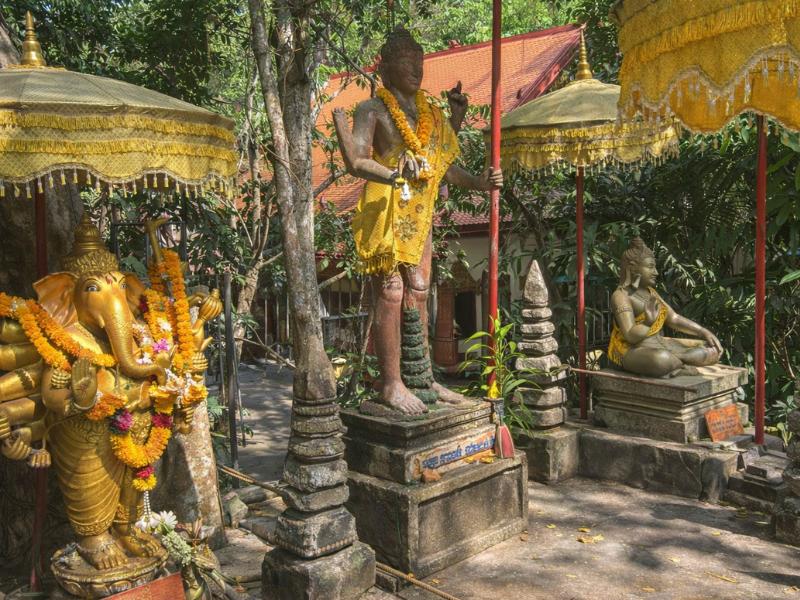
People sometimes confuse Kbal Spean with the River of a Thousand Lingas on Phnom Kulen, because both are streambeds cut with the same Shiva symbols. They are different sites on different tickets. Kbal Spean asks for a shaded climb through forest before you reach the carvings and its cascade, so it rewards walkers more than swimmers. If you want to understand the parallel Kulen site first, our piece on the carved riverbed and reclining Buddha explains what those lingas mean and why the water is treated as blessed.
Because Kbal Spean lies within the Angkor park boundary, a valid Angkor Pass covers your entry, and most people fold it into a temple day rather than treating it as a standalone waterfall trip. That is the practical line between the two: one is a mountain excursion with its own gate and fee, the other is a forest walk on the Angkor circuit.
Phnom Kulen or Kbal Spean: which should you pick?
Pick Phnom Kulen if you want to swim under a real waterfall and see the reclining Buddha; pick Kbal Spean if you would rather hike to ancient carvings and are already touring the Angkor temples on the pass. Phnom Kulen is a full day with its own US$20 fee. Kbal Spean pairs neatly with Banteay Srei on an Angkor day.
The two waterfalls answer different questions. One is a swim and a spectacle, the other a quiet archaeological walk. Set side by side, the choice usually makes itself once you know whether you are chasing a cool pool or carved stone in the forest.
| Feature | Phnom Kulen falls | Kbal Spean |
|---|---|---|
| Distance from Siem Reap | About 50 km north, 1.5 to 2 hr | North near Banteay Srei, a drive out |
| Getting in | Drive, then a short walk down | Drive, then about 1.5 km uphill on foot |
| Ticket | US$20 park fee, separate | Covered by the Angkor Pass |
| What you see | Two-tier fall, swim pool, carvings and Buddha nearby | Carved lingas in a streambed and a modest cascade |
| Swimming | Yes, the lower pool | Not really, look rather than swim |
| Fullest months | June to November | June to November |
| Best for | Swimmers and a full mountain day | Temple walkers already on the pass |
If you only have room for one waterfall day and you want a swim, Phnom Kulen is the safer pick, because it also folds in the sacred riverbed and the hilltop Buddha in a single loop. Kbal Spean shines for travellers deep into the temples who want one more carved marvel with a walk attached.
Can you swim, and when does the water run fullest?
The lower Phnom Kulen pool is the swimming spot, used by locals and visitors alike; Kbal Spean is for looking, not swimming. Flow at both is fullest in the green season, roughly June to November, when rain feeds the streams. By the late dry season the Kulen pool sits calmer and shallower, still fine for a dip but far less dramatic than after the monsoon.
If the swim is your reason for going, timing outranks everything else. A wet-season visit hands you the fullest curtain and the deepest pool, though the trails and rock lips turn slick and the current stiffens. The dry season trades power for calmer, clearer water and surer footing underneath. Our guide to how water flow changes by season lays out the month-by-month picture, and the piece on whether you can swim beneath the falls covers depth, current and safety at the pool.
Can you combine both waterfalls in one day?
You can, but it makes for a long, split day and two separate tickets. Both sit north of Siem Reap, yet Phnom Kulen alone is an 8 to 10 hour outing with a one-way access road, so bolting Kbal Spean on squeezes both. Most people give Phnom Kulen its own day and fold Kbal Spean into an Angkor or Banteay Srei day instead.
The one-way mountain road is the quiet catch. When it is running uphill in the morning you cannot simply turn around and race off to a second site, so Phnom Kulen sets the pace of its own day. Add that the two waterfalls run on different tickets, the mountain fee versus the Angkor Pass, and the tidy plan is usually to keep them apart. For a fuller sense of why the mountain wants a whole day, see how much time you need at Phnom Kulen.
How do you reach each waterfall from Siem Reap?
There is no public bus to either. Almost everyone goes by private car, by tuk-tuk with a transfer, or on a day tour, and each is about 1.5 to 2 hours out. Phnom Kulen charges its own US$20 park fee and runs a one-way road by time of day; Kbal Spean uses your Angkor Pass and needs an uphill walk at the end.
The timing and the ticket are the snags that catch independent visitors on the mountain, which is why a booked day tends to be the simple call for Phnom Kulen. Here is how the transport options line up for each.
| How you go | Phnom Kulen | Kbal Spean |
|---|---|---|
| Private car and driver | 1.5 to 2 hr, arrange the return | Easy to combine with Banteay Srei |
| Tuk-tuk plus transfer | Possible but slow uphill | Workable for the nearer site |
| Guided day tour | Handles the fee and the one-way road | Often bundled with Banteay Srei |
| Ticket to carry | US$20 cash at the gate | A valid Angkor Pass |
The join-in waterfall tour with a picnic lunch folds in the transfer, the entrance and the road window on the mountain, while the Kulen waterfall and sacred-sites picnic tour adds the carved riverbed and the reclining Buddha to the same run. For the money side, our guide to the park entrance fee and tickets covers what the US$20 does and does not include.
Which waterfall trip is right for you?
Short version: swimmers and first-timers want Phnom Kulen; temple-focused walkers already on the Angkor Pass get more from Kbal Spean. If you can travel in the green season and have only one waterfall day, Phnom Kulen is the stronger pick for spectacle, a swim, and the carvings and Buddha in one loop.
Skip Phnom Kulen if your schedule cannot spare a full day, if you are travelling in the driest weeks and the swim is your only motive, or if a two-hour mountain road each way sounds like a poor trade. Skip Kbal Spean if a shaded uphill hike is not your idea of a good morning, or if you came purely to swim. Whichever you choose, a booked day handles the fee and the road timing, and the small-group mountain tour with a picnic lunch keeps the logistics off your plate. Carry cash for extras, water shoes for the rock, and a towel for after.