Can You Swim in the Phnom Kulen Waterfall?
Yes, and the pool below the taller tier is the main reason people ride the mountain road at all. Whether it is deep and safe enough depends on the season and the week's rainfall.
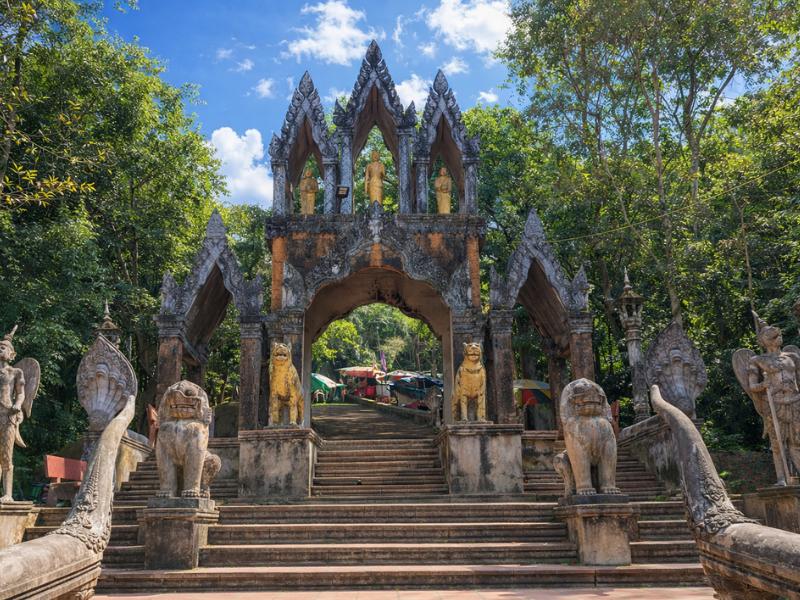
When the swimming is good, and when to stay out
A seasonal rule of thumb. Read the water on the day; flow spikes fast after a downpour whatever the month.
Planning takeaway: Plan a waterfall visit with optional swimming and understand supplied essentials.
Can you swim in the Phnom Kulen waterfall?
Yes. The wide pool at the base of the lower, taller waterfall is a public swimming spot, and most trips build in time for it. The water is deepest and coolest in the green season, roughly June to November. In the dry months it drops and warms, so read the flow on the day before you get in.
Choose the kind of mountain day first, then compare current inclusions and the time you have.
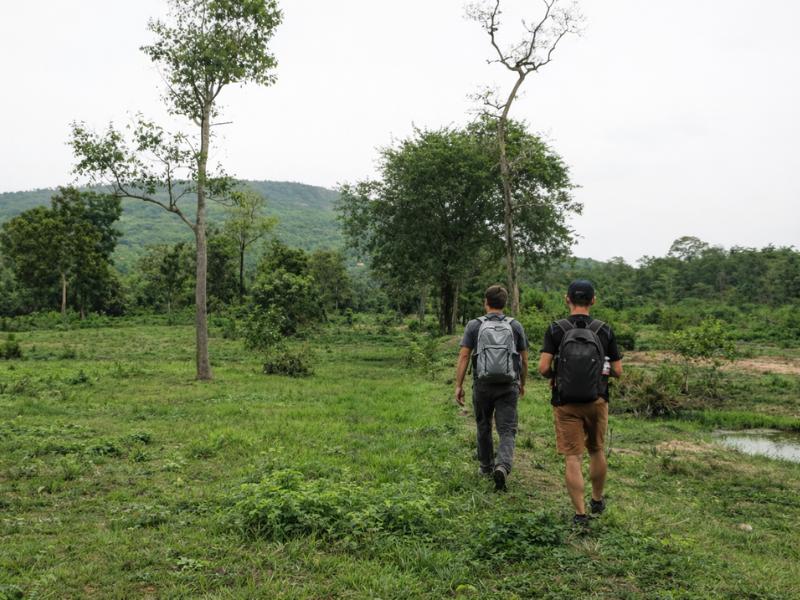
This is not a look-but-do-not-touch waterfall. Local families swim here on weekends and holidays, and the pool is one of the few places near Siem Reap where you can cool off under falling water. Bring a swimsuit and a towel; there are basic changing spots, but nothing fancy. Because the mountain is holy, dress modestly when you are away from the water, especially near the pagoda and the shrines. If you are weighing this into a wider plan, our full guide to the waterfall's two tiers and water flow covers what the pool looks like month by month.
Which waterfall tier can you swim in?
The lower, taller tier is the swimming one. It drops roughly 15 to 20 metres into a large natural pool that is deep enough for a proper swim. The upper tier is shorter and much wider, more a broad cascade for wading and photos than a place to plunge in.
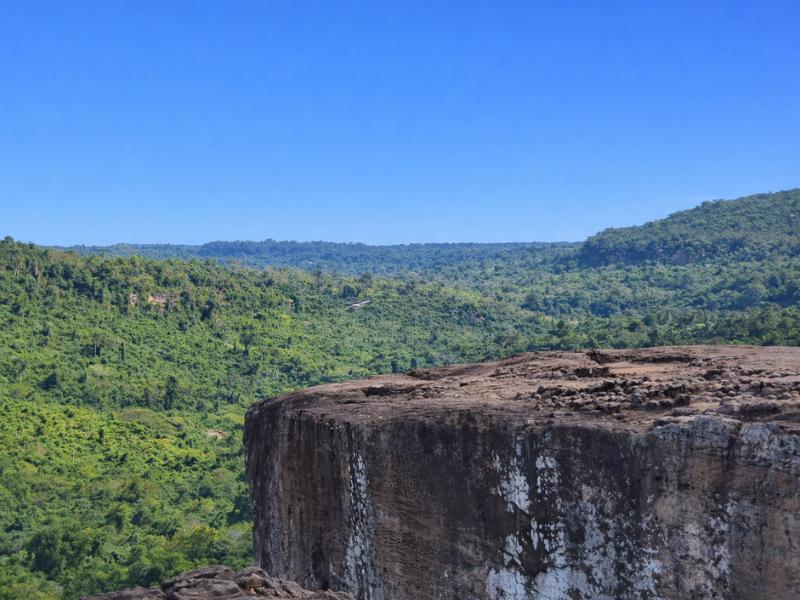
Phnom Kulen's falls come in two steps, and they behave differently. The lower pool is where you want to head if your time is short. See how the tours line up at Phnom Kulen Tours.
| Tier | Rough size | Swimming |
|---|---|---|
| Upper tier | About 4 to 5 m tall and up to 25 m wide | Shallow and broad, better for wading and photos |
| Lower tier | Drops about 15 to 20 m into a large pool | The main swimming spot, deepest in the green season |
Both tiers shrink as the dry season wears on. In full green-season flow the lower fall is loud and the pool is at its best; by late dry season the same pool is calmer, shallower and warmer, which suits nervous swimmers and children even if it is less dramatic to look at.
Is it safe to swim, and what should you watch for?
It is usually fine in calm conditions, but there are no lifeguards, the rocks are slippery, and the current under the fall strengthens fast after heavy rain. Keep to the open pool, stay clear of the base of the cascade when it is running hard, and skip the swim entirely if the water is brown and churning.
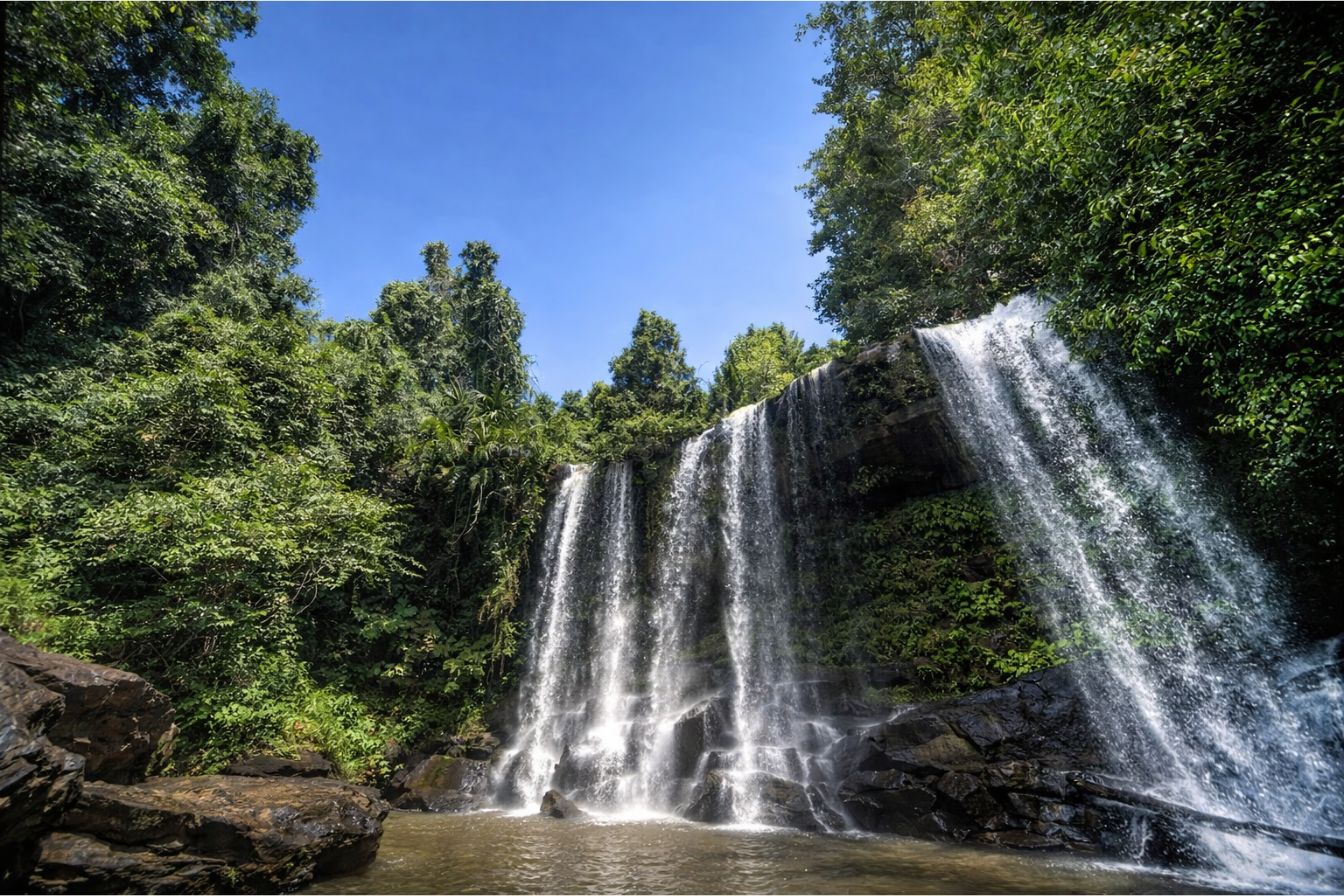
The same rain that makes the falls impressive can make them dangerous, so the green season is both the best and the most variable time to swim. After a downpour the flow spikes and the pool clouds with sediment; wait it out or wade at the edge instead. Wear water shoes for the slick stone, and leave valuables with someone on the bank rather than on a rock that spray can reach. None of this should put you off. It simply means treating a wild pool like a wild pool, judging the water in front of you rather than the month on the calendar.
One extra rule is worth stating plainly: do not dive or jump in. Depth changes with the season, and the rocks below the surface are invisible once the water clouds, so entering feet first and feeling your way is the safe habit even where locals leap. In full green-season flow, keep well back from the plunge line at the base of the fall, where the falling water pushes down hard and the churn can pull a swimmer under. The safest swimmers here stay in the open middle of the pool, watch the sky for building rain, and get out the moment the water starts to rise or discolour.
When is the swimming best?
Early on a green-season morning is the sweet spot: full flow, a deep cool pool, and fewer people before the day-trip crowd arrives. Because the access road has historically run one way, up before midday and down after, getting there early also fits the mountain's timing rather than fighting it.
The table below sets the swim conditions side by side so you can pick a window that matches the swimmer you are.
| Season | Flow | Pool depth | Current risk | Verdict |
|---|---|---|---|---|
| Green, June to November | Full and loud | Deep and cool | Higher, spikes after rain | Best swim; go early and read the water |
| Early dry, December to January | Easing but still good | Comfortable | Low to moderate | A reliable, gentler swim |
| Late dry, February to May | Thin | Shallow and warm | Low | Calm and safe, but a modest cascade |
The simplest way to line up good water with an early arrival is to let the timing be handled for you. A waterfall join-in tour with a local picnic lunch gets you up the mountain in the morning window with swim time built in, and a small-group mountain tour with lunch pairs the pool with the carvings and the reclining Buddha. If you are still picking dates, our notes on how the water flow changes through the year help you land the swim day well.
What should you bring and wear?
Pack a swimsuit under your clothes, a quick-dry layer, water shoes, a dry bag and a towel or sarong. Because Phnom Kulen is a holy mountain, dress modestly away from the water and cover shoulders and knees near the pagoda. Small US dollars cover the snack stalls, and a little cash saves a scramble.
A few things earn their place in the bag. Here is the short list and why each matters at a jungle pool with basic facilities.
| Bring this | Why |
|---|---|
| Swimsuit worn under clothes | Changing huts are basic; arriving ready saves fuss |
| Water shoes or sturdy sandals | The rocks around the pool are slick and uneven |
| Dry bag for phone and camera | Spray reaches the bank, and the pool clouds after rain |
| Towel or sarong | Doubles as a cover-up near the shrines and a picnic mat |
| A modest cover-up | Respectful dress away from the water on a sacred mountain |
| Small US dollar notes | For fruit, snacks and drinks at the stalls |
Skip anything you would hate to lose. There are no lockers, so the golden rule is to have one person mind the bags while the others swim, then swap.
What are the facilities like at the pool?
Simple and functional. Expect basic changing huts and food stalls near the lower falls, vendors selling fruit and snacks on busy days, and shade under the trees at the pool's edge. There are no lifeguards or lockers, so plan to mind your own valuables and change before you arrive where you can.
On Khmer weekends and holidays the picnic area fills with local families, hammocks and grilling smoke, which is part of the charm but also the source of the litter some visitors mention. A weekday morning is quieter, cleaner and better for a swim. The shade matters more than it sounds after the hot walk down to the water, and a mat or sarong makes the picnic spots comfortable while your swim things dry in the warm air.
Because there are no lockers and no formal ticketed changing rooms, a little planning goes a long way: wear your swimsuit under your clothes, keep valuables to a minimum, and travel with someone who can watch the bags while you swim. A dry bag doubles as a place to stash a phone and a few dollars at the water's edge. On a busy day the stalls sell grilled snacks, fresh fruit and cold drinks, so you need not carry much, though small notes make every transaction smoother.
What are the etiquette rules on a sacred mountain?
Treat Phnom Kulen as the holy place it is. Cover shoulders and knees away from the water, remove shoes and hats before entering the pagoda, keep your voice down near shrines and monks, and never climb on the carvings or the reclining Buddha. Ask before photographing people at prayer, and follow any signs or your guide's lead.
The mountain is sacred to both Hindus and Buddhists, and Khmer visitors come to pray as much as to picnic. Around the hilltop pagoda at Preah Ang Thom, where one of Cambodia's largest reclining Buddhas lies, modest dress and quiet matter far more than they do at the pool. Small offerings, incense and monks going about their day are part of the scene, so step around ceremonies rather than through them, and lower a camera the moment someone kneels to pray. Wet swimwear is for the pool, not the shrines, so pull on a dry layer before you walk up to the Buddha.
None of this is heavy going; a little awareness is all it takes, and it turns you into a welcome guest rather than an awkward one. If you want the deeper background on the shrines and the carved streambed you will pass on the way, our guide to the carved riverbed and the reclining Buddha explains what each site means, and our note on what to wear and bring covers the modest layers worth packing for a day that mixes a swim with sacred ground.
When should you not swim, and is it safe for kids?
Do not swim when the water is brown, churning or rising after heavy rain, when the current at the base of the fall looks strong, or if you are a weak swimmer facing full green-season flow. For children, the calmer late-dry-season pool is easier, but always keep them within arm's reach; there are no lifeguards anywhere on the mountain.
Use the water in front of you as the deciding vote. A clear, settled pool on a bright morning is a joy; a muddy surge an hour after a storm is not worth it, and waiting or wading at the edge is the sensible call. Families often find that going early lands them a gentler, emptier pool, then they picnic in the shade while the day-trippers arrive. If you want the swim without the logistics, a guided morning that reaches the gate at opening pairs the pool with the carvings and the reclining Buddha, and our Phnom Kulen day-trip itinerary lays out a sensible order for the day.