Phnom Kulen Day Trip from Siem Reap: Itinerary and Tour Options (2026)
One long day, roughly fifty kilometres of road each way, a swim under a jungle waterfall, and a giant reclining Buddha carved into a single boulder. Here is how a Phnom Kulen day trip actually runs.
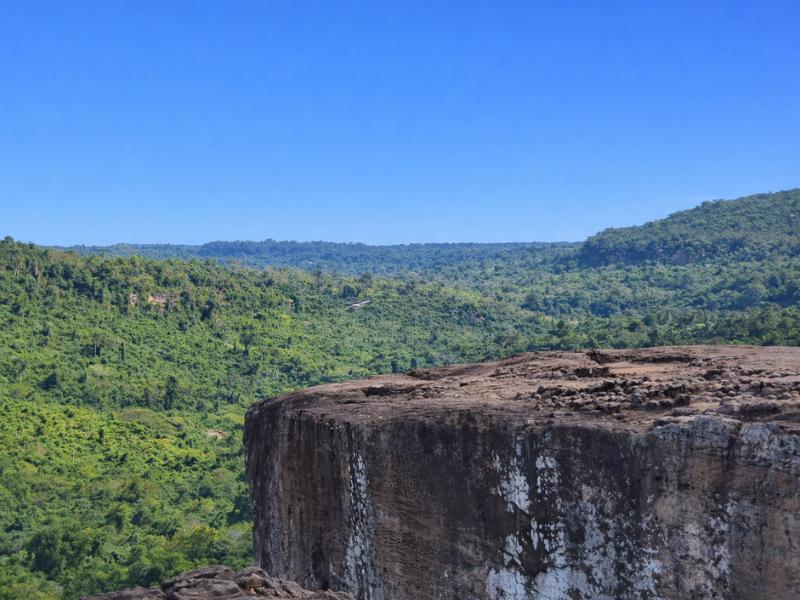
A Phnom Kulen day, hour by hour
A sample day; your operator sets the exact order and handles the one-way road timing.
Planning takeaway: Build a practical full-day Kulen route and decide whether to add Banteay Srei.
How long is a Phnom Kulen day trip from Siem Reap?
Plan for a full day, eight to ten hours door to door. The park sits about fifty kilometres north of Siem Reap, roughly fifty-six by road, which is a ninety-minute to two-hour drive each way. The park opens around eight in the morning, and the mountain's access road has historically run one way, so the day is shaped around timing.
Choose the kind of mountain day first, then compare current inclusions and the time you have.
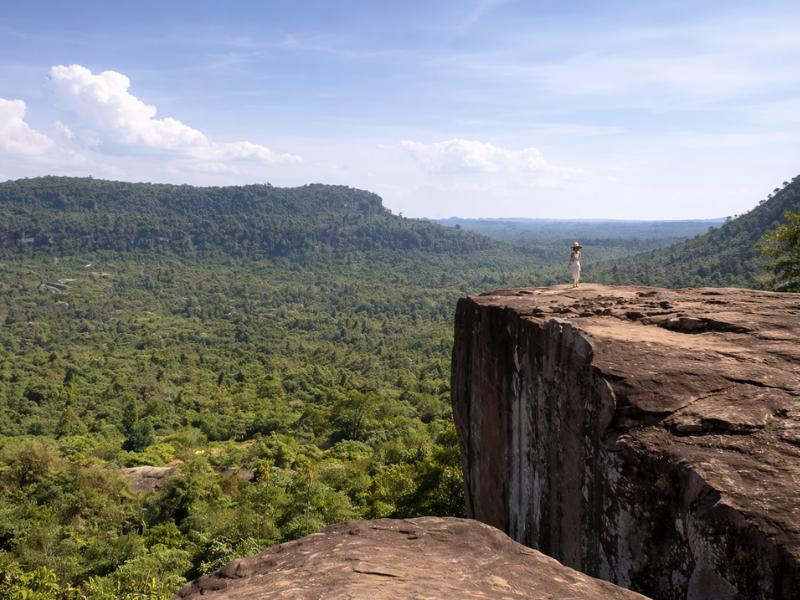
This is not a half-day you squeeze in before lunch. Between the transfer, the swim, the carvings, the reclining Buddha and a picnic, the hours fill fast, and rushing it defeats the point. Most travellers who enjoy the mountain treat it as a dedicated day rather than an add-on to a temple morning. Start planning the visit with Phnom Kulen Tours.
The distance is the reason a guided trip makes sense here. A driver who knows the road handles the one-way climb-and-descend window, the turn-offs and the park logistics, while you keep your eyes on rice paddies and buffalo instead of a map. For the transport specifics, our guide to how to get there from Siem Reap covers taxis, drivers and tours side by side.
One thing to fix in your head early: Phnom Kulen National Park charges its own entry fee, separate from the Angkor pass. That shapes both the cost and the paperwork of the day, and we come back to it below.
The drive is part of the experience, not dead time. It runs through rice country, palm-fringed villages and roadside markets, a slice of rural Cambodia most temple days never show. Sit on the side with the fields, watch the buffalo and the sugar-palm stands go by, and the two hours pass more easily than the distance suggests.
What does a typical Phnom Kulen itinerary look like?
A standard day runs like this: hotel pickup around eight, the drive north, a stop at Preah Dak village for palm sugar, the River of a Thousand Lingas, the two-tier waterfall with a swim, a picnic lunch, then the reclining Buddha and often a cliff viewpoint before the long drive back. Order varies to fit the one-way road.
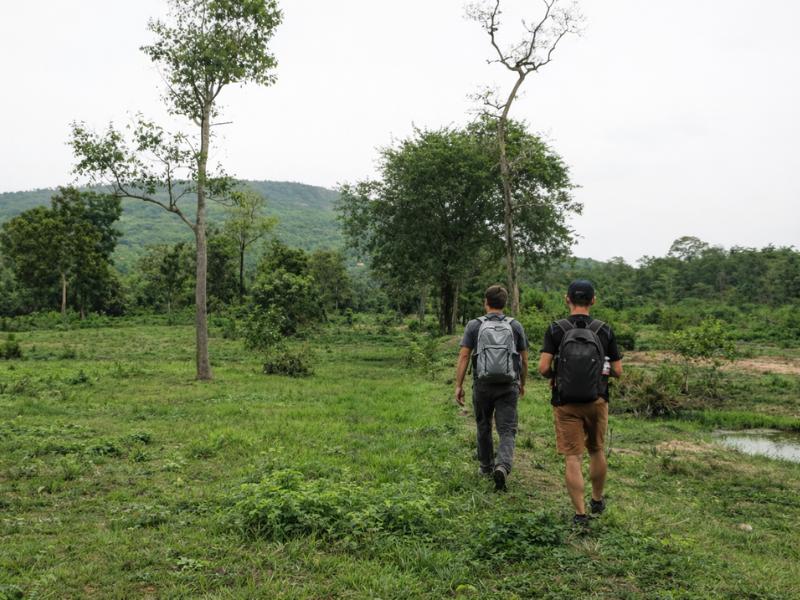
The village stop is easy to underrate. Preah Dak, on the approach, is where you see palm sugar and cakes being made, a small, genuine bit of daily Cambodia before the sacred sites take over. It costs ten minutes and gives the day a human opening.
| Time | Activity | Notes |
|---|---|---|
| 08:00 | hotel pickup | most operators collect between eight and eight-twenty |
| 08:00 to 09:45 | drive north through rice country | about ninety minutes to two hours |
| 09:45 | Preah Dak village | palm sugar and cakes |
| 10:15 | River of a Thousand Lingas | the carved sandstone streambed |
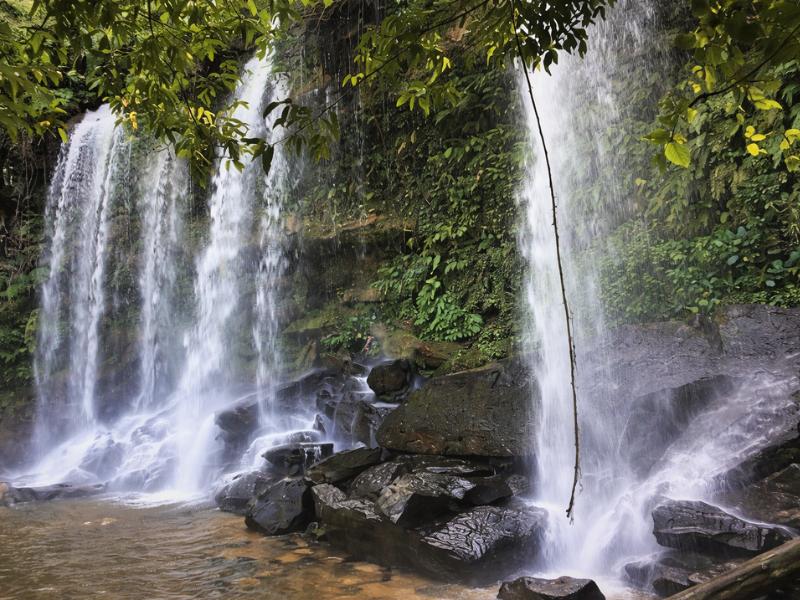
| 11:15 | the two-tier waterfall | swim in the lower pool |
| 12:30 | picnic lunch | usually near the falls |
| 13:30 | reclining Buddha, Preah Ang Thom | the busiest, most sacred stop |
| 14:30 | cliff viewpoint | on some itineraries |
| 16:00 to 18:00 | drive back to Siem Reap | arrival depends on traffic |
The swim is the day's centre of gravity, and it lands better if you understand the falls first. The lower tier drops into a large natural pool that people swim in, while the upper tier is wider and shallower. Our full two-tier waterfall and swimming pool guide explains both, and the deeper meaning of the carvings sits in the River of a Thousand Lingas carvings.
Bring a little flexibility on the order. Guides shuffle the stops to dodge the crowds and to fit the one-way road, so your day might open with the reclining Buddha or lead with the swim. The sites are the same; only the sequence bends. Trust the driver on timing and you will spend far less of the day standing in a queue.
It helps to know what you are looking at. This is the mountain where Jayavarman II founded the Khmer Empire in 802 CE, later the lost city of Mahendraparvata mapped by lidar, so the carvings and the Buddha are not random curiosities but the empire's birthplace of the Khmer Empire story written in stone. A guide who tells that story turns a pretty day into a memorable one.
How does the one-way road change your timing?
The single access road up the mountain has historically been time-restricted, with traffic heading up in the morning and down after midday. That is why almost every itinerary front-loads the climb and the sacred sites, then descends in the afternoon. Confirm the current arrangement locally, or let your operator handle the timing, which is the simplest option.
The practical effect is that you cannot dawdle over breakfast and expect to drift up at noon. Miss the morning window and the day unravels. A tour builds the schedule around it automatically, which removes a genuine source of stress for anyone driving themselves for the first time.
It also explains why the reclining Buddha and viewpoint often come after lunch rather than first thing: the plan follows the road, not the guidebook's ideal order. If you are self-driving or hiring a private car, ask about the day's window before you set off, because it can change with conditions and management.
None of this is a reason for alarm. It is simply the mountain's rhythm, and once you know it the day flows. Travellers most often trip up not on the road but on time budgeting, which is why our note on how much time to allow is worth a glance while you plan.
Self-drivers should also factor in fuel, a decent map or offline navigation, and a plan for the park entry queue, none of which a tour asks you to think about. The freedom of going alone is real, but so is the admin. On a day this long and this far from town, most first-time visitors find the guided version simply removes more friction than it adds.
Which tour option fits your day?
Three shapes cover most travellers. A Kulen-only small-group tour keeps the day focused and affordable at around $48. A combo that adds Banteay Srei and Beng Mealea, around $55, packs in two more temples over ten hours. A Beng Mealea and Tonle Sap combo, around $54, mixes the mountain with a jungle temple and the great lake.
Treat those prices as recent starting rates and check the live listing before booking, since they move with season and demand. The real decision is not money, which is close between them, but appetite: how much do you want to cram into a single, already long day.
| Tour | Adds beyond Kulen | Length | Around |
|---|---|---|---|
| a small-group tour with picnic lunch | nothing, the mountain in depth | 8 hours | $48 |
| a combo with Banteay Srei and Beng Mealea | two temples, one jungle ruin | 10 hours | $55 |
| a Beng Mealea and Tonle Sap day | jungle temple plus the lake | 10 hours | $54 |
The small-group Kulen day is the honest default for a first visit. It reaches the waterfall, the reclining Buddha, the carved river and a cliff viewpoint without the fatigue of chasing two extra sites, and it includes hotel pickup and a picnic. The combos suit travellers who are short on days and willing to trade depth for breadth.
Group size shapes the feel as much as the sights do. A small-group van keeps the cost down and adds a sociable edge, while a private trip buys pace and quiet at the carvings and lets you swim without a crowd. Neither is wrong. It comes down to whether you want company or control on a long day out of town.
Can you combine Phnom Kulen with other sites in one day?
Yes, within reason. Banteay Srei, the finely carved pink-sandstone temple, sits roughly on the way and pairs well. Beng Mealea, a jungle-swallowed Angkor-era ruin, adds atmosphere to the east. Tonle Sap, the great lake with its floating villages, works as a sunset finish. Each addition lengthens an already ten-hour day, so pick one, not all.
The temptation is to bolt everything on. Resist it. Cambodia's heat and the mountain's distance mean that a three-site day can blur into a march, and the sacred quiet of Kulen is the first thing to suffer when you are watching the clock. One well-chosen add-on keeps the day rich without turning it into an endurance test.
Heat is the hidden factor in all of this. By early afternoon the sun is fierce, energy dips, and a third major stop can feel like a chore rather than a treat. Front-load the walking, drink far more water than feels necessary, and keep the afternoon lighter. A day that ends well is worth more than a day that ticks one more box.
| Add-on | Direction from Kulen | Why add it |
|---|---|---|
| Banteay Srei | roughly on the approach | the finest miniature carving near Siem Reap |
| Beng Mealea | east | a vast Angkor-era temple half-eaten by jungle |
| Tonle Sap | south, toward the lake | floating villages and a lake sunset |
If temples are your thing, the Banteay Srei pairing is the strongest, since it puts a masterpiece of Khmer stonework beside the mountain where the empire began. If you would rather balance sacred sites with landscape and daily life, the lake finish gives the day a completely different closing note. And if you are trying to fit the big temple too, read our take on visiting fitting it around Angkor Wat first.
Whatever you bolt on, keep the return drive in mind. Adding a lake sunset or a distant temple can stretch the day toward twelve hours by the time you are back at your hotel, which is a lot in Cambodian heat. Sensible travellers pick the single add-on that excites them most and let the rest wait for another trip.
What does a Phnom Kulen day cost, all in?
Budget three parts: the twenty dollar park entry per foreign visitor, separate from the Angkor pass; the guided day tour itself, from around $48 for a small group; and a little for extras like snacks, palm cakes and tips. A standalone full-day park ticket product runs around $19 to $20 if you are arranging your own transport.
The entry fee is the part that surprises people, and some visitors feel twenty dollars is steep for what is essentially a mountain, a waterfall and a set of carvings. That is a fair reaction to hold, and it is worth going in with clear expectations rather than resentment. The fee is real and fixed, and it is not covered by your Angkor ticket.
| Item | Typical | Note |
|---|---|---|
| Park entrance | $20 per foreign visitor | separate from the Angkor pass |
| Guided day tour | from around $48 | transport included, often a picnic lunch |
| Standalone park ticket | around $19 to $20 | if you organise your own driver |
| Extras | a few dollars | snacks, palm cakes, tips |
Booking a tour that folds the entry ticket into the price removes a queue and a decision on the day. For the full breakdown of fees and what the ticket does and does not include, see our guide to the $20 entrance fee and tickets, or grab the full-day park entry ticket if you have your own wheels.
Two small honesty points on money. Children's rates and any discounts vary by operator, so ask rather than assume, and tipping the driver and guide is customary but not compulsory, a few dollars each is normal for a good day. Building the ticket into a tour price also spares you the cash-only moment at the gate, where card payment can be unreliable.
When should you go, and what should you expect?
Water makes or breaks the day. The falls run fullest in the green, rainy season, roughly June to November, when the swim is at its best if the flow is safe. In the dry months the falls thin out and can look modest late in the season. Go for the water in the wet months, and manage expectations in the dry.
Be ready for a couple of honest realities. Some visitors report litter at the busier stops and a thinner cascade than the photos suggest, especially in dry-season shots taken at the wrong time of year. Neither ruins the day, but both are easier to shrug off when you are expecting them. The carvings and the reclining Buddha do not depend on rainfall and deliver year round.
| Season | Months | The falls |
|---|---|---|
| Green, rainy | June to November | fullest flow, best swimming when safe |
| Dry | December to May | thinner, can run low in the late dry season |
Timing within the season matters as much as the season itself, and our guide to the best time to visit for water flow gets specific about the edges. Whichever month you land in, the swim is best when the flow is safe rather than raging, and a guide will steer you off the water if the current is strong.
Pack for a day that mixes a swim, a walk and strong sun. Swimwear and a quick-dry towel, closed shoes for uneven ground, sun cover, insect repellent for the green season, and cash for snacks and the entry fee will cover most of it. Our fuller packing notes save you the guesswork.
Who should skip the Phnom Kulen day trip?
Skip it if you have only one spare day and have not yet seen Angkor, if long drives in heat wear you down, or if you resent a separate twenty dollar fee for a mountain and a waterfall. Skip it too in the deep dry season if a full cascade is the whole reason you are going. For everyone else, it is a rewarding change of pace.
Days are the real constraint. A traveller with three days in Siem Reap is usually better spending them on the temple plain first, then adding Kulen if a fourth or fifth day appears. The mountain is a wonderful supporting act, not the headline for a short trip.
Physical stamina is the other filter. This is a long day with a lot of car time and a walk or two over uneven ground, so anyone easily tired by heat and travel should weigh that honestly. A relaxed small-group tour softens it, but it cannot shrink the distance.
In short, here is who the day is for and who should think twice.
| Go if you... | Think twice if you... |
|---|---|
| have a spare full day beyond Angkor | have only one day and no temples yet |
| are visiting in the green season | need a full cascade in the late dry months |
| like history paired with a wild swim | tire quickly of long, hot drives |
| are happy to pay a separate park fee | resent the twenty dollar entry on principle |
If the fee, the drive and the dry-season risk together tip you toward no, that is a legitimate call, and there are gentler water options closer to town worth weighing first. If they do not, a well-run day here pairs an origin-of-empire story with a jungle swim, which few day trips anywhere can match.
Booked right and timed for water, it is a day that lingers. You leave Siem Reap in the cool of the morning, swim under a jungle waterfall by lunch, stand before a giant carved Buddha in the afternoon, and roll home through rice fields at dusk. For most travellers that easily justifies the drive and the fee.