Can You Visit Phnom Kulen and Angkor Wat on the Same Trip?
Both share the same base in Siem Reap, so the answer is yes, over a few days. Squeezing them into a single day is where plans fall apart.
Two ways to fit both into a Siem Reap trip
One shape among many. The US$20 Phnom Kulen fee is always separate from the Angkor Pass.
Planning takeaway: Reserve a dedicated Kulen day around Angkor and distinguish Banteay Srei combinations.
Can you visit Phnom Kulen and Angkor Wat on the same trip?
Yes, and most visitors do, but give each its own day rather than cramming both into one. Phnom Kulen is a full-day trip about 50 km north of Siem Reap, while the Angkor temples fill a day or more on their own. Base yourself in Siem Reap and both sit within easy reach.
Choose the kind of mountain day first, then compare current inclusions and the time you have.
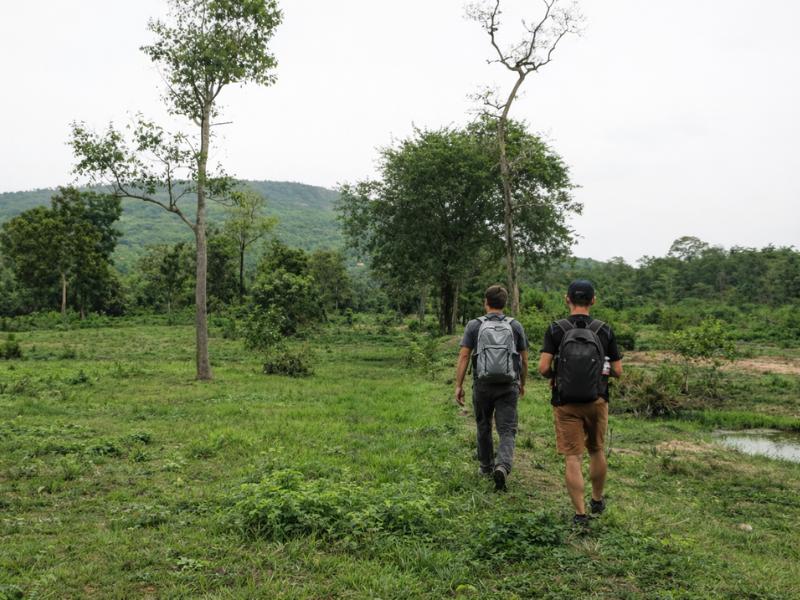
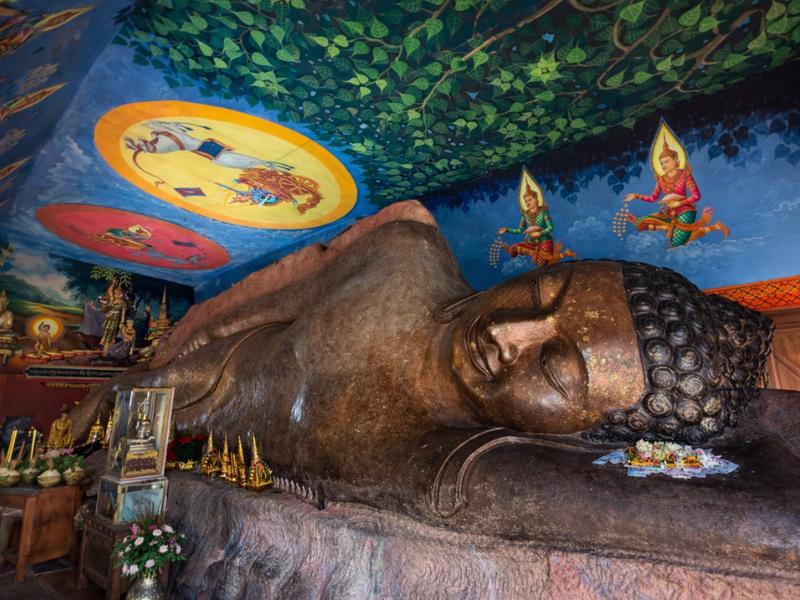
They pull in different directions, which is the whole planning problem. The Angkor temples spread just north of Siem Reap and swallow a full day, or two if you want to slow down. Phnom Kulen lies further out, about 50 km north on a mountain road, and comes with its own rhythm: a long drive up, a swim, the carved riverbed, the reclining Buddha, then the drive back. Spread across a Siem Reap trip of three or four days, they complement each other, the grand stone temples on some days and the green, watery mountain on another. There is a case for treating Phnom Kulen as a headline in its own right rather than an Angkor add-on: this is the mountain where King Jayavarman II proclaimed the Khmer Empire in 802 CE, so its history runs deeper than the day-trip label suggests. That story is told in full in the birthplace of the Khmer Empire.
That deeper history is a good reason not to treat the mountain as a box to tick on the way out of Angkor. The plateau once held Mahendraparvata, an early Khmer capital whose street grid lay hidden under forest until airborne lidar mapped it in 2012 and 2013. Most of that lost city is not on the tourist route, and on the ground it reads as forest and low mounds, but knowing it is beneath the trees changes how the day feels, closer to a pilgrimage than a scenic drive. Our guides at Phnom Kulen Tours handle the timing, the one-way road and the park ticket.
Can you do both in a single day?
You can attempt it, but you would short-change both. Angkor alone fills a day, and Phnom Kulen is an 8 to 10 hour outing in the opposite direction with a one-way access road. Cramming the two into one day means hours in a vehicle and little time actually standing in either place.
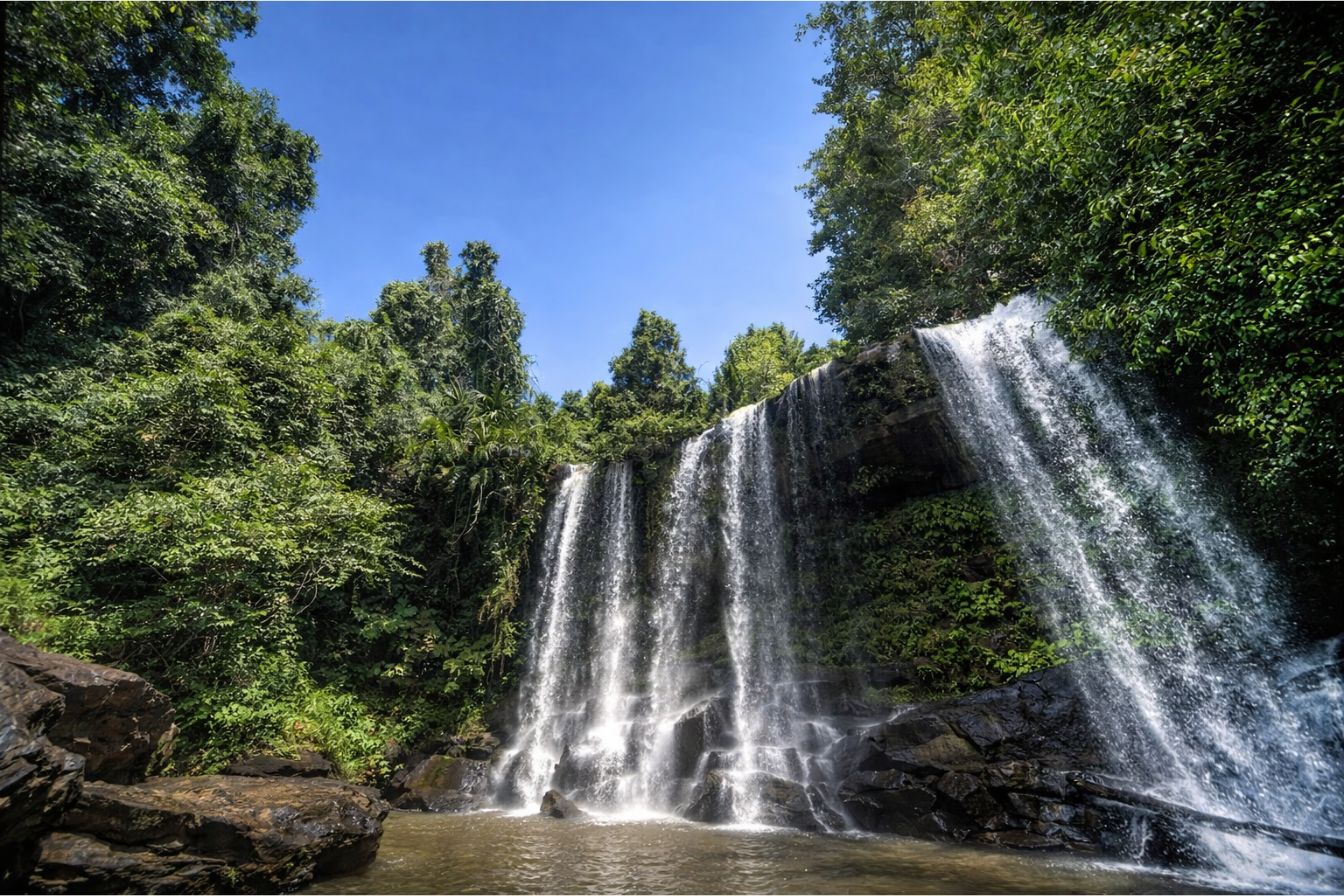
The temptation is real when time is short, but the geography does not cooperate. A morning at Angkor Wat and an afternoon on Phnom Kulen would have you back in the vehicle before you had dried off from the falls, and the mountain road may not even allow the return you planned. If you are weighing the mountain on its own, our answer to how much time to allow for Phnom Kulen shows why it wants a full day of its own.
The numbers make the case on their own. Angkor Wat and the central temples comfortably fill a day of walking, while Phnom Kulen is a couple of hours out and a couple of hours back with a mountain in between. Bolt them together and the driving swallows the sightseeing, so you arrive at each too rushed to take it in. The point of a Siem Reap base is that you never have to choose between them; you just spread them across separate days.
Do Phnom Kulen and Angkor Wat share a ticket?
No, and this catches people out. Phnom Kulen charges its own US$20 park fee for foreign visitors, and the Angkor Pass does not cover it. The mountain is a separate national park, not part of the Angkor World Heritage site, so you buy and budget for the two tickets independently.
Keep the two clearly apart when you plan money and days.
| Ticket | What it covers | Cost | Where to get it |
|---|---|---|---|
| Angkor Pass | The Angkor temples | Sold by number of days | Official ticket centre, before your temple day |
| Phnom Kulen park fee | The mountain | US$20 per foreign visitor | Cash at the gate, or prebooked |
Your Angkor Pass gets you into the temple park on temple days; it does nothing at the Phnom Kulen gate, where you pay in cash on arrival. The mountain fee is per person and separate from any tour price. Our guide to the park entrance fee and tickets explains what the mountain ticket includes and what it does not.
The practical order helps. Buy your Angkor Pass at the official ticket centre for the days you plan to spend among the temples, and treat the Phnom Kulen fee as an entirely separate line in the budget, paid in cash at the mountain gate or prebooked through a tour. Because the two are unconnected, an unused day on your Angkor Pass buys you nothing at Kulen, and the reverse holds too, so plan the tickets around the days rather than the other way round.
How do you sequence a Siem Reap itinerary?
Build the trip from your base in Siem Reap and give each big sight its own day. A common shape is Angkor first, then a full Phnom Kulen day, then a lighter day for outlying temples or the lake. Three days handles both without a rush; four leaves room to breathe and to rest between early starts.
Sequencing matters because both Angkor and Phnom Kulen reward an early start, and back-to-back dawn pickups wear you down. Slotting the mountain on a non-Angkor day lets you treat it as a change of pace rather than more of the same. How you then spend the mountain day, main sights or a wider loop, is mapped in the Phnom Kulen day-trip itinerary.
A rest valve helps on a longer trip. Both headline days start early and involve a lot of walking or driving in the heat, so on a four-day plan many travellers leave one day loose: a slow morning, a market, a spa, before the next early alarm. The mountain, with its swim and its forest cool, actually works well as that gentler day, which is another reason to keep it off the back of a temple marathon rather than the day after a dawn start.
What does a two-day Siem Reap plan look like?
Two days is the tight version that still works. Spend the first on Angkor Wat and the central temples on your Angkor Pass, then give the second entirely to Phnom Kulen: the falls, the carved riverbed and the reclining Buddha, with its own US$20 fee. It is a full pair of early starts, so pace yourself.
| Day | Focus | Ticket |
|---|---|---|
| Day 1 | Angkor Wat and the central temples | Angkor Pass |
| Day 2 | Phnom Kulen: falls, carvings, pagoda | US$20 park fee (separate) |
Two days leaves no slack, so a single delayed morning can cost you a highlight. If you want to keep the mountain day simple, a small-group Phnom Kulen tour sticks to the main sites at a steady rhythm and handles the fee and the road window for you.
On two days the sequencing is worth getting right. Put Angkor on day one while your energy is highest and the temple circuit is long, then let the mountain be the change of pace on day two, when a swim under a waterfall lands as a welcome reward rather than one more set of stairs. Build in an early night between them, because both mornings start before most people are used to on holiday.
What does a three-day plan add?
A third day buys breathing room and the outlying sights. Keep Angkor and Phnom Kulen on their own days, then use day three for Banteay Srei, the jungle temple of Beng Mealea, or the Tonle Sap lake. You can even fold the mountain and those outliers together if you would rather trade depth for coverage.
| Day | Focus | Ticket |
|---|---|---|
| Day 1 | Angkor Wat and the central temples | Angkor Pass |
| Day 2 | Phnom Kulen: falls, carvings, pagoda | US$20 park fee (separate) |
| Day 3 | Banteay Srei, Beng Mealea or the Tonle Sap | Varies by site |
If you want to mop up several outlying attractions in one outing, the Kulen, Beng Mealea and Tonle Sap tour adds a jungle temple and the great lake to the mountain, though at around ten hours it makes for a long day out. On a three-day plan it can double as your day two or day three, depending on how much you want the mountain to stand alone.
Three days is also the version that survives a hiccup. Rain, a late start or a change of heart on day two still leaves room to reshuffle, where a two-day plan has none. If you have the time, the extra day is less about adding sights and more about not spending your holiday racing a clock between two big, tiring outings.
Which day should Phnom Kulen be?
Put it on a non-Angkor day, ideally after you have seen the headline temples. The long drive and the swim make it a slower, greener change of pace, a good counterpoint to a temple-heavy start. If you want the outlying sights in one sweep, combine the mountain with Beng Mealea and the Tonle Sap.
Doing Angkor first also gives Phnom Kulen more context. Once you have stood inside the empire at its height, the mountain where it was proclaimed reads differently, less a waterfall day out and more the source of the whole story. If you are still deciding whether the drive is for you, weigh it with our honest take on whether the mountain is worth it.
Practically, a mountain day also pairs badly with a dawn temple start, so if you are chasing sunrise at Angkor Wat on one morning, give the following day to Kulen rather than bolting a long drive onto the end of an early one. Your legs and your patience will thank you for the gap.
Why give each its own day, and how do they differ?
Angkor overwhelms with scale and carved stone; Phnom Kulen rewards a slower eye with forest, water and quiet sacred carvings. One is a dense circuit of monuments close to town, the other a spread-out mountain a couple of hours out. Trying to blur them into one day loses what makes each worth the trip.
If Angkor is the empire at its height, the mountain is where it began: smaller, older, more intimate. That contrast is exactly why travellers who pair them across a trip tend to remember both, and why those who expect a second Angkor on the mountain feel let down. Set the right expectation and Phnom Kulen shines on its own terms. For the wider picture of everything up there, see the complete national park guide, and for the drive itself, getting to the mountain from Siem Reap.
Keep Phnom Kulen the anchor of its own day and it repays the attention. The swim, the sacred riverbed, the reclining Buddha and the quiet forest are the payoff for the drive, and they land best when you are not glancing at your watch to get back for something else. Angkor will still be there the next morning.