Phnom Kulen Trekking and Hiking Guide
Phnom Kulen rewards walking. Its carvings, its streambed of lingas and its remote stone elephant sit far from any car park, and the mountain only really opens up on foot.
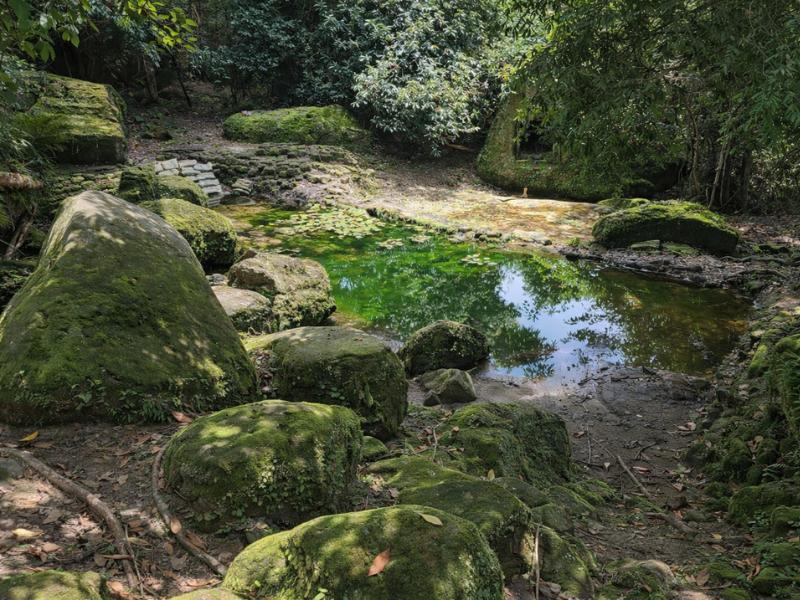
The trail out of Preah Ang Jub temple starts flat, then the jungle closes in and the ground tilts uphill. This is the side of Phnom Kulen that a drive-up day trip never shows you: rainforest, a carved streambed running under your boots, and stone monuments reached only by a sweaty walk. If you would rather earn the mountain than be shuttled around it, here is how the trekking works, how hard it is, and how to set it up. Our guides at Phnom Kulen Tours handle the timing, the one-way road and the park ticket.
Phnom Kulen trekking options at a glance
Times and prices are approximate and set by each operator; check the live listing before you plan around a figure.
Planning takeaway: Choose an actual rainforest trek, distinguishing six-hour, full-day and overnight routes.
Can you trek Phnom Kulen, and what do the hikes involve?
Yes. Guided jungle treks run from Siem Reap and climb through rainforest onto the plateau, taking in the carved River of a Thousand Lingas, the reclining-Buddha pagoda and a waterfall swim. The walking is not technical, but heat, humidity and uneven ground make it a real effort rather than a stroll.
Choose the kind of mountain day first, then compare current inclusions and the time you have.
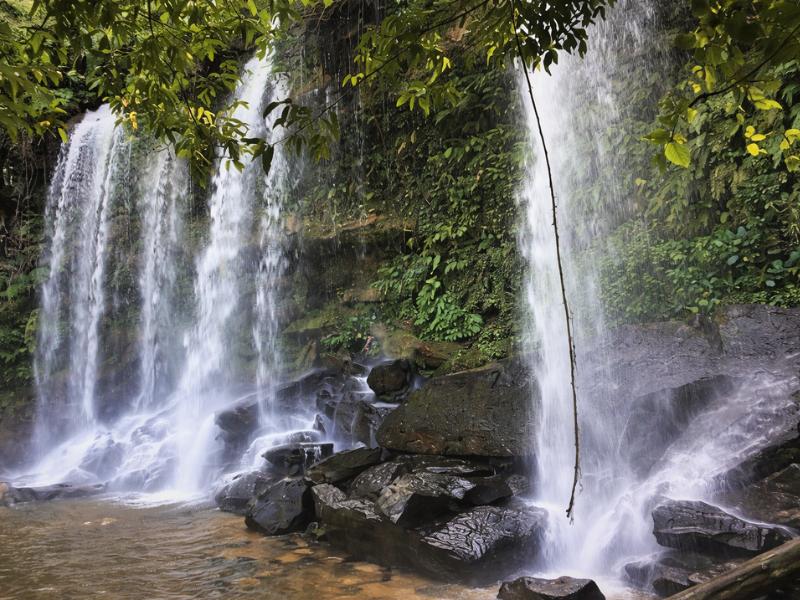
A typical trek trades the vehicle for your legs on the good parts. Instead of parking beside each site, you follow forest paths between them, which is slower, hotter and far more rewarding. You feel the climb, you meet the carvings on foot, and you reach corners of the park most visitors never see. Because the mountain is remote and its junctions are unmarked, these treks are guided; the guide reads the trail, times the one-way road and keeps you on the right side of the sacred-site etiquette.
The shape of the day is walking with purpose rather than a wilderness expedition. You are on trails, not hacking through jungle, and the routes include waterfall stops and a lunch break; lunch may cost extra. But this is Cambodia's tropical forest, so expect to sweat, to drink a lot of water, and to be grateful for shade. A full-day trekking adventure from Siem Reap is the standard shape, with longer and shorter versions on either side for different appetites. If a hot uphill walk is not your idea of a good day, the same jungle and viewpoints open up on an off-road dirt bike or jeep route instead.
Do not picture a technical mountain hike with ropes or exposure; picture a long, hot forest walk with a serious cultural payoff. That framing helps people decide honestly whether it suits them. If the idea of several hours on your feet in humid heat, rewarded by ancient carvings and a swim, sounds good, you will love it. If you would rather see the same sights with minimal walking, a standard vehicle day trip covers them too.
What trekking routes and tours are available?
Three shapes cover most travellers. A full-day trek from Siem Reap, around $45, mixes forest walking with the main sites. A shorter rainforest trekking option takes about six hours and combines trails with the main sacred sites. A two-day Kulen trekking experience, around $175, spreads the plateau over more time for a deeper look.
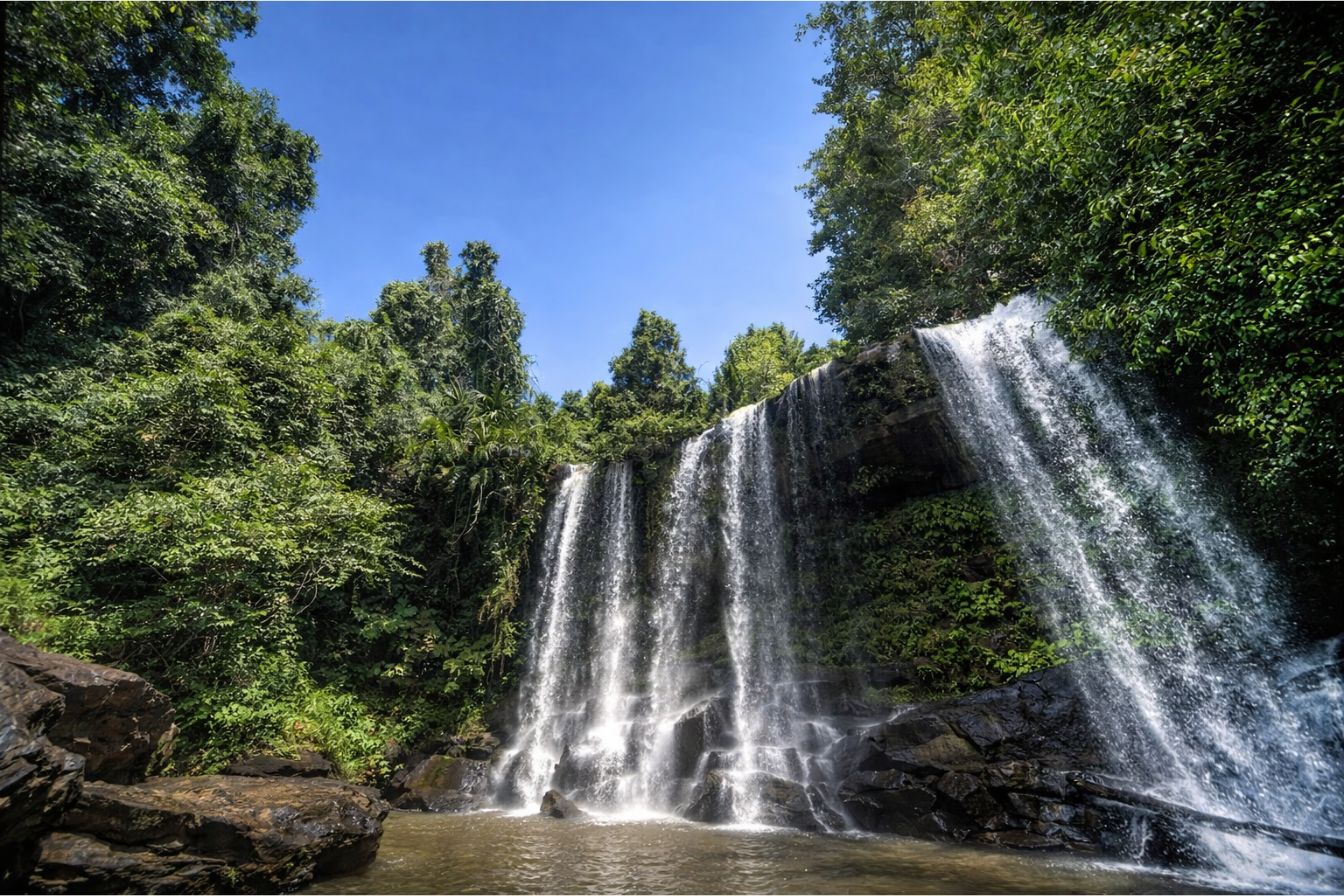
The differences are pace, privacy and depth rather than raw distance. The full-day option is the most popular entry point: a guided walk that still fits the classic highlights into one day. guided Kulen rainforest trekking itinerary follows rainforest paths uphill to the carved river, Buddha and waterfall. The two-day Kulen trekking experience is for people who want to slow right down and let the mountain unfold.
Prices shift, so check the live listing before you plan around a number. Group size is the other lever: a private trek costs more per head but moves at your pace and pauses where you want, while a shared full-day trip is cheaper and sociable but keeps to a set rhythm. Match the format to how you like to travel, not just to the price.
One practical note on the two-day option: its extra time is the real luxury, letting you reach quiet corners of the plateau that a single day cannot fit and slowing the pace in the heat. Confirm exactly what the second day covers and where you rest between the two, since these details vary by operator. For most first visits, though, a full day on foot already delivers the carvings, the pagoda and a swim, and it is the natural place to start.
| Trek | Length | Approx. price | Difficulty | Best for |
|---|---|---|---|---|
| Full-day trek from Siem Reap | About 8 hours | Around $45 | Moderate | First-timers who want the highlights on foot |
| Short rainforest trekking option | About 6 hours | Check current quote | Forest trails; confirm demands | A shorter guided rainforest day |
| Two-day Kulen experience | Two days | Around $175 | Most demanding | Going deeper into the plateau |
How hard is the trek, and what fitness do you need?
Rate it moderate. There are steady uphill sections and uneven jungle footing, but nothing technical or exposed. The real challenge is the tropical heat and humidity, which sap you faster than the gradient. Most reasonably fit walkers manage a guided day with regular breaks, water and a steady pace.
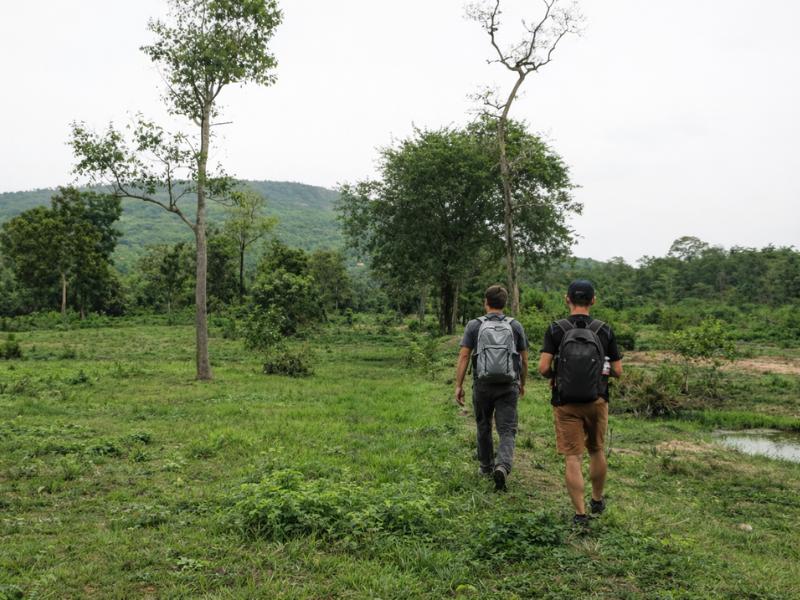
You do not need to be an athlete, but you do need to respect the climate. Cambodia is hot and sticky for much of the year, and a jungle climb turns that up, so pace and hydration matter more than any single steep stretch. Sturdy footing helps on tree roots, loose stone and, in the wet months, slick mud. If you are unsure, the full-day options build in rest at the carvings, the pagoda and the pool, which breaks the effort into manageable pieces.
Be honest with yourself about heat tolerance rather than raw fitness. People who train in cool climates are sometimes caught out by the humidity here, while a steady walker who paces themselves and drinks enough does fine. Start early to walk in the cooler hours, tell your guide if you need to slow down, and there is no prize for pushing through the hottest part of the day. The difficulty ladder below sorts the options by how demanding the day feels.
| Level | What it feels like | Good if you |
|---|---|---|
| Easier | Short walks between drop-offs, plenty of stops | Prefer a gentle pace or travel with children |
| Moderate | Steady uphill, uneven ground, heat the main test | Walk regularly and can handle a hot day out |
| Demanding | Longer forest sections, more climbing, two-day depth | Are fit and want the remote corners |
What will you see on the trail?
The route strings together the mountain's best: Preah Ang Jub temple at the base, rainforest paths, the carved River of a Thousand Lingas in the streambed, the reclining Buddha at the Preah Ang Thom pagoda, and the two-tier waterfall for a swim. Longer treks can reach the remote Srah Damrei stone elephant deep in the park.
Each stop earns its place. The carved River of a Thousand Lingas is a sandstone riverbed cut with Shiva symbols and Hindu deities, believed to bless the water running down to the plains; walking to it beats any photo. The pagoda holds one of Cambodia's largest reclining Buddhas, carved from a single boulder in the sixteenth century. The waterfall where treks stop to swim is the reward at the end of the effort.
On the longest routes, the life-size Srah Damrei stone elephant sits far off the tourist track, a payoff only walkers reach. All of it explains why this hill is remembered as the birthplace of the Khmer Empire, declared by Jayavarman II in 802 CE on the mountain the maps call Mahendraparvata. Trekking ties these scattered pieces together in a way a vehicle circuit cannot, because you cross the ground between them and feel how the sacred landscape actually fits.
Between the marquee sites, the walking itself is part of the reward. You pass through working forest with birdsong overhead, cross the streambed where the carvings sit just under the surface of the water, and get the kind of quiet the roadside viewpoints rarely offer. Keep an eye out for smaller shrines and offerings along the way; this is a landscape people have treated as holy for more than a thousand years, and the treks thread through the living version of it, not a roped-off museum.
| Waypoint | What it is | Why it matters |
|---|---|---|
| Preah Ang Jub | A temple near the base | Common trailhead onto the forest paths |
| River of a Thousand Lingas | Carved sandstone streambed | Sacred carvings said to bless the water |
| Preah Ang Thom | Hilltop pagoda | A giant reclining Buddha in a single boulder |
| Kulen waterfall | Two-tier falls and pool | The swim that caps most treks |
| Srah Damrei | Life-size stone elephant | Remote carving reached only on longer walks |
What should you wear and bring for the trek?
Wear grippy closed shoes and quick-dry clothes, with a light rain shell in the green season. Bring plenty of water, swimwear for the pool, insect repellent, sun protection, and cash for the US$20 park fee. Keep shoulders and knees coverable for the pagoda, which is an active place of worship.
Footwear is the thing people get wrong. Flip-flops fail on wet rock and roots, so closed shoes with real grip make the day safer and more comfortable. Layers that dry fast beat cotton in the humidity, and a packable poncho earns its space from May to October. Repellent matters on damp forest trails, and modest cover is not optional at the reclining Buddha. Our full list of what to pack for a jungle trek runs through the details.
Pack light but do not skip the essentials: more water than feels necessary, sun protection even under the canopy, and a small dry bag so your phone and cash survive the swim and the showers. A good guided trip will still tell you exactly what the day needs, and some carry water and lunch so you are not hauling everything yourself. Leave the heavy daypack behind; on a hot climb, every extra kilo is felt.
| Item | Why | Season note |
|---|---|---|
| Grippy closed shoes | Roots, loose stone, wet rock | Essential in the wet season |
| Quick-dry layers | Heat and humidity | Year round |
| Light rain shell | Short heavy showers | Green season, May to Oct |
| Water and sun cover | Long hot exposure | Heaviest need in dry season |
| Swimwear and repellent | The pool and damp trails | Year round |
| Cash and modest cover | Gate fee and the pagoda | Year round |
When is the best time to trek Phnom Kulen?
The dry season, roughly November to April, gives the firmest footing and the easiest walking, though the waterfall runs thin. The green season, May to October, brings lush forest and a full waterfall, but muddy, slippery trails and heavier showers. Shoulder months split the difference and often suit trekkers best.
Trekking flips the waterfall logic a little. For walking comfort, dry ground beats a full torrent, so the dry season is the easier trek even if the falls are quieter. If you want both a decent walk and water running, target the shoulders, late in the wet season as trails start to firm up, or early in it before they turn to mud. Damp months can also bring leeches on wet forest paths, which good guides plan around.
Whatever the season, the heat is a constant, so the time of day you set out matters as much as the month. An early start walks you through the coolest hours and lands you at the pool before the midday sun. Our notes on the best season to hike the mountain go deeper on water and weather, and they pair naturally with the wider timing decision. If in doubt, the shoulder weeks around the change of season are the safest all-round bet for a trek.
Footwear and footing are the season's real story for a trekker. Dry-season trails are firm and predictable, so you can watch the forest rather than every step. Wet-season paths demand more attention: mud, slick roots and the occasional stream crossing slow the pace and reward good shoes. Neither rules the trek out, but they change how tiring the day feels, so factor the ground, not just the rain, into your timing.
| Season | Trail underfoot | Waterfall | Verdict for trekking |
|---|---|---|---|
| Dry (Nov to Apr) | Firm, easy | Thin, low by Mar | Easiest walking, quieter falls |
| Green (May to Oct) | Muddy, slippery | Full, loud | Harder going, best water |
| Shoulder (May to Jun, Oct to Nov) | Improving | Strong | Best all-round balance |
Do you need a guide, and how do you arrange one?
A guide is strongly recommended and, in practice, how these treks are sold. The park is remote, the forest junctions are unmarked, the access road runs one way on a timed window, and the sites carry sacred etiquette. A guided trek handles the park ticket, the transport, the timing and the route, so you just walk.
Self-guiding Phnom Kulen is possible in theory and awkward in reality: you would still owe the US$20 fee, arrange a car, work out the one-way road and find your own way through the trees. The guided model exists because it removes all of that for a modest premium, and it puts someone alongside you who knows the route to the streambed carvings. Remote Srah Damrei is named on the two-day itinerary; do not assume a standard day trek reaches it. Check your intended date and hotel pickup before arranging the rest of your trip. Published schedules do not establish remaining places.
A guide is also the difference between seeing stones and understanding them. The lingas, the reclining Buddha and the ruined temples mean far more with someone to explain the Shiva symbols, the eighth-century history and the etiquette of a working shrine. Compare a shared full-day trek against a private uphill option and pick the pace that fits your group; either way, arrange it in advance and confirm what is included, from the ticket to lunch to water.
| Guided trek | On your own | |
|---|---|---|
| Route-finding | Handled by the guide | Unmarked jungle junctions |
| Park fee and timing | Included and arranged | Your responsibility |
| Transport | Pickup and return | Hire your own car |
| Remote carvings | Taken straight to them | Easy to miss entirely |
What does a typical trekking day look like?
Most full-day treks start with a hotel pickup around 8 AM, then a drive of an hour and a half to two hours to the mountain. From a base temple you climb through forest to the River of a Thousand Lingas, continue to the reclining-Buddha pagoda, break for lunch, and finish with a swim at the waterfall before the drive back.
The order shifts with the one-way road and the guide's read of the crowds, but the rhythm is consistent: transfer, climb, sacred sites, lunch, swim, return. The climbing tends to sit in the cooler morning, the swim rewards the hot middle of the day, and the descent lines up with the road reopening downhill. On a private trek you can dwell longer at the carvings; on the two-day version the whole thing stretches out with time to reach the remoter corners.
Expect to be back in Siem Reap by late afternoon or early evening on a day trek, pleasantly tired and probably a little muddy. The table below sketches the shape so you know what you are signing up for; your operator's own itinerary is the version to trust, since timings flex with the season and the road.
What surprises many first-timers is how much of the day is spent moving between sites rather than at them. The transfer alone eats a chunk of the morning and afternoon, and the forest sections take time in the heat, so the swim and the carvings feel earned rather than ticked off. Go in expecting a full day out with a satisfying rhythm, not a quick highlights loop, and the trek lands exactly as it should.
| Stage | Roughly when | What happens |
|---|---|---|
| Hotel pickup | Around 8 AM | Meet the guide, drive out of Siem Reap |
| Reach the mountain | Mid-morning | Base temple, start the forest climb |
| Sacred sites | Late morning | The carved streambed and the pagoda |
| Lunch and swim | Midday | Picnic, then the waterfall pool |
| Return | Afternoon | Descend and drive back to town |