Kulen Mountain by Dirt Bike and Jeep: Off-Road Adventure
Manual clutch, red dust, and a mountain track most tour vans never touch. This is Phnom Kulen the way riders and jeep crews see it, dirt under the tyres and villages between the sights.
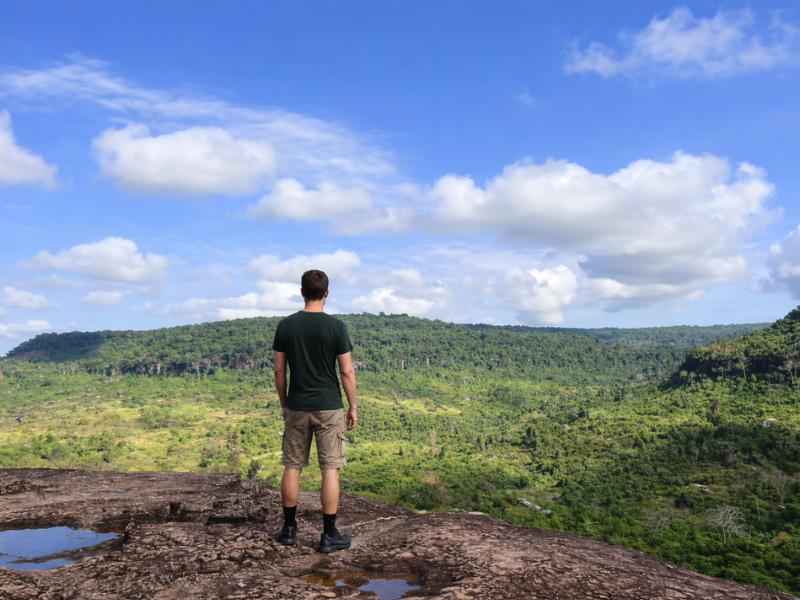
Dirt bike, trails or jeep: the three off-road options
Prices are recent starting rates for each tour; check the live listing for today's figure.
Planning takeaway: Choose driver-led jeep, manual motorcycle or experienced-rider dirt bike.
Can you ride Phnom Kulen by dirt bike or jeep?
Yes. Three off-road styles run up the mountain from Siem Reap: a manual motorcycle adventure, a dedicated dirt bike trails day, and an open-sided jeep tour. All swap the air-conditioned van for dust, villages and back tracks. The riding ones need real skill; the jeep needs none, so there is a route for most people.
Choose the kind of mountain day first, then compare current inclusions and the time you have.
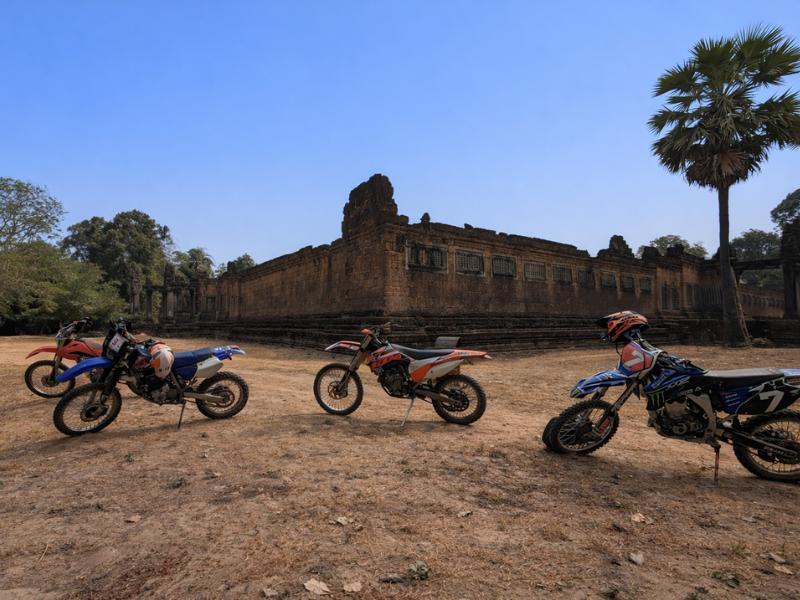
The pull is simple. A standard tour delivers you to the same handful of car parks as everyone else. An off-road day turns the getting-there into the point, threading dirt lanes through rice country, past temples the coaches skip, up onto the plateau where the empire began. You still see the waterfall and the carvings; you just earn them differently. Compare the options side by side with Phnom Kulen Tours before you go.
The mountain itself sits about fifty kilometres north of town, roughly a ninety-minute to two-hour transfer before the fun starts. Every one of these trips is a full day, eight to nine hours door to door, because the distance is real and the riding is not a quick loop. If you would rather understand the plain route first, start with how to reach the mountain from Siem Reap.
Phnom Kulen National Park is protected ground, so these tours stay on established tracks and village lanes rather than cutting new lines through forest. That is the honest frame: this is adventure travel on real roads and trails, not a motocross free-for-all across a nature reserve.
These are guided trips, not solo rentals where you vanish into the hills alone. A lead rider, and often a support vehicle, travels with the group, which is what makes the harder routes reasonable for a strong rider who does not know the terrain. You bring the skill; the operator brings the local knowledge, the fuel stops and the backup if a bike plays up.
What is the dirt bike route actually like?
A typical moto day starts on a manual motorcycle at your hotel, rolls out through villages toward Wat Run near Phnom Bok, then on to Tbaeng village and the base of the mountain. From there you climb the access road to the waterfall, break for lunch, and loop the reclining Buddha, the carved river and a sacred spring before riding home through the countryside.
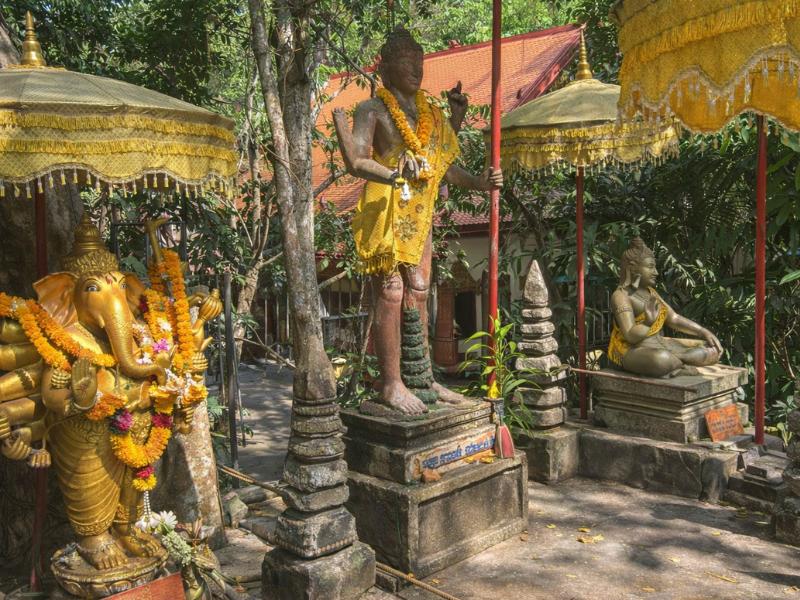
The surface changes constantly, and that is the appeal. You get hard-packed lanes, loose gravel, dust in the dry months and slick mud in the green season, plus the paved but steep mountain road itself. Nothing about it is a smooth cruise, which is exactly why it filters out casual riders.
| Stage | Waypoint | What happens here |
|---|---|---|
| 1 | your hotel, Siem Reap | bikes handed over, quick briefing |
| 2 | villages toward Wat Run, near Phnom Bok | warm-up on rural lanes |
| 3 | Tbaeng village and the mountain base | the climb begins |
| 4 | up to the two-tier waterfall | park, swim, cool off |
| 5 | lunch near the falls | rest and refuel |
| 6 | reclining Buddha, carved river, sacred spring | the mountain's set-piece sights |
| 7 | back through local villages | the long ride home |
What a rider notices is how much life sits between the sights: kids waving from doorways, buffalo on the verge, market stalls, palm-sugar smoke. That in-between is the part a van erases. On the mountain you meet the same two-tier waterfall you swim beneath and the same carved River of a Thousand Lingas as everyone else, just reached the hard way.
The order can flip with the one-way road and the group's pace, so treat no single sequence as fixed. What stays constant is the shape of the day: countryside, then the climb, then a swim, then the sacred sites, then a long ride home. Riders who relax into that arc enjoy it far more than those who treat it as a race between photo stops.
Dirt bike versus jeep: which suits you?
Choose by how much you want to drive. A dirt bike or manual motorcycle puts you in control and demands clutch skill, stamina and a tolerance for dust and spills. An open-sided jeep lets someone else handle the mountain while you ride along, camera out, breeze in, no experience required. Comfort and skill sit at opposite ends.
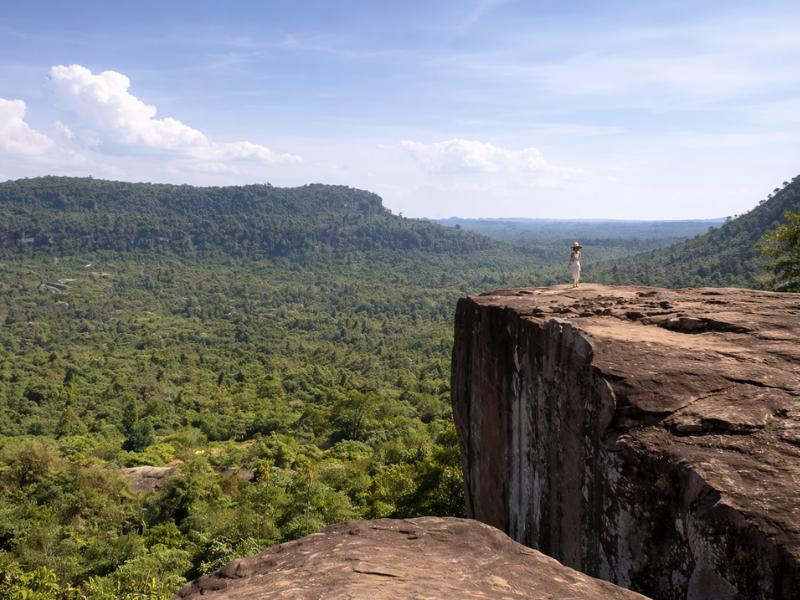
The riding options reward people who already ride at home. If a manual clutch on a loose surface sounds fun rather than frightening, the moto and trails days are built for you. If it sounds like a hospital visit, that instinct is correct, and the jeep exists precisely for it.
| Dirt bike / moto | Open jeep | Small-group van | |
|---|---|---|---|
| You drive | Yes, manual | No, passenger | No |
| Skill needed | High | None | None |
| Comfort | Low, physical | Medium, breezy | High |
| Dust and weather exposure | Full | Some | Little |
| Group size | Small | Small, private | Up to about a dozen |
| Best for | Confident riders | Families, photographers | First-timers, easy days |
The jeep also solves the ages and mixed-ability problem. A family with kids, or a group where only one person rides, can still get the off-road feel from an open vehicle without anyone risking a spill on gravel. It is the diplomatic pick when not everyone wants to hold a clutch.
The price gap follows the format. A private open jeep with a specialist crew costs more than a shared bike day because you are buying comfort, exclusivity and a vehicle that carries passengers rather than demanding riders. Whether that premium is worth it depends on your group. Solo thrill-seekers rarely pay it; families and photographers often think it money well spent.
How hard is the riding, and do you need experience?
The riding tours assume you can already handle a manual bike confidently on loose, changing surfaces. This is not the place to learn. Expect real physical effort, dust or mud depending on the season, a steep mountain road, and the odd tricky patch. The jeep, by contrast, needs no skill at all beyond sitting tight on bends.
Be straight with the operator about your level when you book. Overstating your riding to grab the dirt bike day is how people end up walking a bike, or worse, on a section they cannot control. A guide who knows you are rusty can set a sensible pace; a guide who thinks you are an expert will not.
Use this quick check to match the vehicle to your ability before you book.
| If you... | Then... |
|---|---|
| ride a manual bike confidently at home | the moto or trails day will suit you |
| have never used a clutch | take the open jeep, not a bike |
| mainly want to swim and photograph | any of the three works, the jeep is easiest |
| have back, knee or wrist trouble | skip the dirt bike, choose the jeep or a van |
| are travelling with children | check age limits and suitability for the specific jeep or van option |
Season shifts the difficulty as much as skill does. The green season, roughly June to November, fills the waterfall and makes the swim glorious, but it also greases the trails and can turn dust into mud. The dry months are grippier underfoot yet dustier and can leave the falls thin. Our note on the best time to visit for water flow helps you weigh that trade.
The mountain road adds its own wrinkle. The single access road up the plateau has historically run one way, up in the morning and down after midday, so your riding day is timed around that window rather than your own whim. It is one more reason these are guided outings: the operator reads the road so you can concentrate on the trail.
Whichever you pick, dress for it. Closed shoes, long trousers and something over your mouth for dust are the baseline, and there is a fuller kit list in what to wear and bring for the mountain. If you are still unsure the whole thing is for you, our honest take on whether the mountain is worth the day trip is a good gut check.
Whatever you ride, pack light but pack right.
| Bring | Why |
|---|---|
| closed shoes and long trousers | protection from dust, gravel and a hot exhaust |
| a buff or scarf and sunglasses | dry-season dust is relentless on the trails |
| swimwear worn underneath | the waterfall stop lands mid-day |
| a light rain layer in the green season | showers arrive fast on the mountain |
| cash for the twenty dollar fee and snacks | card payment is unreliable up here |
The three off-road tour options, compared
The moto adventure runs about nine hours on a manual motorcycle for around $130. The dirt bike trails day is roughly eight and a half hours on a dirt bike for around $150, leaning into ecology and lesser-known ruins. The open jeep by a specialist operator is about nine hours for around $218, the premium, no-skill way to ride the mountain.
Read those prices as recent starting rates and check the live listing for the current figure before you commit, since seasonal demand moves them. The gap between them is not really about hours. It is about who does the driving and how much comfort and privacy you are buying.
| Tour | Vehicle | Length | Focus | Around |
|---|---|---|---|---|
| the moto adventure tour | manual motorcycle | 9 hours | villages, waterfall, the classic sights | $130 |
| the dirt bike trails tour | dirt bike | 8.5 hours | ecology, flora and fauna, quieter ruins | $150 |
| the open-sided jeep tour | open jeep | 9 hours | reclining Buddha, carvings, easy photo stops | $218 |
The trails day markets itself around the mountain's ecology and its two thousand years of history, right back to Jayavarman II and the founding of the empire, so it suits riders who want context with the adrenaline. The jeep leans the other way, toward comfort and photography, with the reclining Buddha and the Kbal Spean carvings as headline stops.
Choose the vehicle and route before fixing the rest of your mountain day. Check the operator’s dates, equipment and rider requirements; a published schedule does not confirm that places remain. The jeep has a driver, while both motorcycle options require riding experience.
What do you see off-road that a van tour misses?
You see the joins. A van hops between car parks; an off-road day rides the countryside in between, so you pass working villages, roadside markets, temple fragments and the base-of-the-mountain approach that coach travellers never register. The set-piece sights are the same, but the texture around them is the reward.
On the mountain itself you still hit the highlights everyone comes for: the swim beneath the two-tier falls, the sandstone streambed carved with lingas, the great reclining Buddha, and a sacred spring the moto route folds in. None of that is exclusive to riders. What is exclusive is the approach, the dust, and the unpolished stops between them.
There is a quieter payoff too. Because riding groups are small and move at their own pace, you can linger where a coach would herd you on. A rider can sit longer at the falls, or stop for a photo of a paddy nobody else bothers with. If you would rather see the standard structured version to compare, our a standard van day-trip itinerary lays it out stop by stop.
Do temper the ruins expectation. The lesser-known sites the trails tour mentions are modest, weathered and scattered, not another Angkor Wat hiding in the trees. The pleasure is atmospheric, a broken lintel in the forest, not monumental.
Accept one trade going in. Off-road days spend real time in the saddle and in transit, so your total minutes standing at each famous sight can be shorter than on a slow van tour. You gain the journey and give up a little of the lingering. For most riders that is precisely the bargain they came for.
A worked example: an off-road day on the mountain
Picture a moto day. Bikes at eight, out through villages by half past, at the mountain base mid-morning, up the access road, swimming under the falls before noon, lunch, then the reclining Buddha and the carved river through the early afternoon, and a dusty ride home to land back in Siem Reap by late afternoon. Long, physical, full.
The timing is not arbitrary. The mountain access road has historically run one way, up in the morning and down after midday, so the day is naturally shaped around climbing early and descending later. A good operator plans around that window so you are never fighting the flow of traffic on a single-lane road.
| Time | Where | What you are doing |
|---|---|---|
| 08:00 | your hotel | bike handover and briefing |
| 08:30 | rural lanes toward Phnom Bok | warming up on the dirt |
| 10:00 | the mountain base and access road | the climb |
| 11:30 | the two-tier waterfall | swimming and a rest |
| 12:30 | near the falls | lunch |
| 13:30 | Preah Ang Thom and the carved river | the mountain's sacred sights |
| 15:00 | back down through villages | the ride home |
| 16:30 to 17:30 | Siem Reap | drop-off, aching and grinning |
The jeep version follows a similar arc with less sweat and more shade, and the trails version trades some of the classic stops for quieter ruins and forest. Same mountain, three different intensities.
A word on stamina for the day itself. Eat a proper breakfast, because the first real food stop is lunch near the falls, and keep water within reach for the whole ride. The heat and the vibration drain you faster than the distance suggests, and a tired rider makes mistakes. Pace beats bravado on a long mountain day.
Who should skip the dirt bike and jeep tours?
Skip the riding tours if you cannot handle a manual bike on loose ground, if you have back, knee or wrist issues, or if a full day of dust and sun sounds miserable rather than fun. And skip the whole off-road idea if your priority is simply the fastest, coolest, most comfortable way to see the falls and be back for dinner.
The physical toll is real. These are eight and nine hour days with heat, vibration and a steep road, and the moto and trails options add the strain of controlling a bike throughout. If your body protests at that, the open jeep removes the riding load, and a standard van removes almost all of it.
Weather can also make the call for you. In the wettest stretch of the green season, trails turn to mud and the fun-to-risk ratio shifts, so nervous riders are better off in the jeep or waiting for a drier window. There is no glory in dropping a bike on a slick climb.
If none of the three fits, the mountain is still very much worth it by ordinary transport. A relaxed small-group tour with picnic lunch reaches every headline sight with air-conditioning and a fraction of the effort, which for many travellers is the smarter trade.
Whatever you choose, ride within your limits and mind the insurance. Many standard travel policies exclude motorcycling, especially off-road, so check your cover before you book a bike day. There is no shame in taking the jeep. A day you finish smiling beats a day you finish in a clinic, and the mountain looks just as good from the passenger side.
None of this should scare off a capable rider. Plenty of people take these trails every season and come home buzzing, having seen a side of the mountain the coaches never reach. Match the vehicle to your honest ability, dress and hydrate properly, and an off-road day on Phnom Kulen is one of the best things you can do out of Siem Reap.