What Is the River of a Thousand Lingas?
Upstream of the main Phnom Kulen waterfall, the river runs over a bed of sandstone carved with rows of small round lingas and images of Hindu gods. Khmer kings had them cut to bless the water flowing down to the plains.
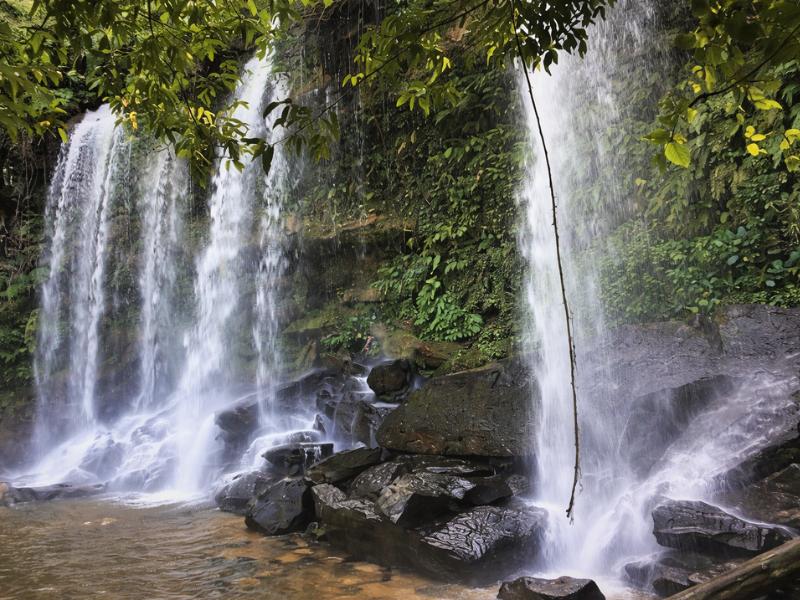
Carvings in the dry months, waterfall in the wet
A seasonal rule of thumb for what you will see; the exact water level shifts week to week with the rains.
Planning takeaway: Understand the Kulen river carvings and distinguish Kbal Spean.
What is the River of a Thousand Lingas?
It is a stretch of streambed on Phnom Kulen where the sandstone riverbed is carved with hundreds of lingas, the symbol of the Hindu god Shiva, alongside other deities. Khmer rulers believed the water passing over the carvings carried a blessing down to the rice fields below, turning the source of the river into a living shrine.
Choose the kind of mountain day first, then compare current inclusions and the time you have.
Picture a shallow river running over pale, flat stone, then look closer: the rock underfoot is worked with neat rows of rounded knobs, square sockets and carved figures, all placed so the current flows across them. This is sacred engineering as much as art. Rather than build a shrine beside the water, the carvers made the water itself the object of devotion. A short walk upstream from the falls brings you to it, which is why so many visitors pair the two. Our deep guide to the River of a Thousand Lingas and the reclining Buddha maps out exactly where the carved sections lie.
What is a linga, and what is a yoni?
A linga is a rounded stone pillar that represents Shiva and his creative power; a yoni is the square or dished base it sits in, its paired symbol of the divine feminine. Together they stand for generation and renewal. On Phnom Kulen they are cut straight into the bedrock, in tidy grids, so the whole riverbed reads as one continuous act of worship.
The symbolism is old and central to Shiva worship across the Hindu world, and the Khmer court adopted it wholesale. A linga on its yoni is a compact image of cosmic creation, the male and female principles joined. Carving them in stone was ordinary; carving them into a riverbed so flowing water forever anointed them was the distinctive Khmer touch. The larger relief figures worked among the grids show other gods and scenes, which is why the site rewards a slow, guided look rather than a quick glance at the water. The team at Phnom Kulen Tours books the trips that make this an easy day out.
What do the carvings actually show?
Mostly lingas: rounded stone symbols of Shiva cut in tidy grids across the riverbed. Around and between them are yoni bases, the square counterparts, and larger carved images of Hindu gods including Vishnu. No one has ever counted exactly a thousand; the name is poetic, a way of saying they are too many to tally.
The detail is easy to miss until someone points it out, so here is what to look for underfoot.
| What you see | What it is |
|---|---|
| Grids of lingas | Rows of rounded stone symbols of Shiva, carved into the bedrock |
| Yoni bases | The square sockets each linga sits in, a paired symbol of creation |
| Hindu deities | Larger carved images of gods including Vishnu, worked into the same riverbed |
| The flowing water | Believed to be sanctified as it passes over the carvings on its way to the plains |
On a clear stretch you can pick out lingas the size of a fist, worn smooth by centuries of current, next to deeper-cut figures that reward a slow look. The carvings are not identical, and part of the pleasure is spotting the larger reliefs among the fields of small lingas. A guide earns their keep here, because the meaning is far from obvious from the stone alone.
Why carve a riverbed instead of building a temple?
Because water was the point. Phnom Kulen feeds rivers that run down to the plains where the Khmer built their capitals, so blessing the water at its source blessed everything it touched: the fields, the harvests and the kingdom. Carving the streambed made the river a shrine that renewed the blessing every day it flowed.
This ties the site straight into why the mountain mattered to Khmer kings in the first place. The same rulers who declared Phnom Kulen sacred and made it the seat of the early Khmer state understood that a capital on the plains depended on the mountain's water. The lingas put royal and religious power directly into that lifeline. Think of it as hydrology fused with faith: an agrarian kingdom watering its rice through a stream it had made holy. It is a quieter kind of monument than a stone temple, and for many visitors a more memorable one.
Seen this way, the carved river is a founding technology of the Khmer state, not just a devotional flourish. The plains kingdoms that rose below the mountain depended on capturing and moving water, and a court that could claim to sanctify the source of that water claimed a stake in the harvest itself. The lingas made a theological point and a political one at once: the river, the rice and the throne were bound together at this spot on the mountain. That fusion of faith and farming runs right through Khmer history, from these small carved knobs to the vast reservoirs the later capitals built out on the flatlands.
Is this the same as Kbal Spean near Banteay Srei?
They share the name and the idea, but they are two places. The carvings here lie on Phnom Kulen, a short walk above the waterfall. Kbal Spean is a separate carved streambed on a different hillside near Banteay Srei, reached by its own forest trail. Both were cut to bless the water; visitors sometimes confuse them because both are called a river of a thousand lingas.
The distinction matters when you plan. If a tour or driver mentions the 1000 Lingas, ask which one, because the two sit some distance apart and involve different walks. The Phnom Kulen carvings come as part of the mountain day, paired with the falls and the reclining Buddha; Kbal Spean is usually visited on an Angkor-area day near Banteay Srei. The side-by-side below keeps them straight.
| Feature | Phnom Kulen riverbed | Kbal Spean |
|---|---|---|
| Where | On Phnom Kulen, just above the main waterfall | A separate hillside stream near Banteay Srei |
| How you reach it | Short walk on the mountain day, after the US$20 park fee | A forest trail on an Angkor-area day, its own site |
| Usually paired with | The waterfall, the swim and the reclining Buddha | Banteay Srei and nearby temples |
| Shared idea | Lingas carved so water is blessed at its source | The same devotional purpose, a different streambed |
Both were the work of the Angkorian court, with the riverbed carving generally placed across the earlier and middle Angkor centuries. Exact dating is a scholar's debate; what you can safely say is that these are centuries-old royal devotional works, not modern reproductions.
When are the carvings visible?
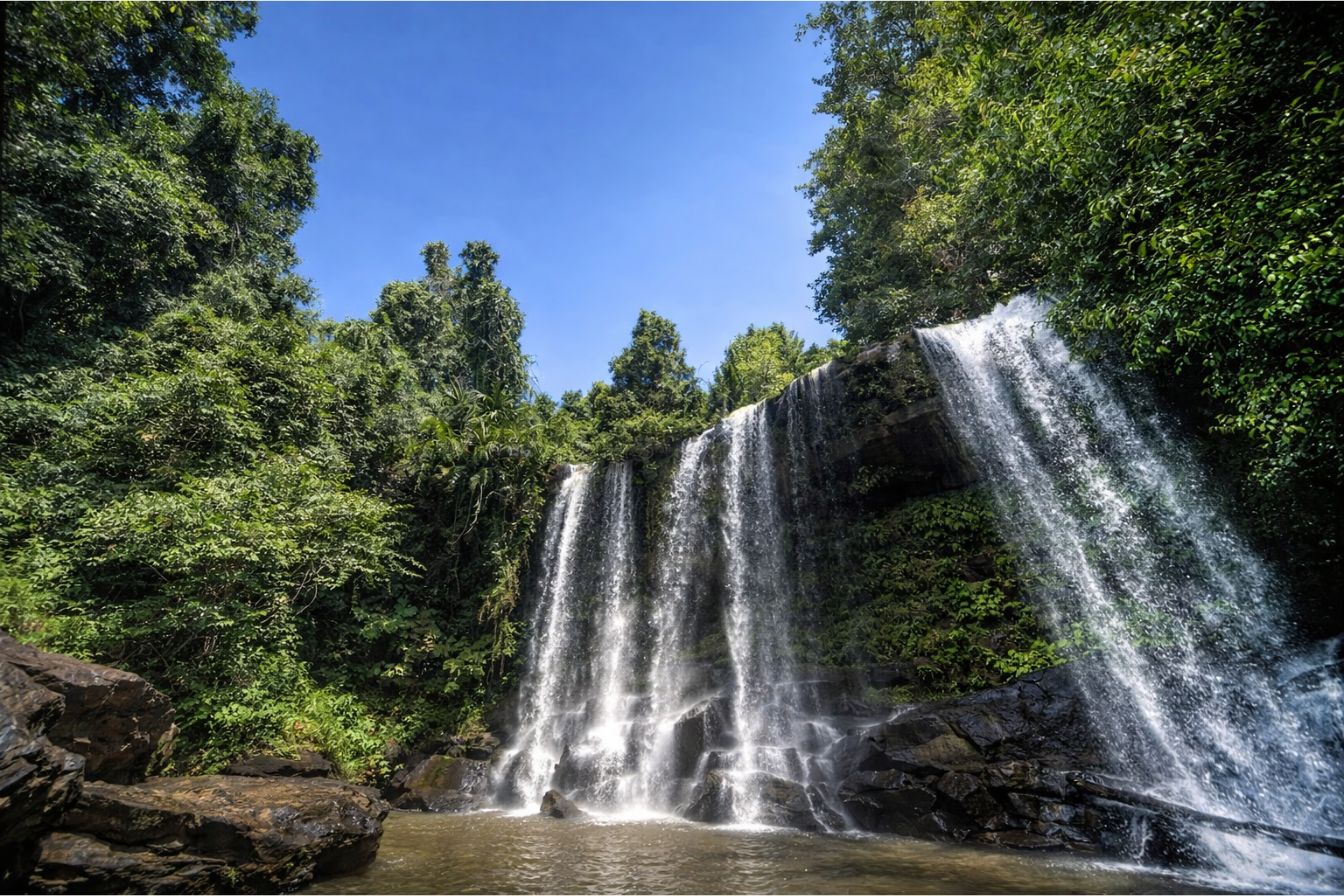
They are clearest in the dry season, roughly December to May, when the river runs low and more of the carved stone sits above the water. In full green-season flow the current runs right over the lingas, which was always the intention. So you trade a powerful waterfall for hidden carvings, or a thin cascade for a clear view of the stone.
That gives you a gentle choice, not a bad one either way. The table below sets the seasonal trade out plainly.
| When | River level | Carvings | Waterfall | Best for |
|---|---|---|---|---|
| Late dry, February to May | Low | Most exposed and easy to see | Thin | Seeing and photographing the stone |
| Early dry, December to January | Easing | Well exposed | Still decent | A balance of carvings and flow |
| Green, June to November | High | Often under the current | Full and loud | The waterfall doing its sacred job |
For photographs of the lingas, come as the water drops and the light is soft in the morning. For the river as its makers meant it, come after the rains and watch the blessed water pour over the carvings toward the falls.
How does the River of a Thousand Lingas fit a full mountain day?
It sits at the top of a natural circuit. Most visitors reach the mountain in the morning, walk the short, shaded path to the carved riverbed above the falls, then drop down to swim in the pool and finish at the hilltop reclining Buddha. Seeing the carvings, the waterfall and the pagoda together turns a single stop into a half-day of sacred sightseeing.
The order matters less than the pairing. Because the lingas lie just upstream of the water you swim in, the site makes most sense once you grasp that the same river you splash in was carved to carry a blessing to the plains. Give the carvings a slow twenty or thirty minutes, ideally with a guide, then let the waterfall and the pool be the reward on a hot day. Add the reclining Buddha at Preah Ang Thom and you have covered the mountain's three headline sights in one loop. If you are mapping the day yourself, our full Phnom Kulen day-trip itinerary puts the carvings, the falls and the Buddha in a sensible order, and our sense of how much time to allow keeps the pace realistic. The walking between them is short and easy, so the day is far gentler than the word trekking suggests.
How do you visit, and what do you actually see today?
The carved riverbed sits a short, shaded walk above the waterfall inside the national park, reached after the US$20 entry. You will see stretches of pale sandstone worked with lingas and figures, with the amount of visible carving set by the season. It is a subtle, low-key wonder rather than a dramatic monument.
Set your expectations for texture, not spectacle. This is not a towering ruin; it is quiet, worked stone underfoot that means far more once you understand it. Guided trips make the most of it: an guided Kulen rainforest trekking itinerary puts a guide beside the carvings to explain what you are looking at, and a Kulen waterfall and sacred-sites picnic tour pairs the riverbed with the swim and a meal. If you want the waterfall context first, our two-tier waterfall guide sets the scene just downstream.